Historical report: Originally published by 深潮 TechFlow on November 12, 2026, at 09:57 China time, based on analysis by Alea Research. Figures below describe the periods and dates specified in that report, not current balances.
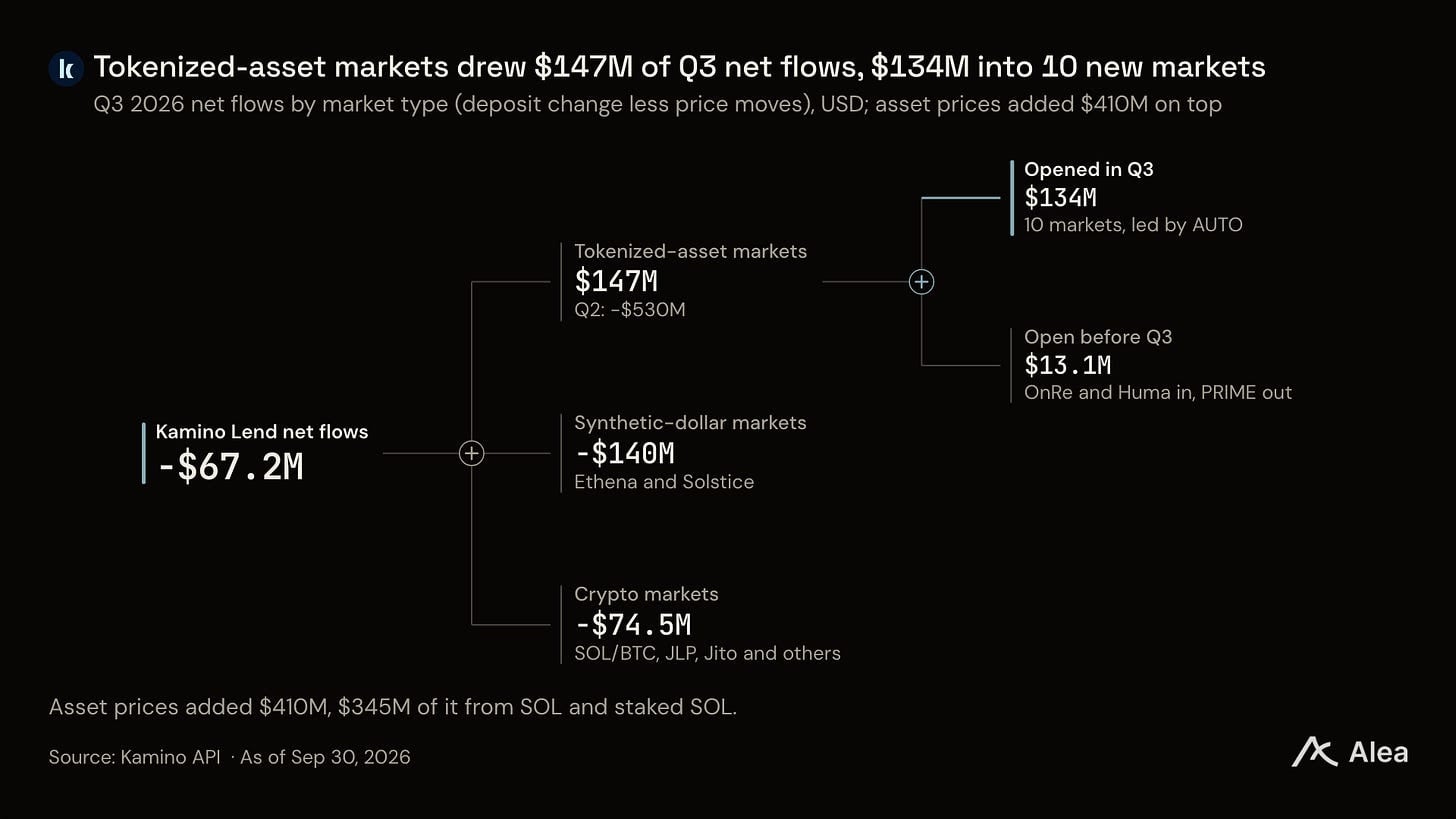
Kamino’s tokenized-asset markets recorded $147 million in net inflows in Q3 2026, according to Alea Research. They were the platform’s only market category with net inflows that quarter: its crypto-asset and synthetic-dollar markets lost a combined $215 million. Of the tokenized-asset inflows, $134 million went to 10 markets opened during the quarter. The report separately attributed $410 million of growth in asset values to price appreciation, rather than fund flows.
Where deposits went
Among dollar-collateral markets open throughout the quarter, deposits rose by $92.5 million in OnRe and $62.5 million in Huma’s PST market, while Figure’s PRIME market shrank by $125.5 million. Alea Research linked the stronger deposit growth to markets offering wider spreads between collateral yield and borrowing cost. That spread is an incentive for leveraged borrowing, but it can narrow if either yield or borrowing rates change.
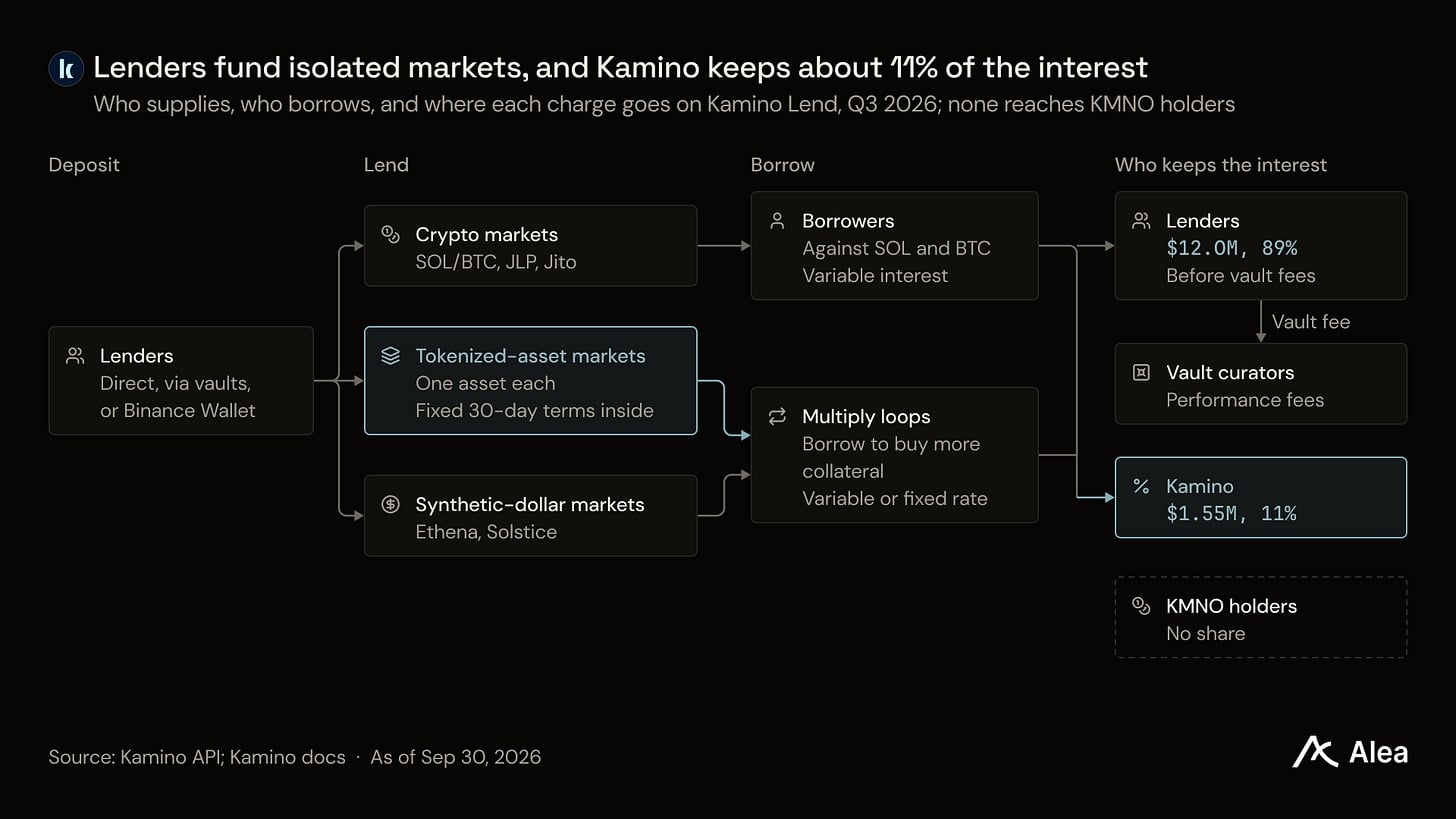
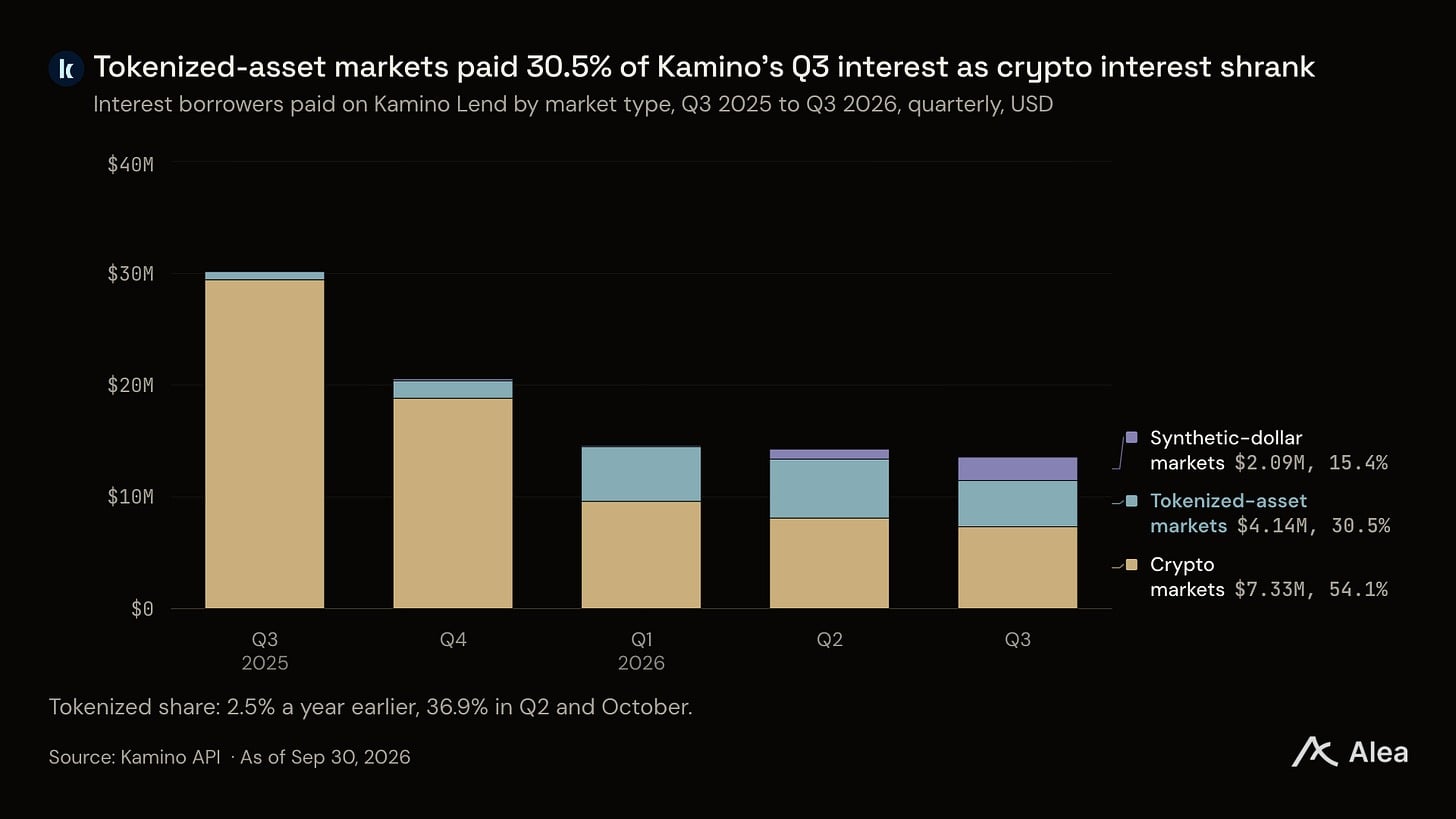
Tokenized-asset markets generated 30.5% of Kamino’s Q3 borrowing interest, up from 2.5% a year earlier but below Q2 2026’s 36.9%. Across its markets, Kamino retained $1.55 million in borrowing-interest revenue in Q3, compared with $1.61 million in Q2. The report puts the protocol’s retained share at roughly 11% of borrowing interest; those figures exclude liquidation fees.
Fixed rates and KMNO
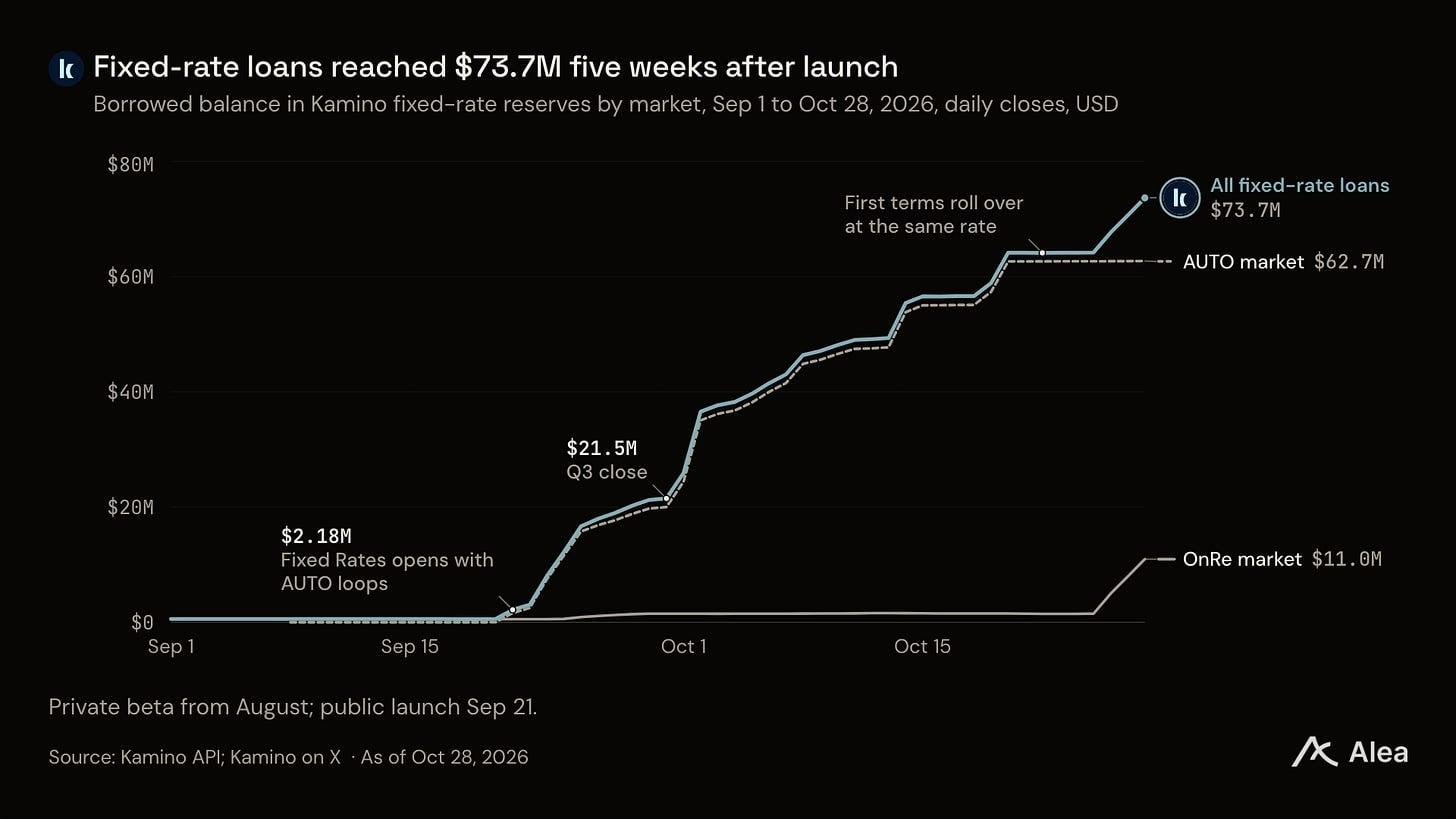
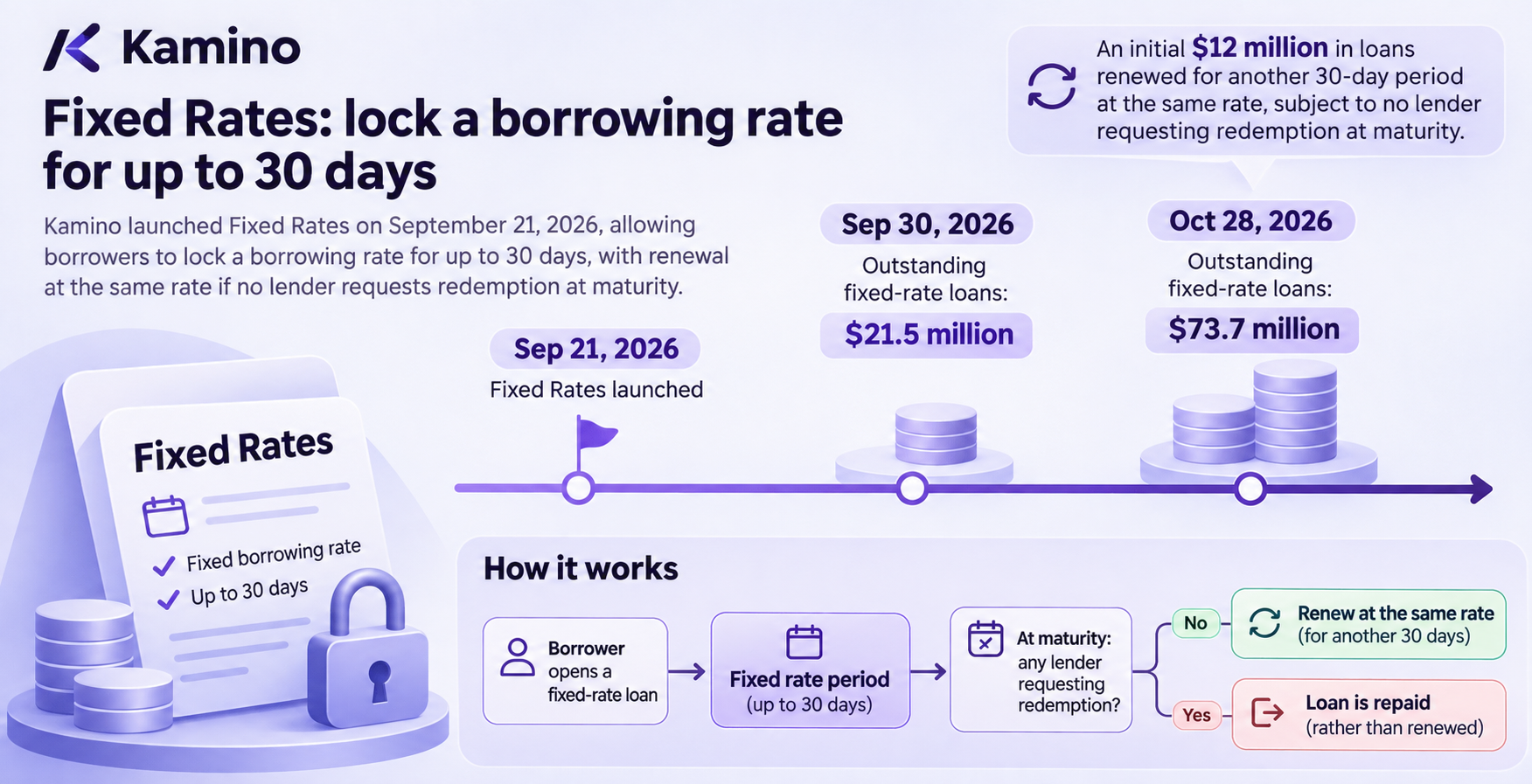
Kamino launched Fixed Rates on September 21, 2026, allowing borrowers to lock a rate for up to 30 days. Outstanding fixed-rate loans reached $21.5 million by September 30 and $73.7 million by October 28. According to the report, an initial $12 million in loans renewed for another 30-day period at the same rate. Renewal depends on no lender requesting redemption at maturity.
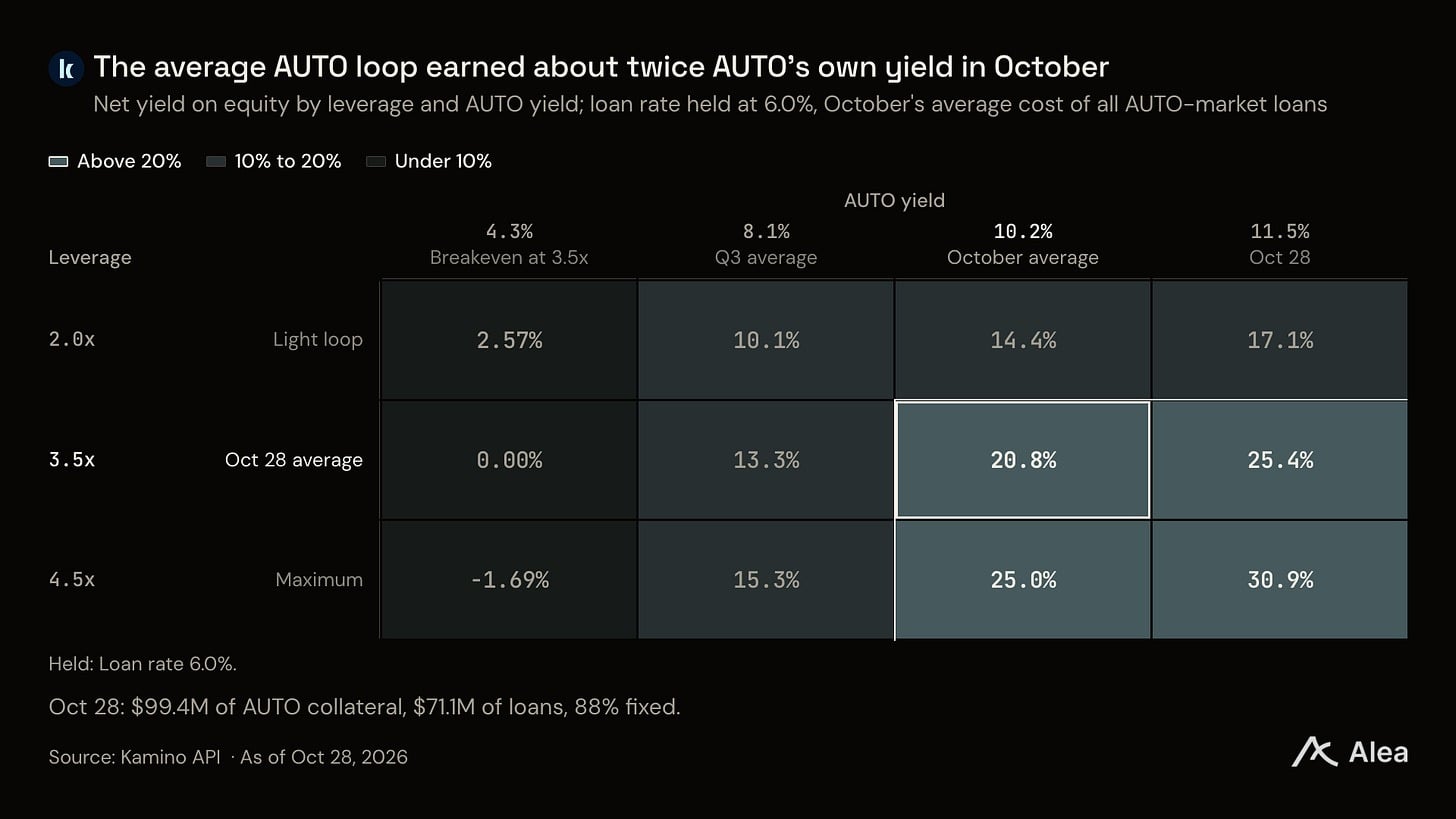
A fixed borrowing rate limits uncertainty on the debt side of a leveraged position; it does not lock the underlying asset’s yield. Alea Research estimated that an AUTO looping position at 3.5× leverage would break even at a 4.3% asset yield under its assumed 6.0% borrowing cost. Its return estimates exclude fees and price changes and are scenarios, not promised outcomes.
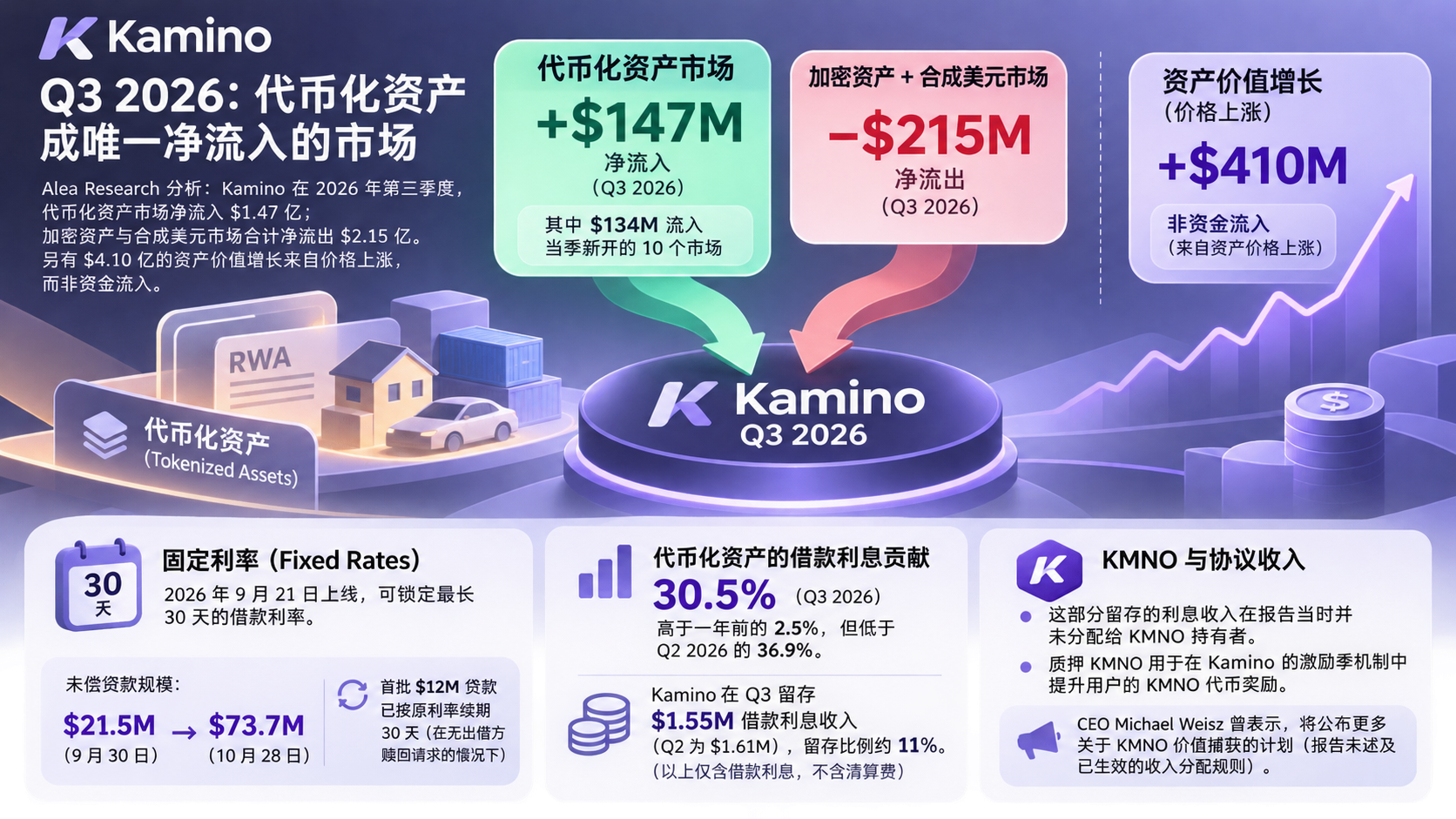
The retained interest revenue was not being distributed to KMNO holders at the time of the report. Staking KMNO instead boosted users’ KMNO token rewards under Kamino’s incentive-season mechanism. CEO Michael Weisz had said more plans for KMNO value capture would be announced; the source did not describe an enacted revenue-sharing rule.
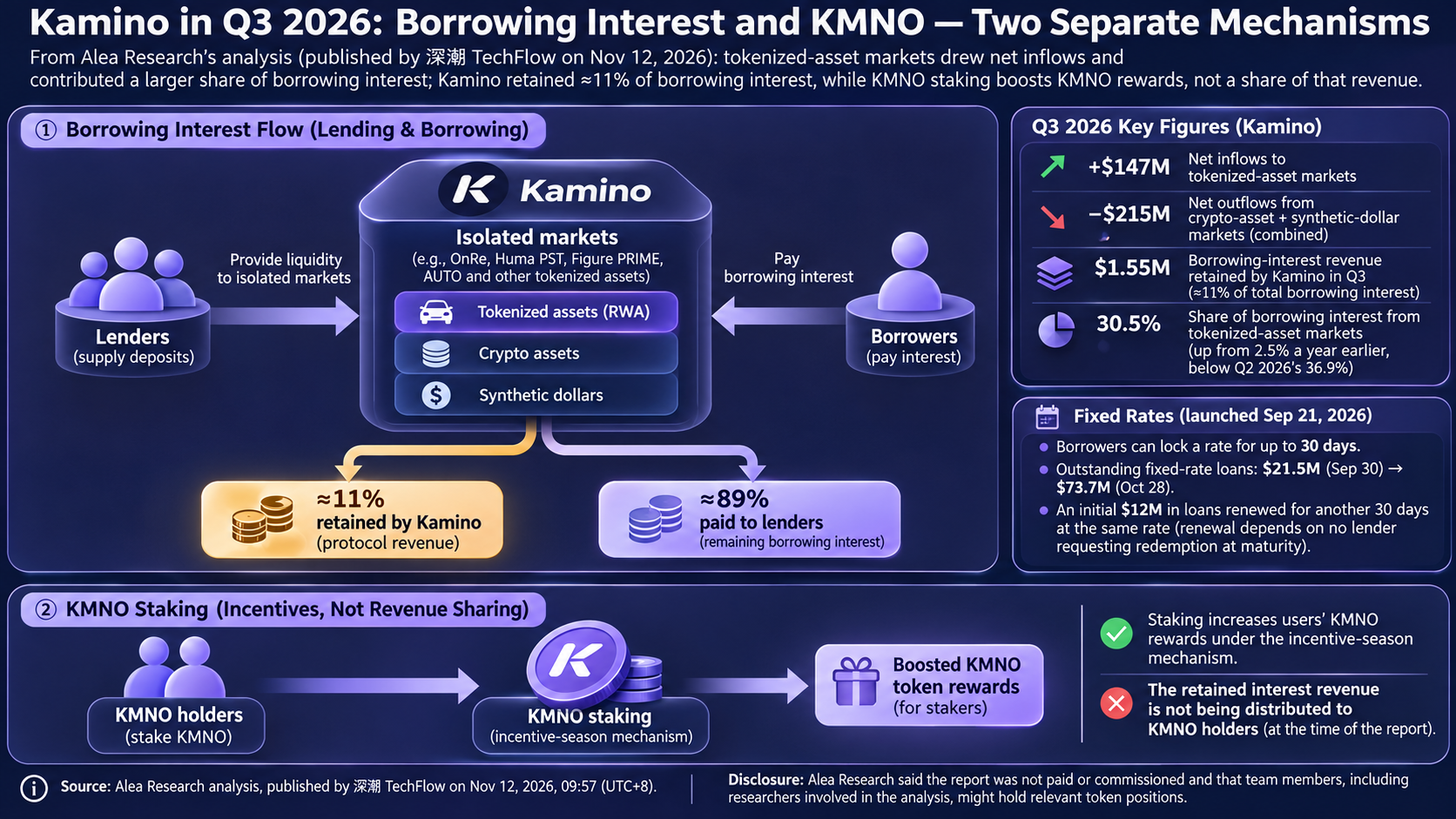
Disclosure: Alea Research said the report was not paid or commissioned and that team members, including researchers involved in the analysis, might hold relevant token positions.
Source: techflowpost.com (originally published 2026-11-12 09:57 UTC+8)