TechFlow published this item on November 10, 2026, at 20:43 (UTC+8), citing The Defiant. It is a dated launch-and-proposal notice. It does not report a later governance vote, fee collection, or any change in ZK supply.
What was introduced
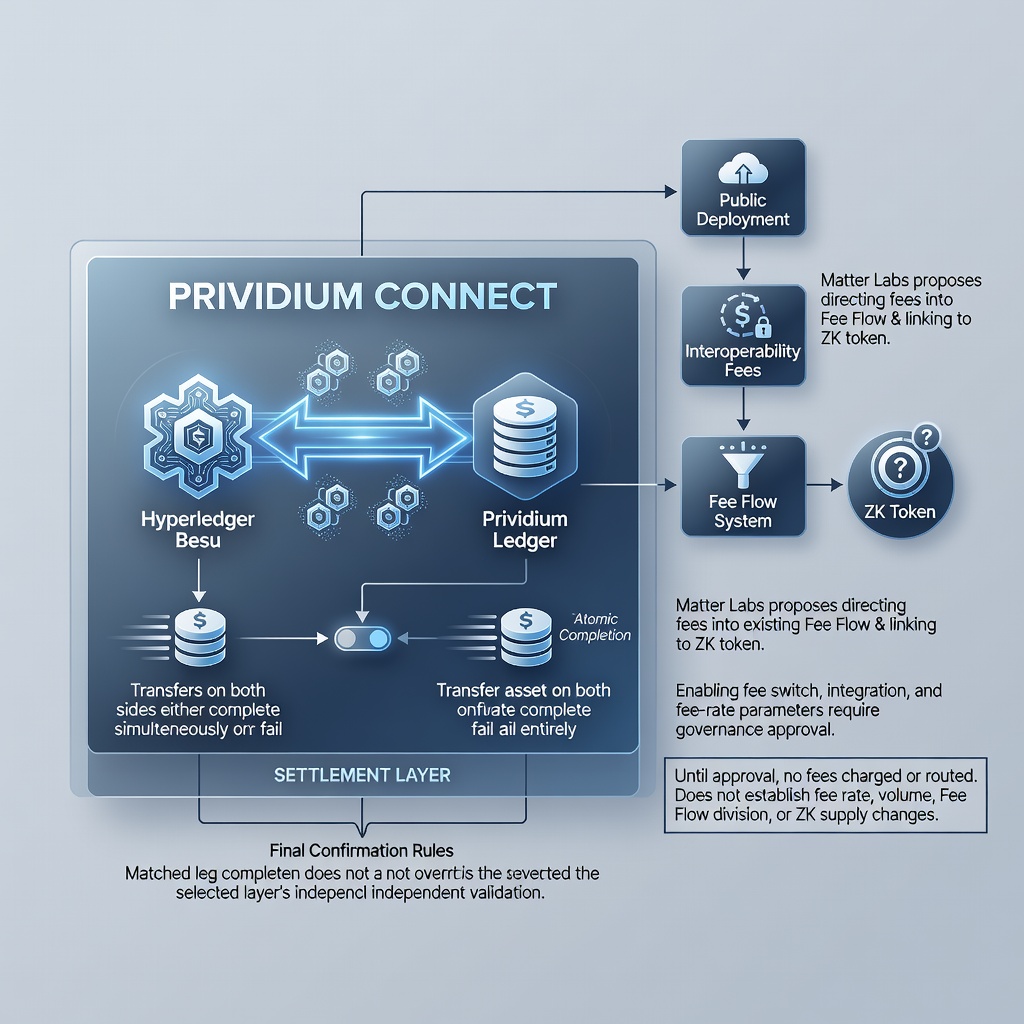
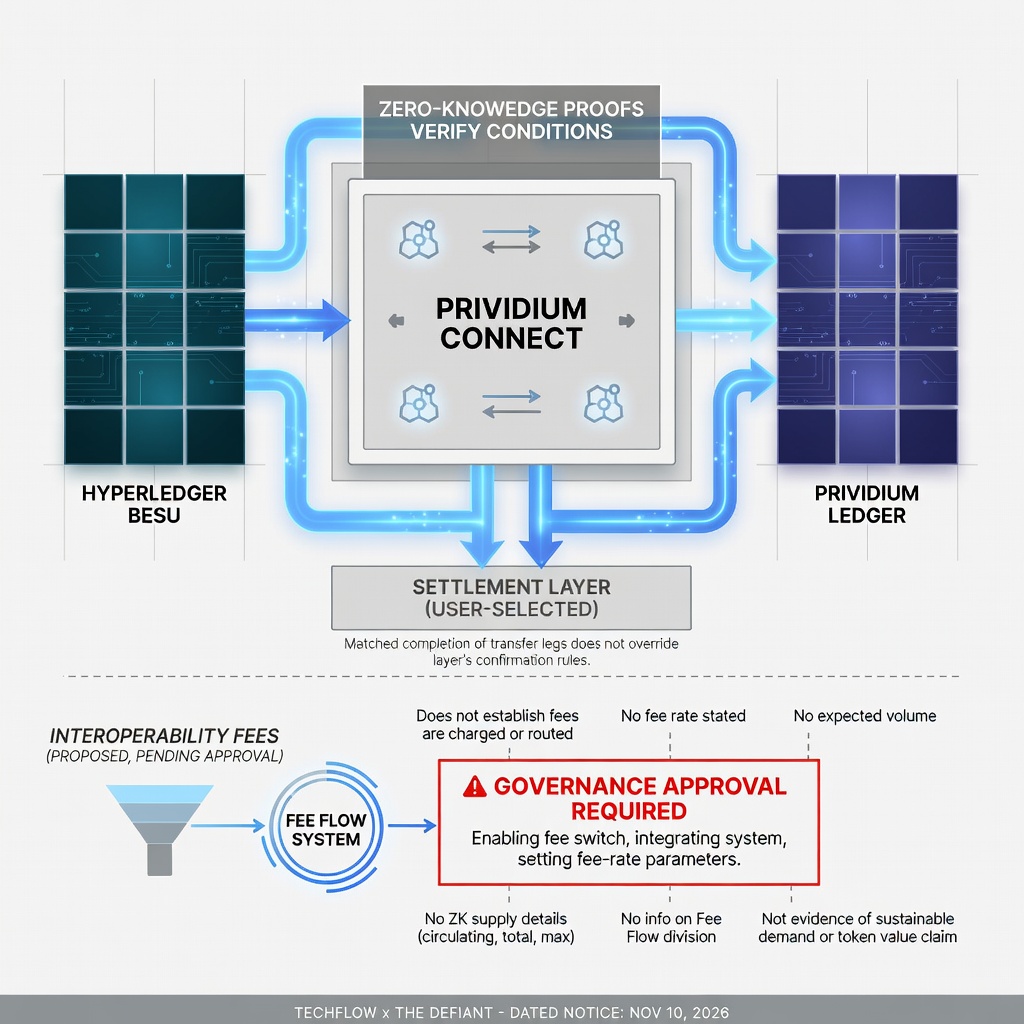
Matter Labs, identified as the developer of ZKsync, introduced Prividium Connect, an institutional cross-chain tool for privately exchanging assets between blockchains. Initial support is limited to Hyperledger Besu and Prividium Ledger.
The tool uses zero-knowledge proofs to verify transaction conditions. Asset transfers on both sides of an exchange either complete together or do not complete at all. Final confirmation still depends on the settlement layer the parties select, so matched completion of the two legs does not replace that layer’s own confirmation rules.
The fee proposal, and what it does not yet do
Matter Labs also proposed that interoperability fees from a public deployment of the tool’s specification be directed into the existing Fee Flow system and linked to the ZK token. Enabling the fee switch, integrating the system, and setting the fee-rate parameters still require governance approval.
Until that approval, the notice does not establish that interoperability fees are being charged or routed to any recipient. It does not state a fee rate, expected volume, how Fee Flow divides receipts, or any circulating, total, or maximum ZK supply. It also does not say who would receive tokens, or when any supply would become available, because of this tool.
A governance-approved link between paid use of the specification and the existing Fee Flow would connect interoperability activity to ZK only under rules the notice does not specify. That proposed link is not evidence of sustainable demand for private institutional transfers, and it is not a claim about token value.
Original article: TechFlow, November 10, 2026.