Originally reported by PANews on November 12, 2026, at 15:00 UTC+8. The migration and product launches below were scheduled or planned as of that report, not confirmed as completed.
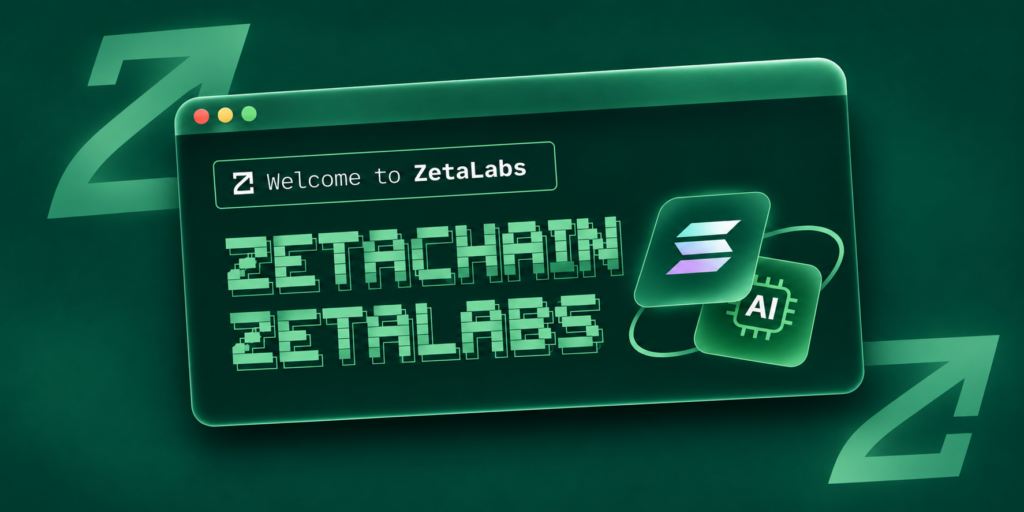
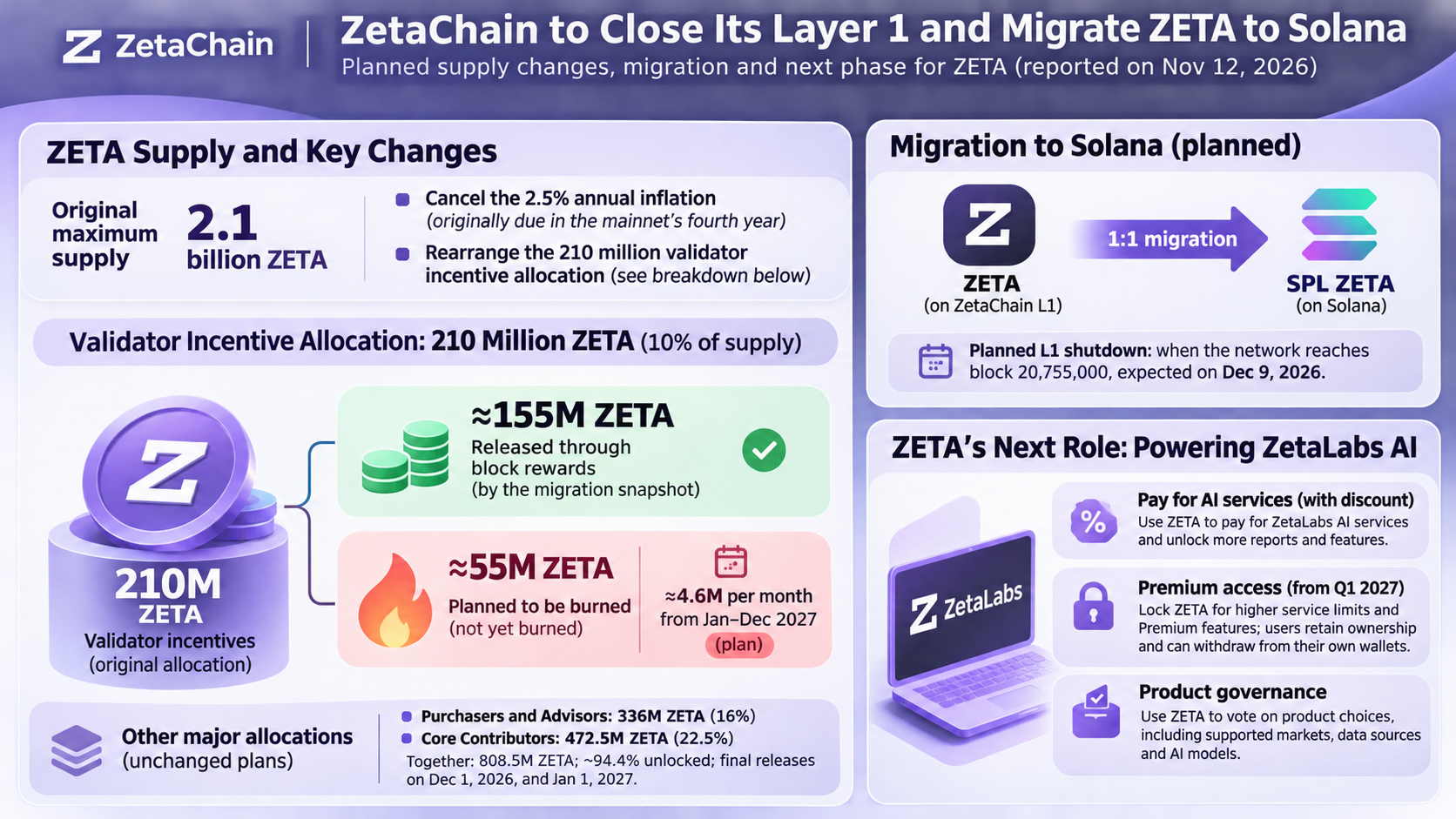
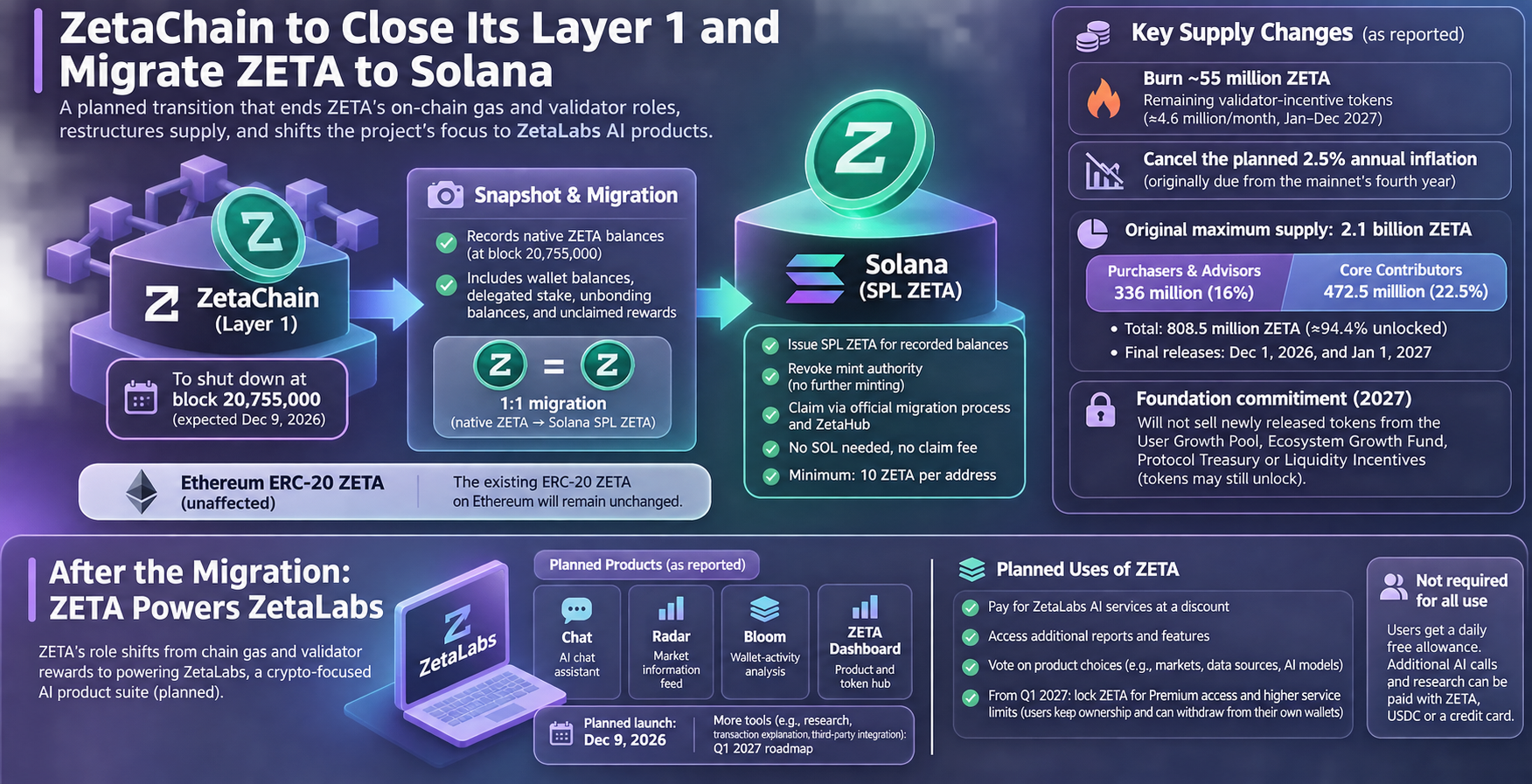
ZetaChain plans to shut down its independent Layer 1 when the network reaches block 20,755,000, expected on December 9, 2026. Native ZETA balances recorded at that block are to migrate to a Solana SPL token at a 1:1 ratio. The change also ends ZETA’s role in paying the chain’s gas fees and rewarding its validators, leaving the project to build token uses around its planned ZetaLabs AI products.
What changes in ZETA’s supply schedule
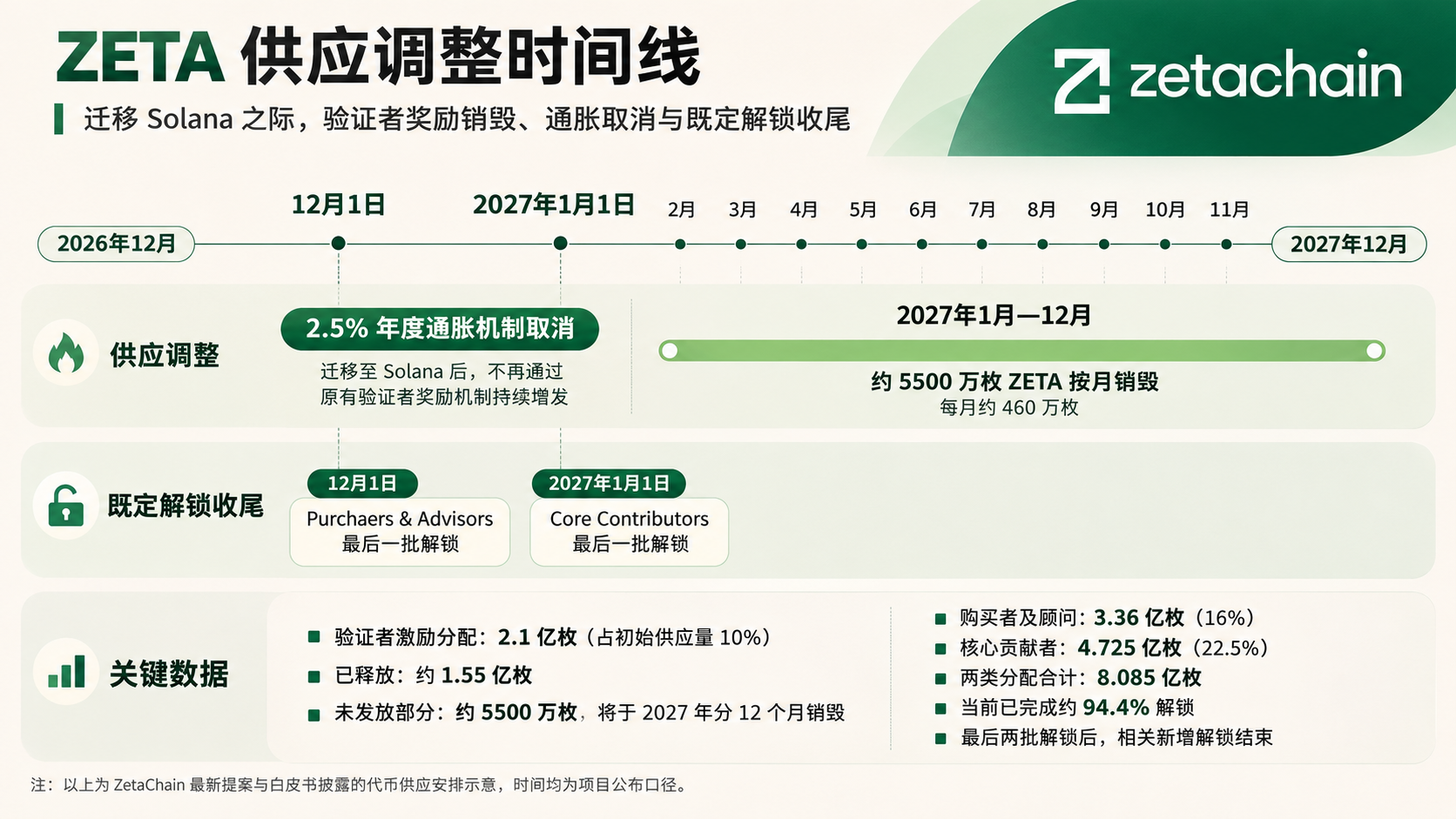
Of ZETA’s original 2.1 billion maximum supply, 210 million tokens were allocated to validator incentives. According to the reported plan, approximately 155 million will have been released through block rewards by the migration snapshot. ZetaChain plans to burn the remaining approximately 55 million on the original release schedule, at roughly 4.6 million per month from January through December 2027, rather than distribute them as validator rewards. It also plans to cancel the 2.5% annual inflation originally due to begin in the mainnet’s fourth year.
Existing allocations follow different rules:
- Purchasers and Advisors: 336 million ZETA, or 16% of the original supply.
- Core Contributors: 472.5 million ZETA, or 22.5%.
Together, those allocations total 808.5 million ZETA. The report says approximately 94.4% had unlocked; their final scheduled releases were set for December 1, 2026, and January 1, 2027, respectively. Those unlocks are distinct from the validator-token burn: the allocated tokens are still scheduled to become available. Separately, the ZetaChain Foundation committed not to sell newly released tokens from the User Growth Pool, Ecosystem Growth Fund, Protocol Treasury or Liquidity Incentives during 2027. That commitment does not mean those tokens will not unlock.
How the migration is intended to work
After the snapshot, ZetaChain plans to issue SPL ZETA corresponding to recorded native balances, then revoke the new token’s mint authority. Holders of native ZETA would claim through the official migration process and ZetaHub by signing a message specifying a Solana receiving address. The reported process requires neither an advance SOL balance nor a claim fee, but sets a 10 ZETA minimum per address.
The snapshot is intended to include wallet balances, delegated stake, unbonding balances and unclaimed rewards; staking rewards stop accruing at the snapshot block. Exchanges are responsible for converting ZETA held on their platforms, subject to each exchange’s arrangements. The existing ERC-20 ZETA on Ethereum is unaffected.
Holders of wrapped ZETA or liquidity-pool positions were advised to unwrap or exit and return assets to a personal wallet before the snapshot, because contract-held assets cannot be claimed through an ordinary wallet signature. Other assets held as ZRC-20 tokens on ZetaChain are slated to become claimable back to their original chains through ZetaHub from December 9, across nine origin networks, with a $5 minimum claim per asset. At the time of reporting, ZetaChain said Hacken was independently auditing the Solana distribution program and claim service; the report had not yet been published.
What ZETA would do after the Layer 1 closes
On Solana, SOL pays network transaction fees, so ZETA’s former gas and validator-incentive functions do not carry over. The revised white paper instead describes ZETA as a way to pay for ZetaLabs AI services at a discount, access additional reports and features, and vote on product choices such as supported markets, data sources and AI models. From the first quarter of 2027, the project also plans to let users lock ZETA for Premium access and higher service limits; it says users retain ownership of locked tokens and can withdraw them from their own wallets.
ZETA is not required for all product use under the reported plan. Users are to receive a daily free allowance, while additional AI calls and research services can be paid for with ZETA, USDC or a credit card. The token’s proposed utility therefore depends on whether users value its discounts and access rights; the supply changes alone do not establish demand.
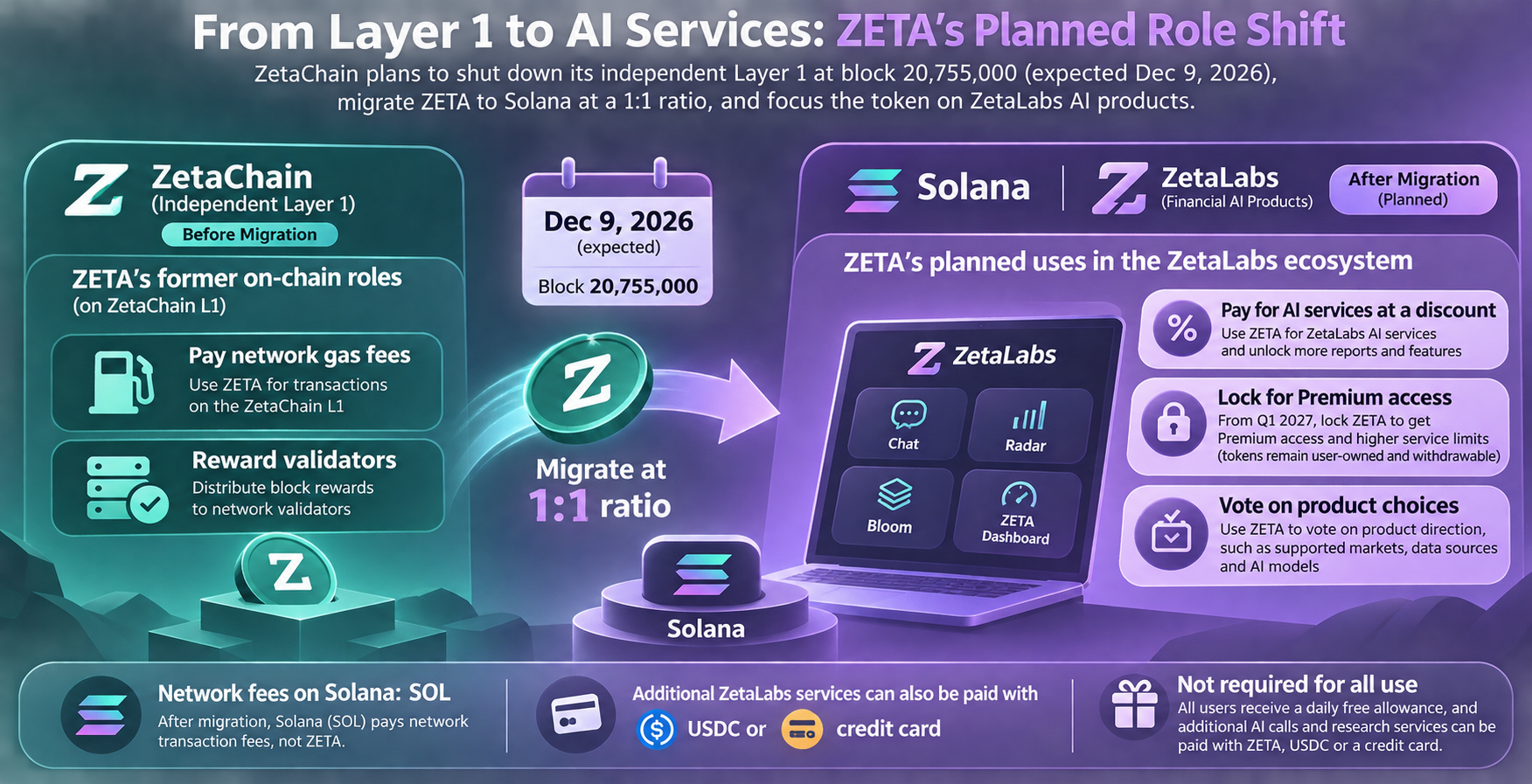
ZetaLabs, built on the earlier Anuma Chat product, was scheduled to launch Chat, a market-information feed called Radar, a wallet-activity feature called Bloom, and a ZETA Dashboard on December 9. Further research, transaction-explanation and third-party integration tools were on its first-quarter 2027 roadmap. These were product plans as reported in November 2026, not evidence that the features subsequently launched.
Source: panewslab.com (originally published 2026-11-12 15:00 UTC+8)