Originally reported November 12, 2026, at 11:48 a.m. UTC+8.
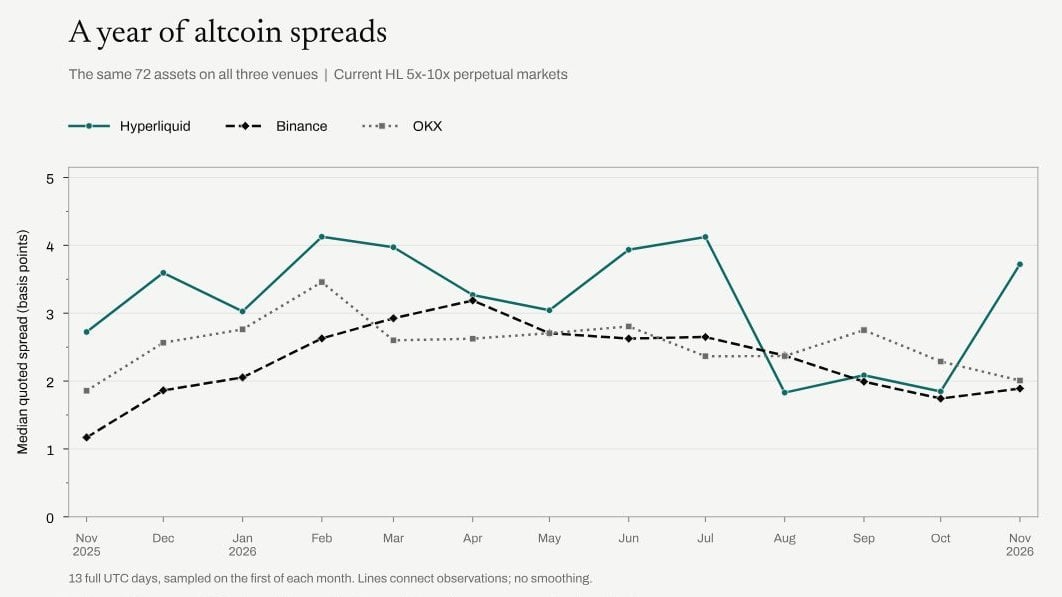
An analysis of Hyperliquid order books found that liquidity close to the market price had weakened across the long-tail perpetual contracts it studied. Its central question is whether the platform’s fee and congestion rules make it harder for smaller market makers to keep quoting. The data show changes in depth and participation, but do not establish a single cause.
How much did near-market depth change?
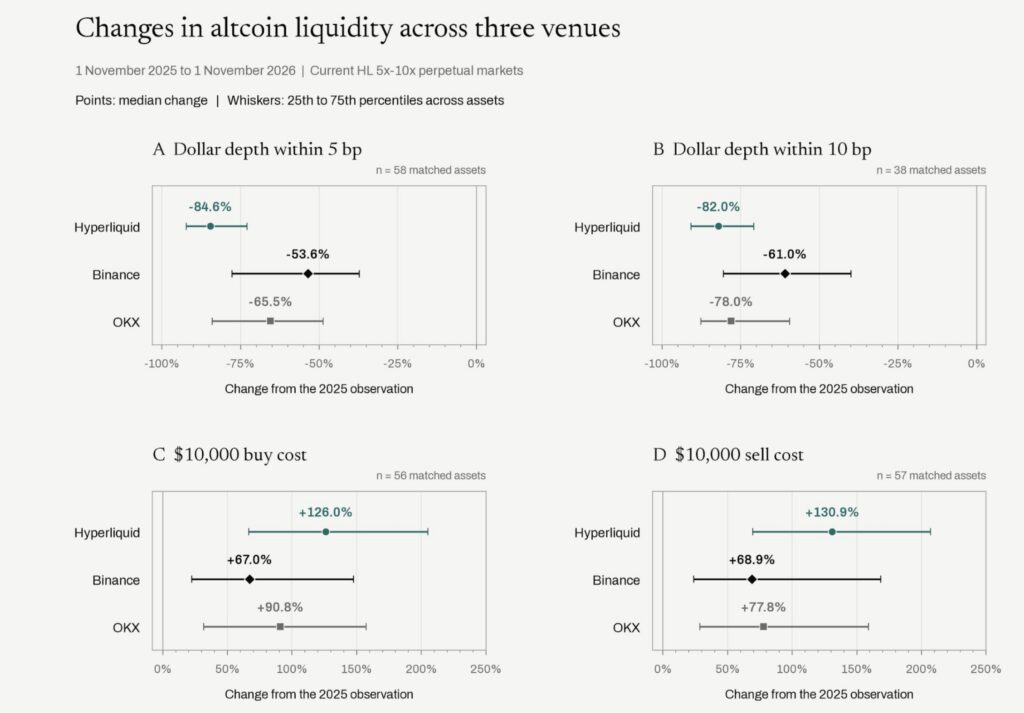
The author, matteo, drew on more than 18 months of order-book data from 0d Labs’ trading operations. For a November 1, 2025–November 1, 2026 comparison, the study selected 86 tokens listed on both Hyperliquid and Binance with maximum leverage no higher than 10×. Among 38 comparable pairs, the median decline in dollar-denominated depth within 10 basis points was 82% on Hyperliquid, versus 61% on Binance and 78% on OKX.
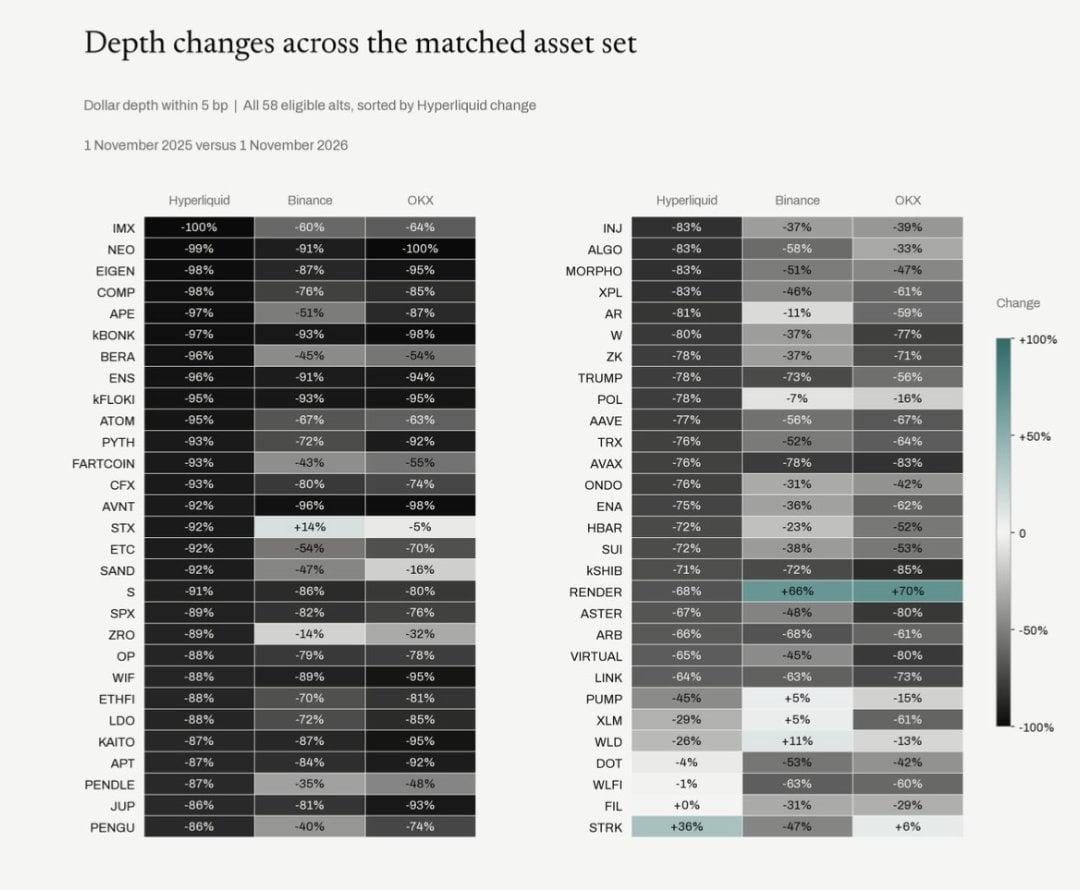
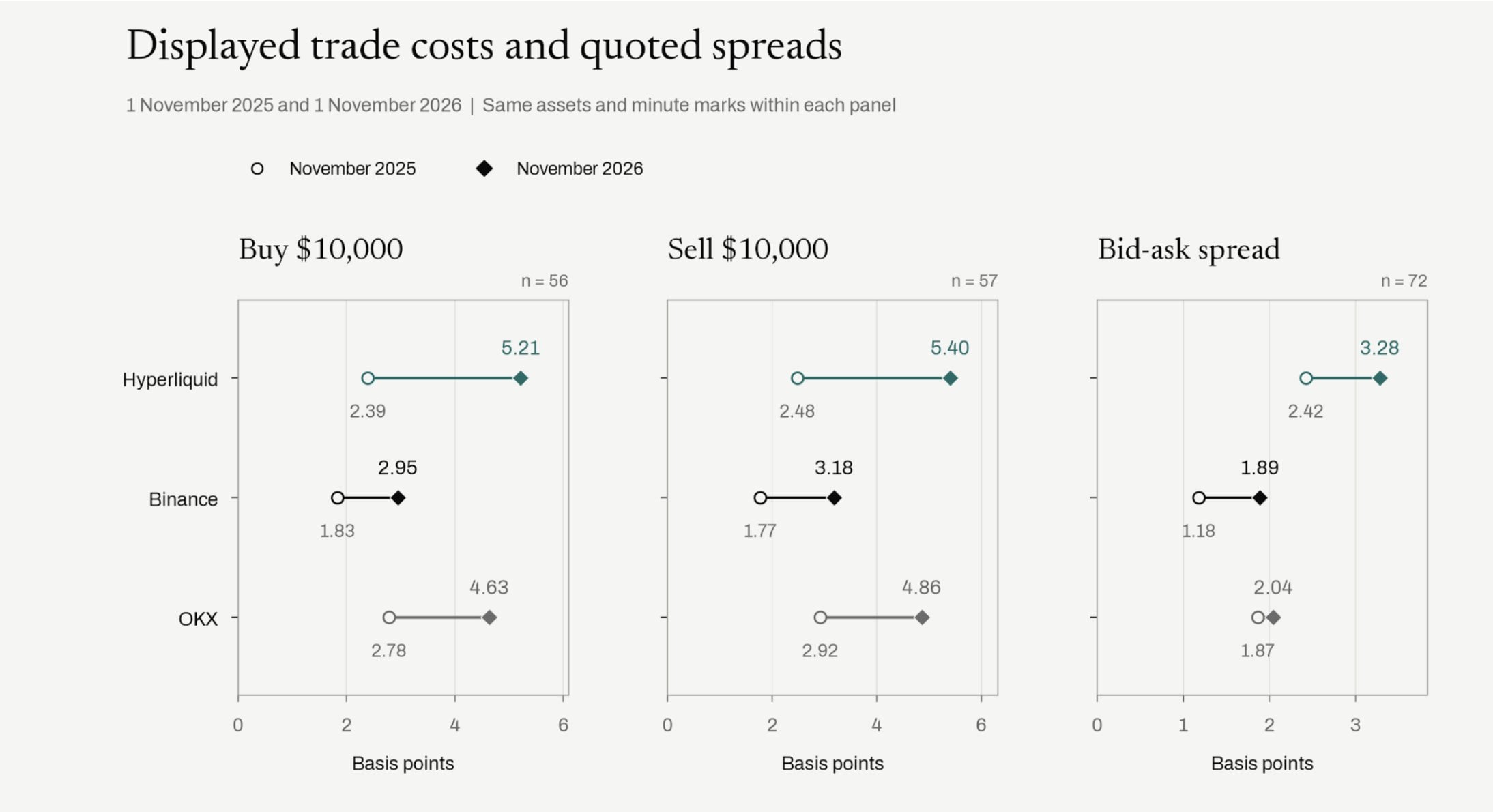
The study also calculated Hyperliquid-to-Binance depth ratios separately for each token. At five basis points, the median ratio fell 57.5%. In the later sample period, a $10,000 buy order would have faced median order-book slippage of 5.21 basis points on Hyperliquid, compared with 2.95 on Binance, before fees. These are historical sample results, not a quote for a future trade.
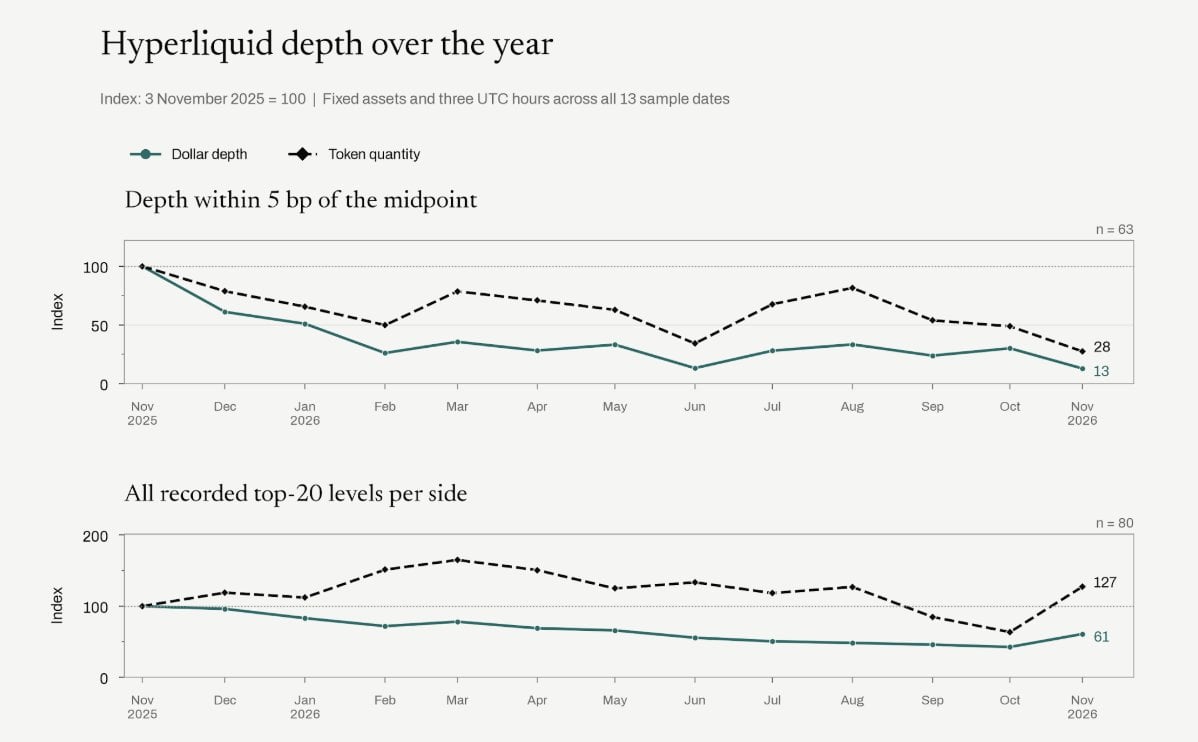
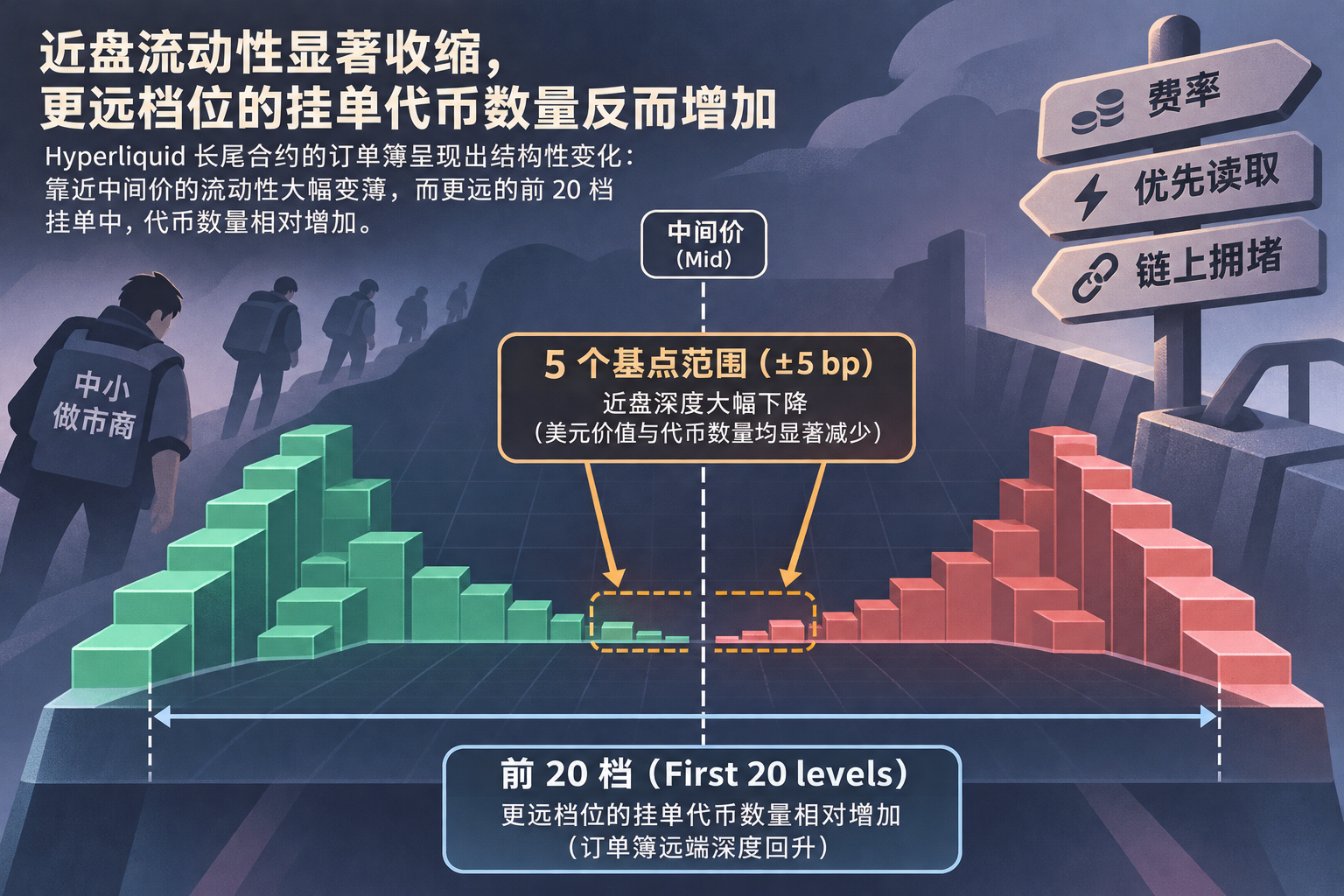
Falling token prices can reduce depth measured in dollars without reducing the number of tokens quoted. In a separate, more strictly selected Hyperliquid sample, the author checked both measures. With November 2025 set to 100, median depth within five basis points fell to 13 in dollar value and 28 in token quantity one year later. Across the first 20 order-book levels, the corresponding readings were 61 and 127. The five-basis-point and 20-level groups covered 63 and 80 markets respectively, so they should not be treated as the same sample as the exchange comparison. The distinction matters: more tokens could be posted farther from the price even as immediately accessible quotes thinned.
What changed for liquidity providers?
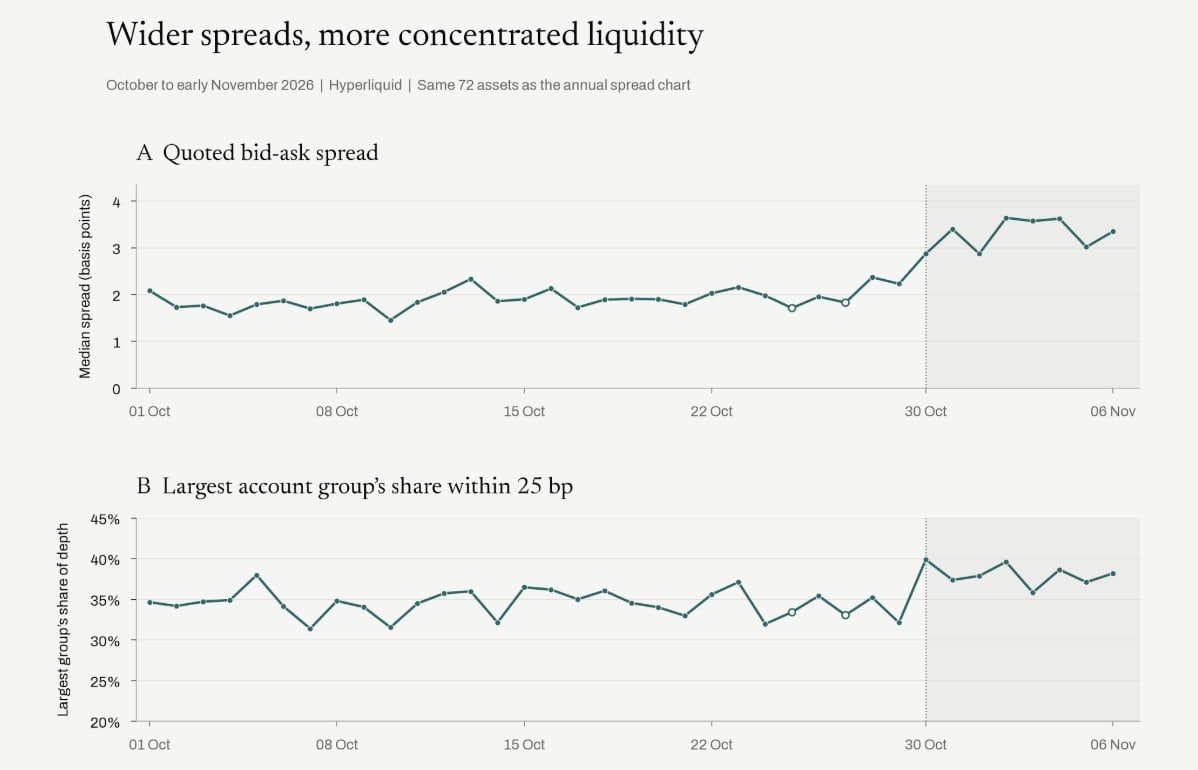
Across 72 markets, the median number of account groups posting at least $1,000 of valid quotes on both sides within 25 basis points fell from 7.64 during October 8–14 to 6.39 during October 31–November 6. Over those windows, the largest account group’s median share of quoted depth within that range rose from 34.5% to 38.6%, while the median quoted spread widened from 2.13 to 3.55 basis points. The author grouped main accounts with associated subaccounts, but could not identify every institution behind them.
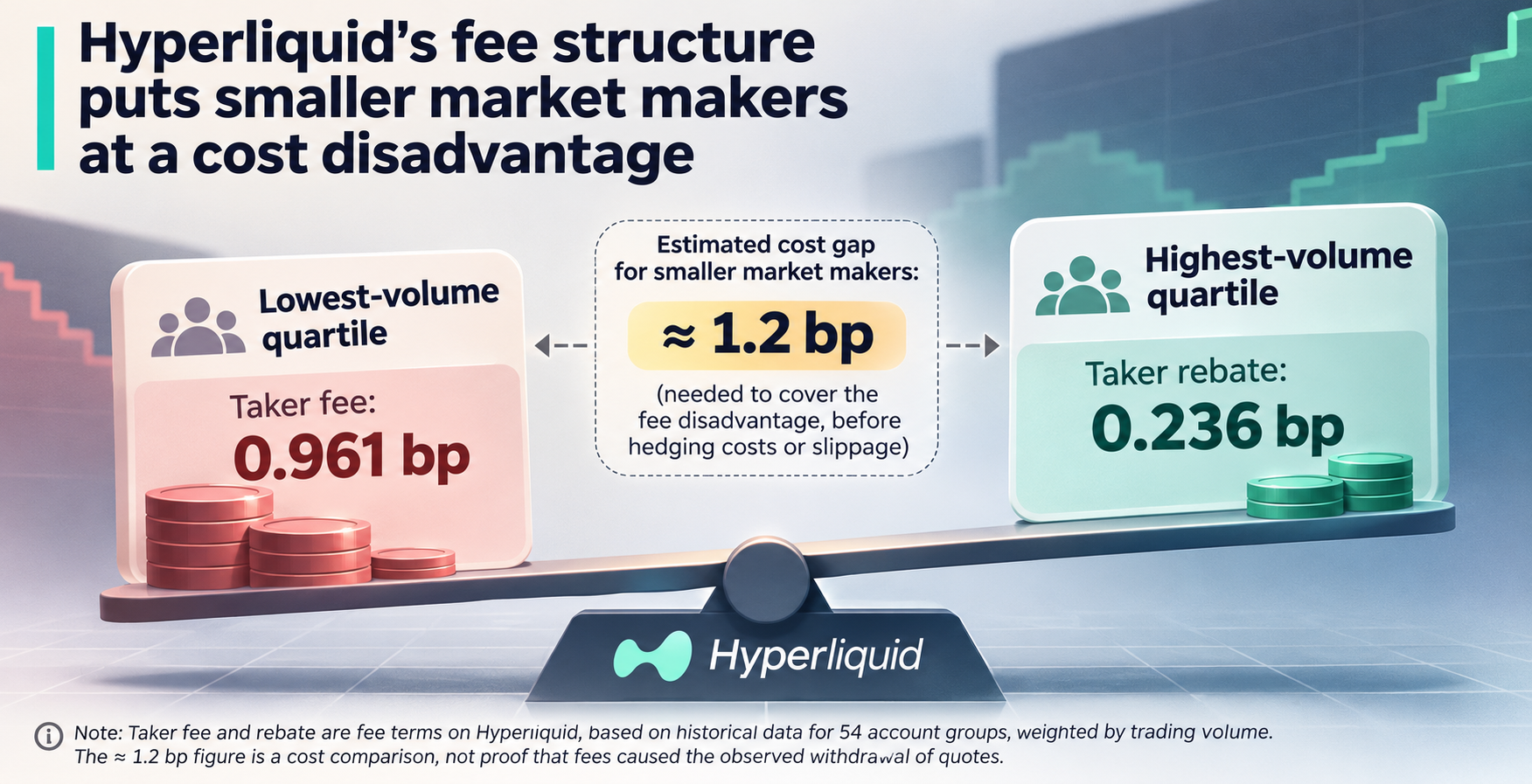
The author also examined historical taker fees for 54 account groups, weighted by trading volume. The lowest-volume quartile paid 0.961 basis points; the highest-volume quartile received a 0.236-basis-point rebate. The article estimates that smaller market makers would need to earn about 1.2 basis points to cover the fee disadvantage before hedging costs or slippage. That is a cost comparison, not proof that fees caused the observed withdrawal of quotes.
Traders known to the author reported mounting competitive pressure, including complaints about priority-read fees, fee rules and L1 congestion. Those are participant accounts, not independently established explanations. The study notes that Binance’s October 29 security incident fell between the two observation windows; it therefore cautions against attributing the subsequent changes entirely to priority fees or congestion. It also observed a large liquidity provider removing many quotes around November 3, another possible contributor requiring further monitoring.
Why HIP-4 enters the discussion
The article says Hyperliquid’s congestion quota is based on an address’s weighted market-making share on the preceding UTC day, with a cap of twice that share of block space during congestion. Traders involved in HIP-4 told the author they struggled to submit quotes when the network was busy—a potential hurdle for participants that need executions to build quota in the first place.
In a November 10 sample of 256 HIP-4 contracts, four professional wallets supplied 47% of displayed depth within 25 basis points. The author argues that keeping such liquidity providers able to quote matters for long-tail prediction markets. The evidence supports concern about access to near-market quoting; it does not yet show which mechanism is responsible for the broader decline.
Source: panewslab.com (originally published 2026-11-12 11:48 UTC+8)