In June 2026, 27,689 wallet addresses committed $557 million in USDC to SPCXx, a subscription organized by Binance Wallet and xStocks around SpaceX’s Nasdaq listing. The third-party supplier could not secure enough underlying shares. Binance canceled the offering, returned the USDC and distributed $1 million worth of SPCXB, a separate token issued by its Abu Dhabi entity, to users.
The refund exposed a distinction at the heart of Binance’s securities business: collecting subscriptions onchain does not give buyers an allocation from an IPO underwriter. In its November 27, 2026 analysis, Principia Research argued that Binance’s licenses and hiring in Abu Dhabi put it in a position to work directly with issuers. The securities already trading there, however, were certificates representing existing instruments, not shares sold by companies raising capital onchain.
What a bStock holder owns
On June 11, 2026, the first bStocks issued by BTech Holdings Limited joined the Abu Dhabi Global Market (ADGM) Official List and began trading on Nest Exchange. According to Principia, these were the first tokenized securities on a public blockchain admitted to the list. The tokens run on BNB Smart Chain, but the underlying US shares remain in the US Depository Trust & Clearing Corporation system.
Under paragraph 92 of Schedule 1 to ADGM’s Financial Services and Markets Regulations, a bStock is a certificate representing a specified financial instrument. The prospectus makes one-to-one segregated custody, regular reconciliation and proof of reserves enforceable obligations. Regulatory approval is not a guarantee from ADGM that the issuer holds the assets. A contract multiplier lets BTech Services account for stock splits, reverse splits and reinvested net cash dividends without replacing holders’ tokens.
Bending Spoons illustrates how quickly a certificate could follow a conventional IPO. The company listed on Nasdaq on July 1 at $29 a share under the ticker BSP. BTech then secured approval for a separate BSPB prospectus, and Binance accepted the token as collateral for cross and portfolio margin. That gave users a way to trade or pledge exposure to an already listed stock; it did not give them shares at the IPO price.
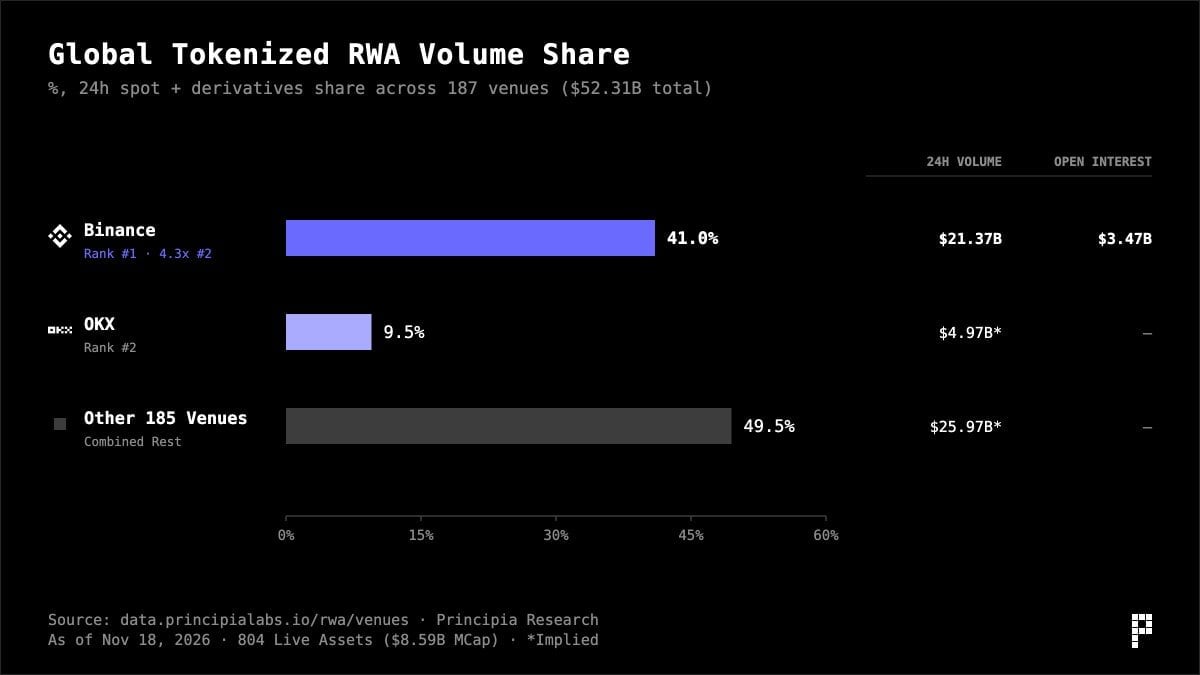
Later approvals covered instruments ranging from GameStop to leveraged ETFs. By early September, Principia reported, cumulative bStocks trading volume had exceeded $30 billion, with more than half recorded outside US stock market hours. That figure measures trading activity, not the value of reserves or capital raised by the underlying companies.
The roles Binance has assembled in Abu Dhabi
In March 2025, Abu Dhabi investment firm MGX paid $2 billion in stablecoins for a minority stake in Binance, becoming its first outside institutional shareholder. Binance subsequently moved the global operating structure of Binance.com from the Cayman Islands under ADGM supervision. Approval came in December 2025 and took effect on January 5, 2026. Binance co-CEO Richard Teng had previously led ADGM’s Financial Services Regulatory Authority (FSRA) from 2015 to 2021.
Under Irish parent Binance Holdings (IE) Limited, the group divides its securities operations among distinct entities:
- Nest Exchange Limited operates a recognized investment exchange and a multilateral trading facility.
- Nest Clearing and Custody Limited serves as a recognized clearing house and central securities depository.
- Nest Trading Limited may deal as principal or agent and arrange investment transactions. It cannot hold or control conventional client money, and its money-services permission is limited to recognized fiat-referenced tokens such as USDC.
- BTech Holdings Limited issues securities and files prospectuses. BTech Services Limited handles minting and disclosures.
Principia argued that these permissions could support stablecoin subscriptions and same-day delivery against payment, with securities and payment changing hands together. The more direct evidence of an interest in primary issuance came from Binance’s UAE job postings: its equity capital markets roles called for staff to approach prospective issuers and investment banks, conduct due diligence, model pricing and submit deals to an internal investment committee. Neither the postings nor the licenses establish that Binance has underwritten a native onchain IPO.
Public float is not the same as unlocked supply
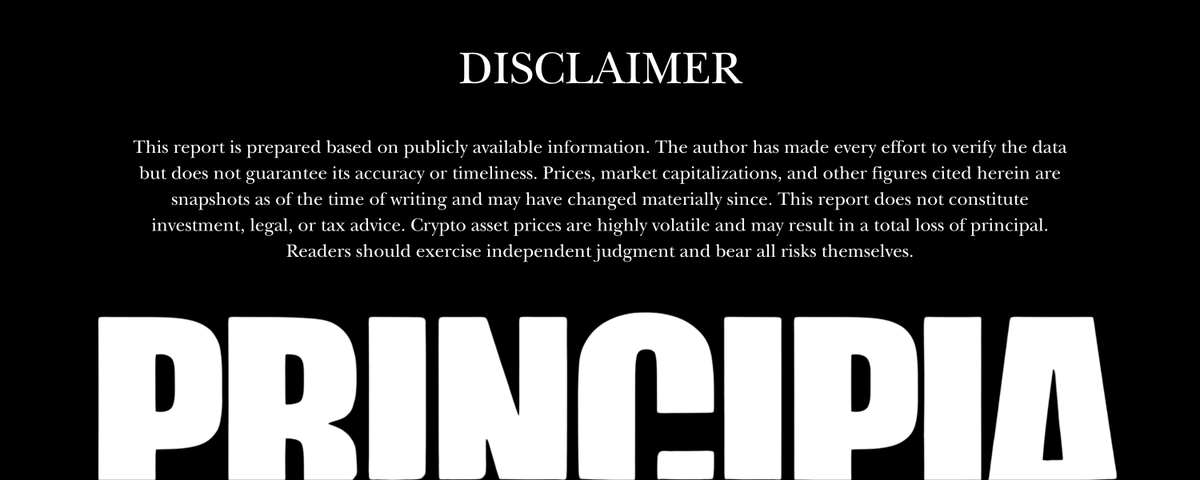
For a prospective issuer, one important difference from a crypto token launch is who must hold the initial float. According to Principia’s reading of ADGM Market Rule 2.3.10, issuers valued below $500 million need at least 20% public ownership; those valued from $500 million to $1 billion need at least 15%. Directors’ and related parties’ holdings, employee share-plan trusts, stakes of 5% or more and shares lent rather than sold outright to market makers do not count toward public float.
At a $100 million valuation, the 20% minimum corresponds to $20 million in public hands. At an $800 million valuation, the 15% minimum corresponds to $120 million. Neither figure necessarily represents new money for the issuer: unlocked shares already owned by independent small shareholders can also qualify. Conversely, lending stock to a market maker may make shares available to trade without satisfying the ownership requirement.
Principia’s comparison of 650 traditional non-SPAC IPOs, each raising at least $50 million, helps explain its focus on distribution. Measured from the first-day opening price to day 180, the median decline was 49.4% among 124 offerings with less than 10% initial float, 34.0% among 119 offerings with 10%–15% float, and 23.8% among 132 offerings with 15%–25% float. The sample shows an association; it does not establish that a larger float prevents losses or predict how an ADGM listing would trade.
Principia identified midsize companies as plausible candidates for direct issuance. It cited a $20,000 ADGM prospectus review fee and a $3,000 Official List admission fee, separate from legal, audit and advisory expenses. Those terms help explain the proposed route’s appeal, but the June refund points to the remaining test: whether a company will use the venue to sell new equity to investors, rather than have a third party issue certificates after its shares list elsewhere. A listing of Binance’s own Abu Dhabi business likewise remains speculation. Teng said in 2025 and 2026 that Binance had ample cash flow and no near-term plan to raise funds through an IPO.