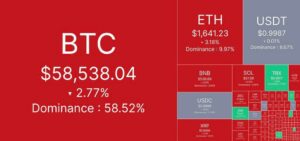
CleanSpark may sell slightly more Bitcoin than it mines in a quarter when it needs cash for expansion, President and Chief Financial Officer Gary Vecchiarelli told analysts on November 25, 2026, according to Crypto.news. The miner already sells nearly all its new production to cover operating costs. What management is considering is whether to draw on reserves as well, rather than issue shares or take on more debt. Vecchiarelli described that as an option dependent on market conditions, not a fixed sales target.
Bitcoin outflows already exceeded production
CleanSpark mined 1,708 BTC in the quarter ended September 30 and sold or delivered 2,102 BTC. The difference of 394 BTC was about 23% of quarterly output. Cointelegraph reported that this was the first quarter since at least 2024 that CleanSpark ended with less Bitcoin than it held at the start.
Not all of those outflows were spot sales. CleanSpark sold or delivered 579 BTC in July, 821 BTC in August and 702 BTC in September. Of the September total, just 2 BTC were sold on the spot market; the other 700 BTC were delivered when call options were exercised.
CleanSpark ended September with 13,530 BTC, including 3,475 BTC pledged as collateral or recorded as derivatives receivables. According to Cointelegraph, the company said it sold more Bitcoin after September to fund expected acquisitions but did not disclose how much. CleanSpark has switched from monthly mining updates to quarterly operating reports.
Bitcoin revaluation drove much of the earnings swing
On November 24, CleanSpark reported a $987.1 million net loss for the fiscal year ended September 30, compared with net income of $364.5 million a year earlier. Management attributed about two-thirds of the change in annual earnings to noncash adjustments in the value of its Bitcoin holdings, rather than to cash spent on operations.
Annual revenue fell 25% to $576.5 million, and adjusted EBITDA was negative $304.2 million. The fourth quarter was profitable, with net income of $9.8 million despite a 46% year-over-year revenue decline to $120.9 million.
PANews reported that CleanSpark shares fell 7.5% on November 24 before the results were released, bringing their year-to-date decline to 55%. Cointelegraph put the closing price at $5.12. At 07:38 UTC on November 25, CoinPaprika showed Bitcoin at $59,250, down 1.7% over 24 hours and 8.5% over seven days. Estimates of the value of CleanSpark’s September holdings differed: PANews put them at about $812 million and Cointelegraph at roughly $806 million.
Mining fleet shrinks as CleanSpark funds Georgia data center
CleanSpark mined 7,253 BTC in fiscal 2026, down 8%, while its average hashrate fell 21% to 36 exahashes per second. It removed about 25,000 machines in the September quarter, leaving roughly 200,000 in operation. The remaining fleet used 14.8 joules per terahash, down from 15.8 in the preceding quarter, according to Cointelegraph. Crypto.news reported a year-earlier figure of 16.7. Vecchiarelli said mining would continue as long as it remained profitable and that hashrate would likely fluctuate.
CleanSpark raised $2.276 billion through senior secured notes carrying 7.875% annual interest and maturing in 2031, fully funding its Sandersville, Georgia, AI data center project. The company expects about $6.6 billion in contracted revenue over a 20-year lease with an investment-grade tenant. Its first AI data hall is targeted for November 2027. CleanSpark expects to begin disconnecting miners there in late 2027 and will then decide whether to move or sell them, Cointelegraph reported.
In Texas, CleanSpark secured conditional baseload designations totaling 585 megawatts across its Sealy and Brazoria properties. At a separate site in Washington, Georgia, it bought 500 adjacent acres for a potential AI campus and submitted a transmission study to increase available capacity from 86 megawatts to as much as 500 megawatts. That expansion remains prospective.