
As reported on November 17, 2026, decentralized spot exchange Metric was pairing a moving-liquidity design with a points program for traders and liquidity providers. The two mechanisms are related but distinct: keeping liquidity near a reference price may help a pool remain available for trading, while points reward specified activity. Neither mechanism establishes that providing liquidity will be profitable.
How Metric’s pools move
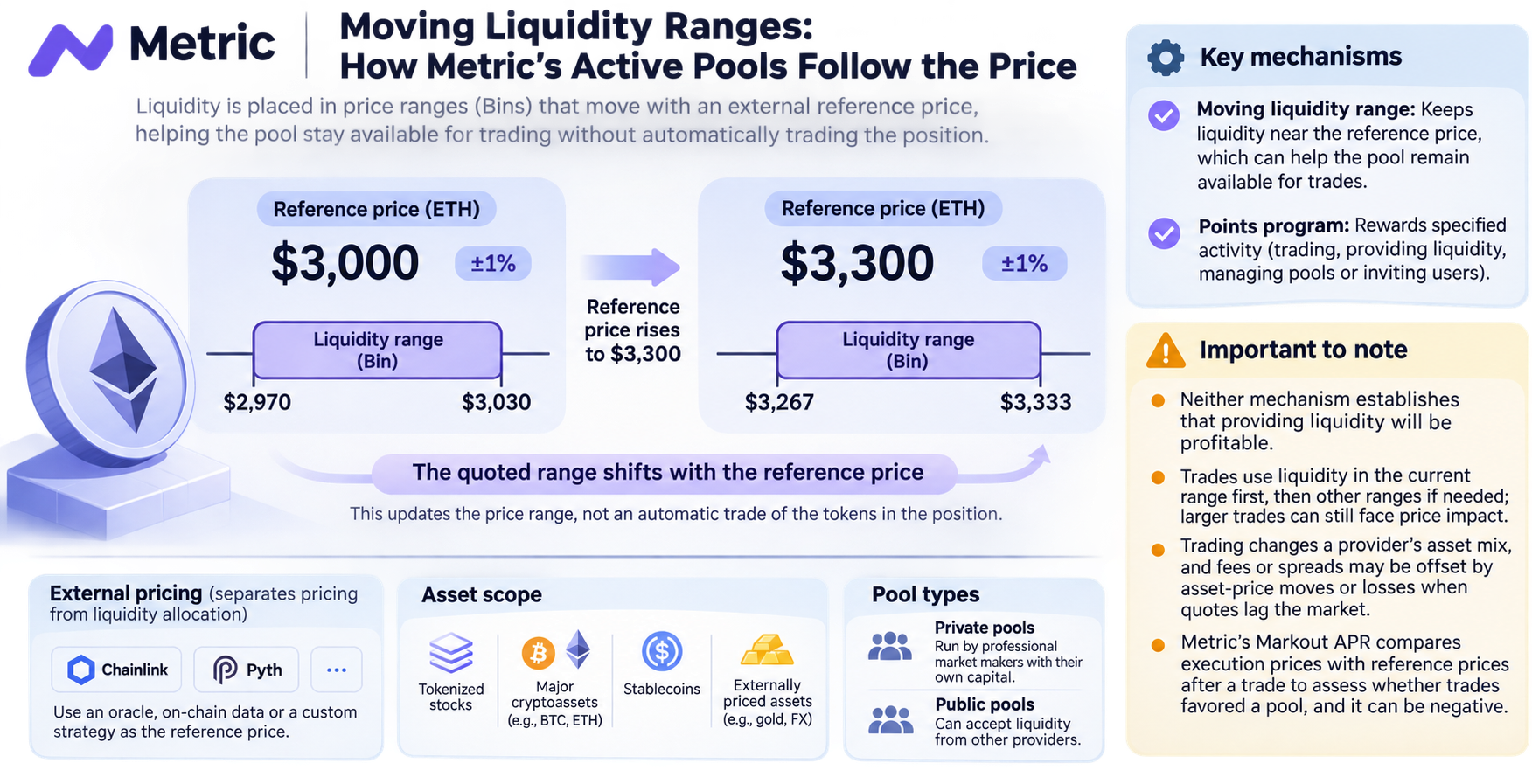
Metric’s Active Pools separate pricing from liquidity allocation. A pool can use an external price provider—including an oracle, on-chain data or a custom strategy—to update its quotes. Its public code included integrations for Chainlink and Pyth data. Metric targets trading in tokenized stocks, major cryptoassets and stablecoins; externally priced assets such as gold and foreign exchange are also within the design’s scope. Professional market makers can operate private pools with their own capital, while public pools can accept liquidity from other providers.
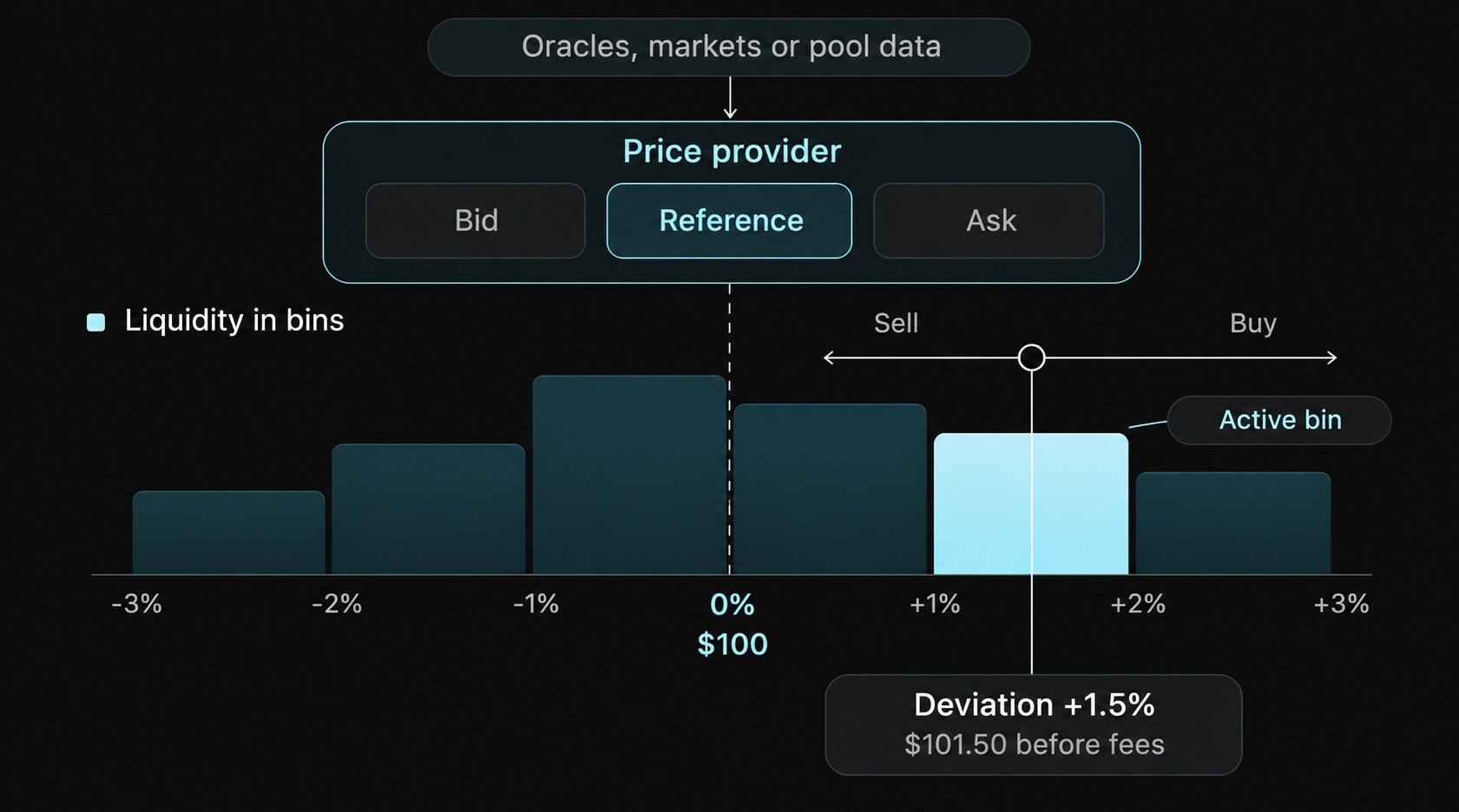
Liquidity providers place assets in price ranges called Bins, which move with the reference price. In the example given in the report, a range set 1% above and below a $3,000 ETH reference price spans $2,970–$3,030. If the reference rises to $3,300, the range moves to $3,267–$3,333 without the provider withdrawing and redeploying liquidity. Moving the quoted range does not automatically trade the tokens in the position.
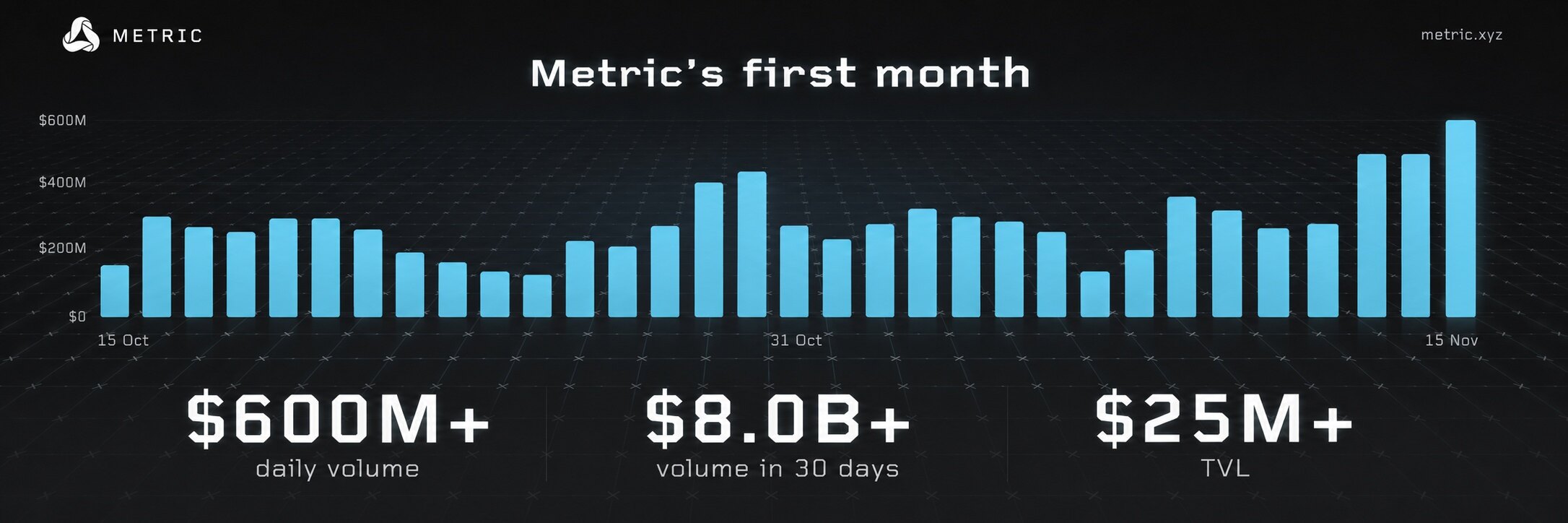
That distinction matters for both volume and risk. A range that follows the reference price can remain available for trades where a fixed range might become inactive. Metric said on November 15 that its first month of operation had exceeded $8 billion in trading volume, with daily volume above $600 million, against total value locked of just over $25 million. Repeated turnover of the same liquidity helps explain how cumulative volume could exceed TVL, but those figures alone do not establish provider returns.
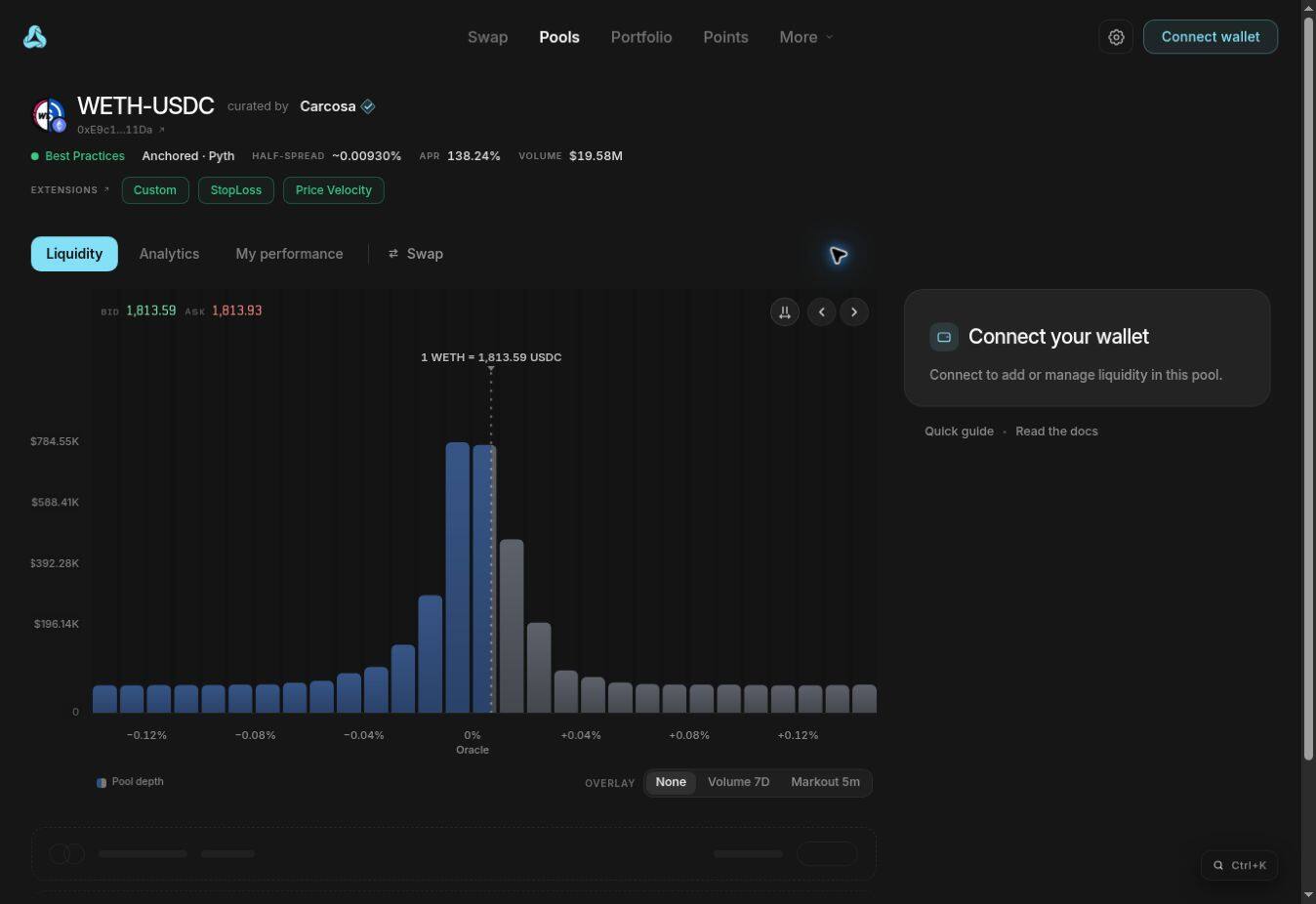
Trades first use liquidity in the current range, then move to other ranges if necessary; larger trades can therefore still face price impact. Trading also changes a provider’s asset mix. Fees or trading spreads may be offset by asset-price moves or losses when quotes lag the market. Metric’s Markout APR compares execution prices with reference prices after a trade to assess whether trades favored a pool; the measure can be negative.
What the points program rewards
Metric announced its points program on November 13, 2026, saying it would distribute 1 million points per week among participants who trade, provide liquidity, manage pools or invite users. Points had been counted since October 15, including interactions from the preceding four weeks. According to the report, each weekly period ends Wednesday at 8 p.m. Beijing time, and points are distributed automatically on Thursday.
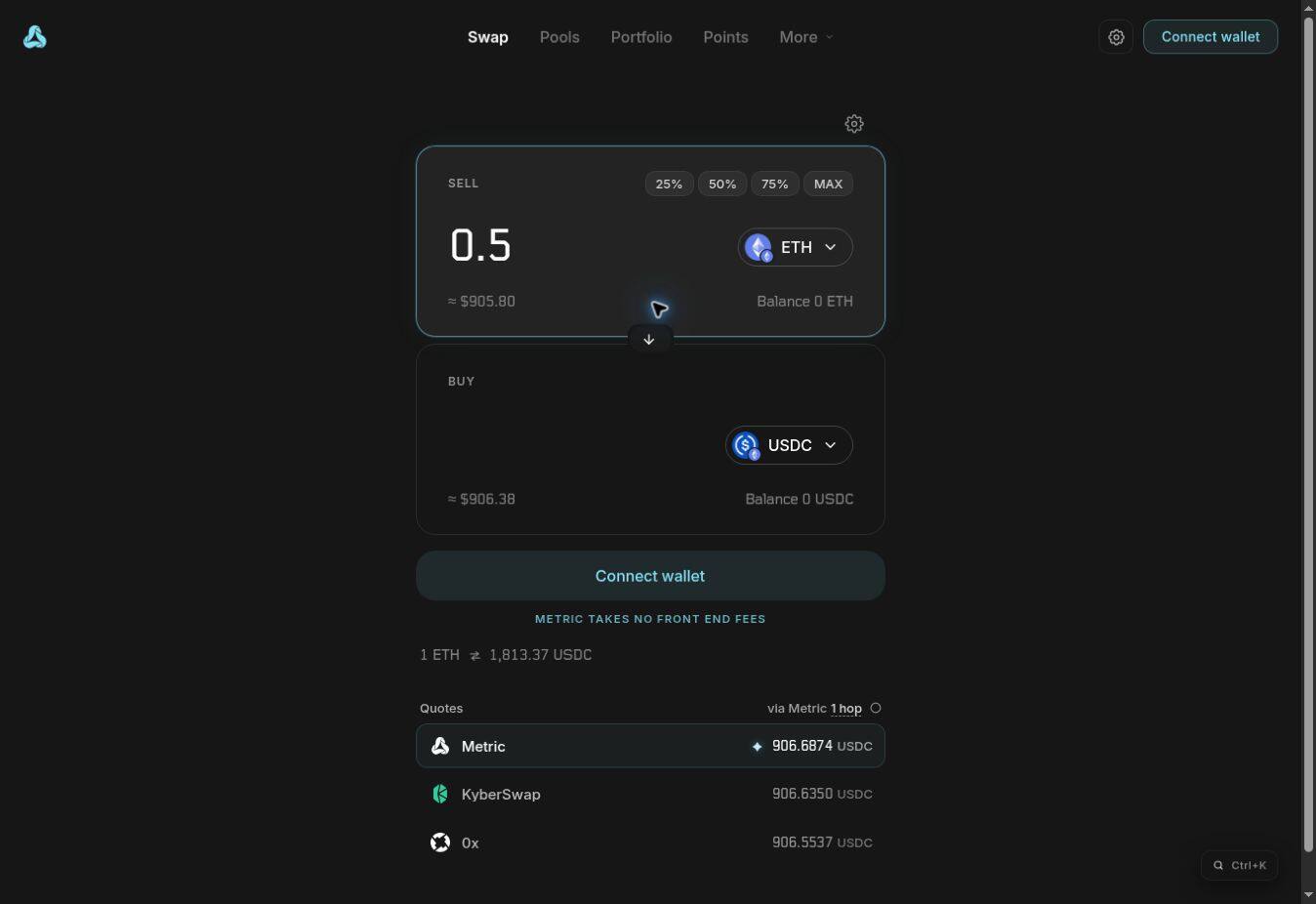
A swap made through Metric’s interface does not necessarily use a Metric pool. The report said trades must take a Metric route marked with the points symbol to qualify for trading points. Liquidity providers can choose a range and deposit assets through a pool page, where information such as the manager, pricing source, APR, volume and range-level Markout is displayed. The program also offered an invitation-based points bonus of up to 10%; an invitation binding could not be changed afterward.
Points are an activity incentive, not a measure of net liquidity-provider performance. The reported APR and trading volume likewise need to be considered alongside changes in the deposited assets and potential trading losses.