Historical report: Originally published by PANews on November 11, 2026, at 21:36 UTC+8. The project plans and network statuses below reflect that reporting date.
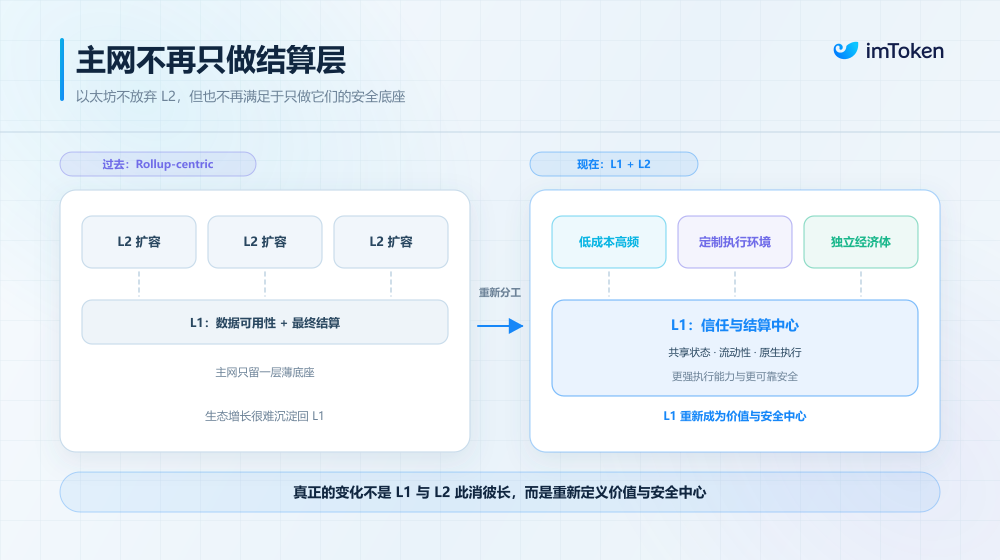
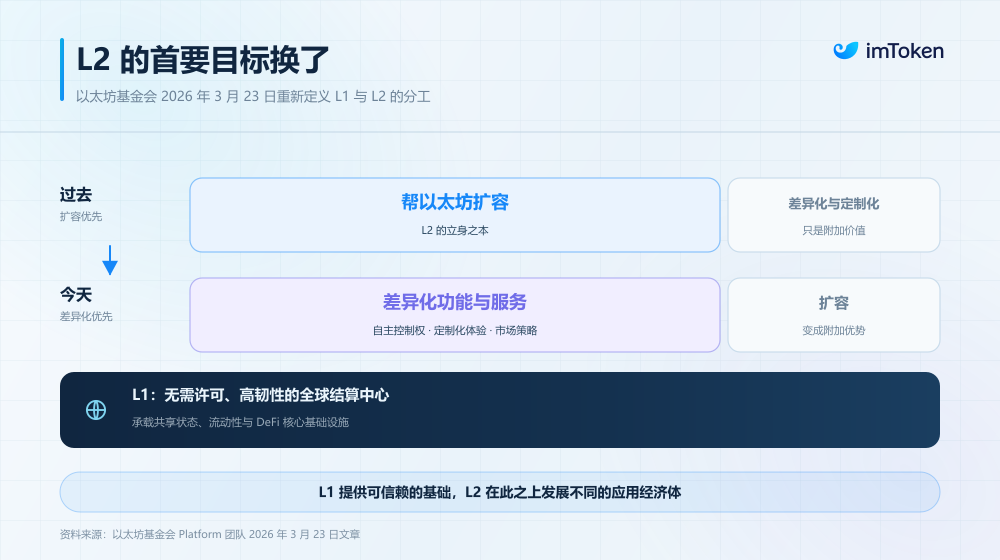
Some Ethereum projects were rethinking whether running a separate layer 2 (L2) was worth its costs. As imToken reported, their decisions did not amount to a wholesale departure from L2s: they reflected different calculations about operating expenses, liquidity, security and where users already held assets.
The cost of running a separate chain
ENS Labs planned a dedicated ZK rollup, Namechain, for ENSv2 in 2024. In February 2026, ENS co-founder Nick Johnson said development would stop and ENSv2 would instead deploy on Ethereum mainnet. He cited faster-than-expected L1 scaling. According to ENS Labs figures cited in the article, average gas costs for ENS name registration had fallen by about 99% over the preceding year, from nearly $5 to less than $0.05. A separate L2 would still require infrastructure, bridging, cross-chain resolution, audits and ongoing operations.
Other projects made different, narrower changes. Synthetix argued in June 2025 that L2 infrastructure instability and fragmented liquidity had become problems for applications; it launched a new perpetuals exchange on Ethereum mainnet that December. In 2026, Trueo announced plans to move its primary deployment from Base to L1, while ShapeShift moved its rFOX staking program from Arbitrum to mainnet on October 1. ShapeShift’s stated reason was that most FOX tokens were already held on mainnet, making a bridge an extra step for stakers. Superseed stopped its L2 in August and planned to pursue its lending-repayment goals through application-layer yield strategies rather than independent-chain gas revenue. In October, Nillion began moving node operations previously on its L2 to Ethereum mainnet as it launched Blacklight L1, with plans to phase out the L2.
The economic pressure was sharper for two other networks. Blast, which the article says had previously exceeded $2 billion in total value locked, announced a wind-down on October 2, citing network maintenance costs above L2 revenue and no reliable path to sustainability. Abstract subsequently announced a planned December 15 shutdown. The article reported more than 144 applications and over 400,000 users on Abstract, but described insufficient liquidity, a limited DeFi ecosystem and little institutional participation as obstacles. These cases illustrate why attracting users—or offering token incentives—does not by itself establish a durable source of revenue.
Keep assets on L1, outsource some execution
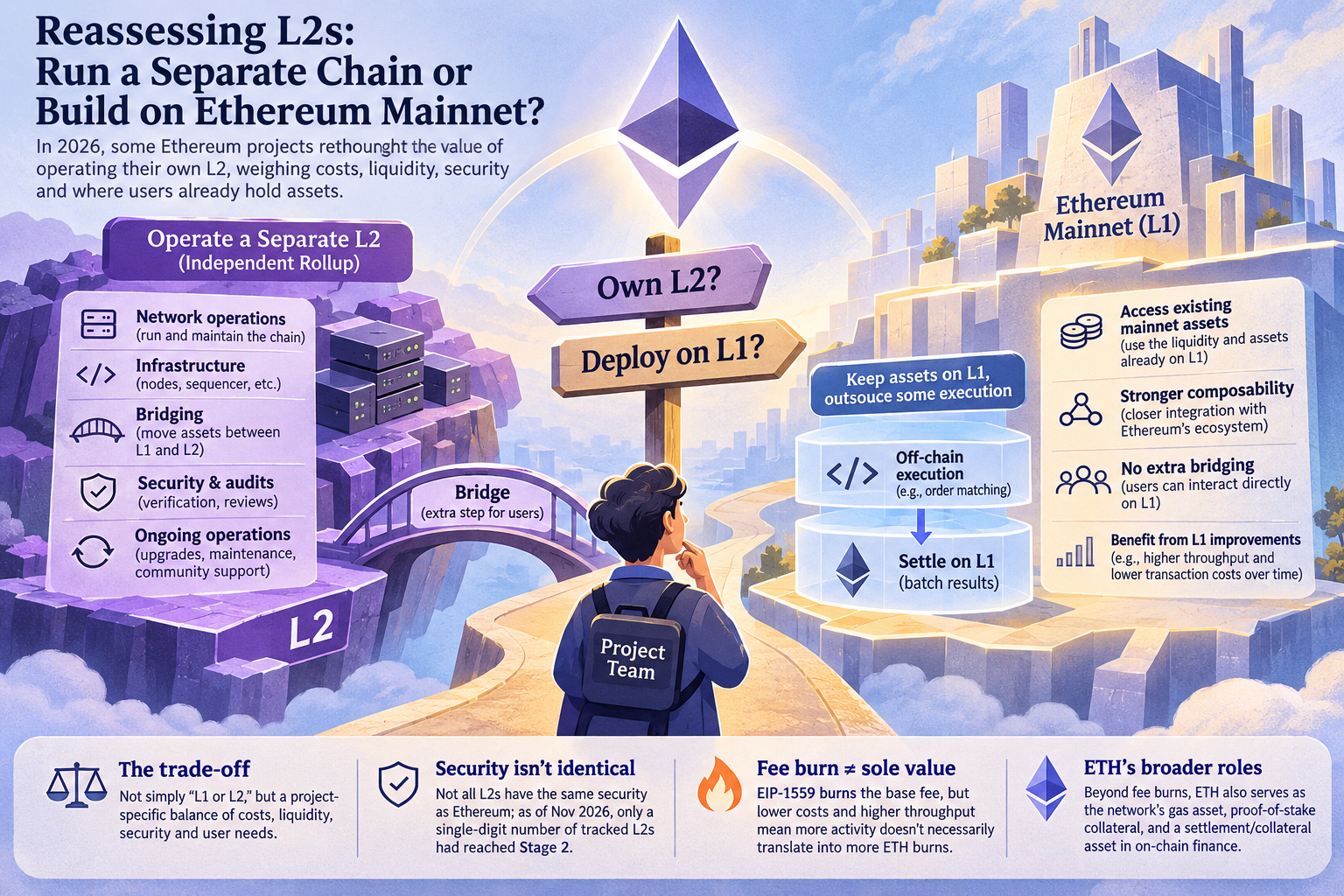
The architectural choice is not simply “L1 or L2.” According to the article, Synthetix’s exchange keeps user assets in Ethereum L1 contracts, uses an off-chain central limit order book for matching, and batches settlement results back to mainnet. That avoids requiring users to bridge all their assets for faster matching, but it does not remove every trust assumption: the off-chain order book and its role in margin management still warrant scrutiny.
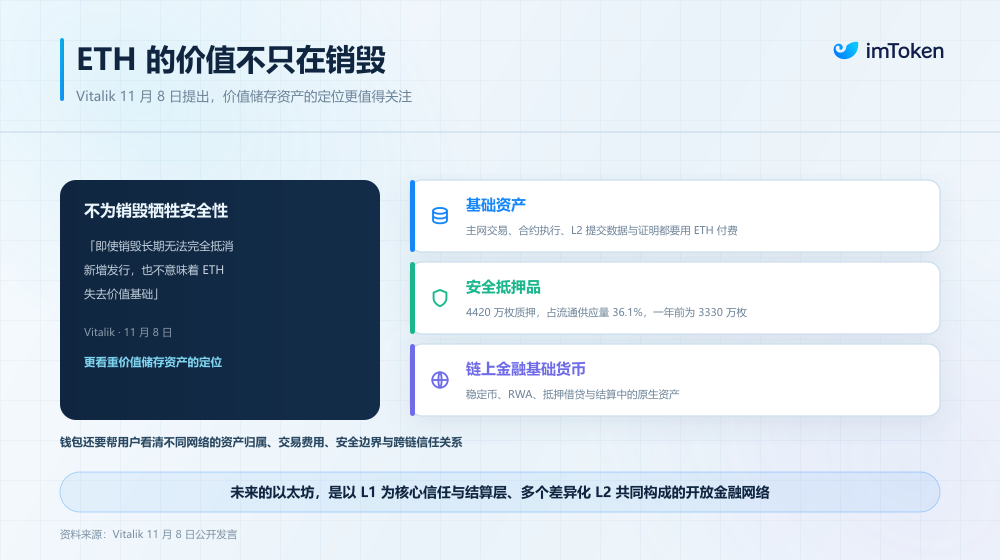
The distinction matters because L2s do not all provide the same security properties as Ethereum mainnet. Citing ETHBEAT data as of November 2026, the article said only a single-digit number of tracked L2s had reached Stage 2, with negligible assets there; major rollups including Base, Arbitrum One and OP Mainnet remained at Stage 1. It also noted that some operators might deliberately retain upgrade or management powers for business or regulatory reasons. Native Rollup research and Ethereum Economic Zone proposals aimed to improve verification or interaction across execution environments, but remained proposals at varying stages of development—not deployed solutions to fragmentation.
Cheaper transactions complicate the burn narrative
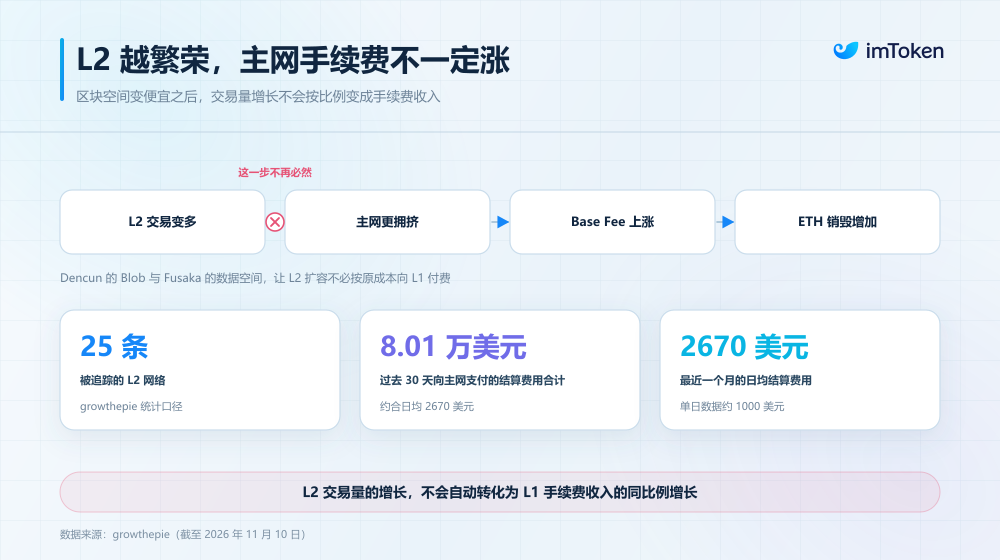
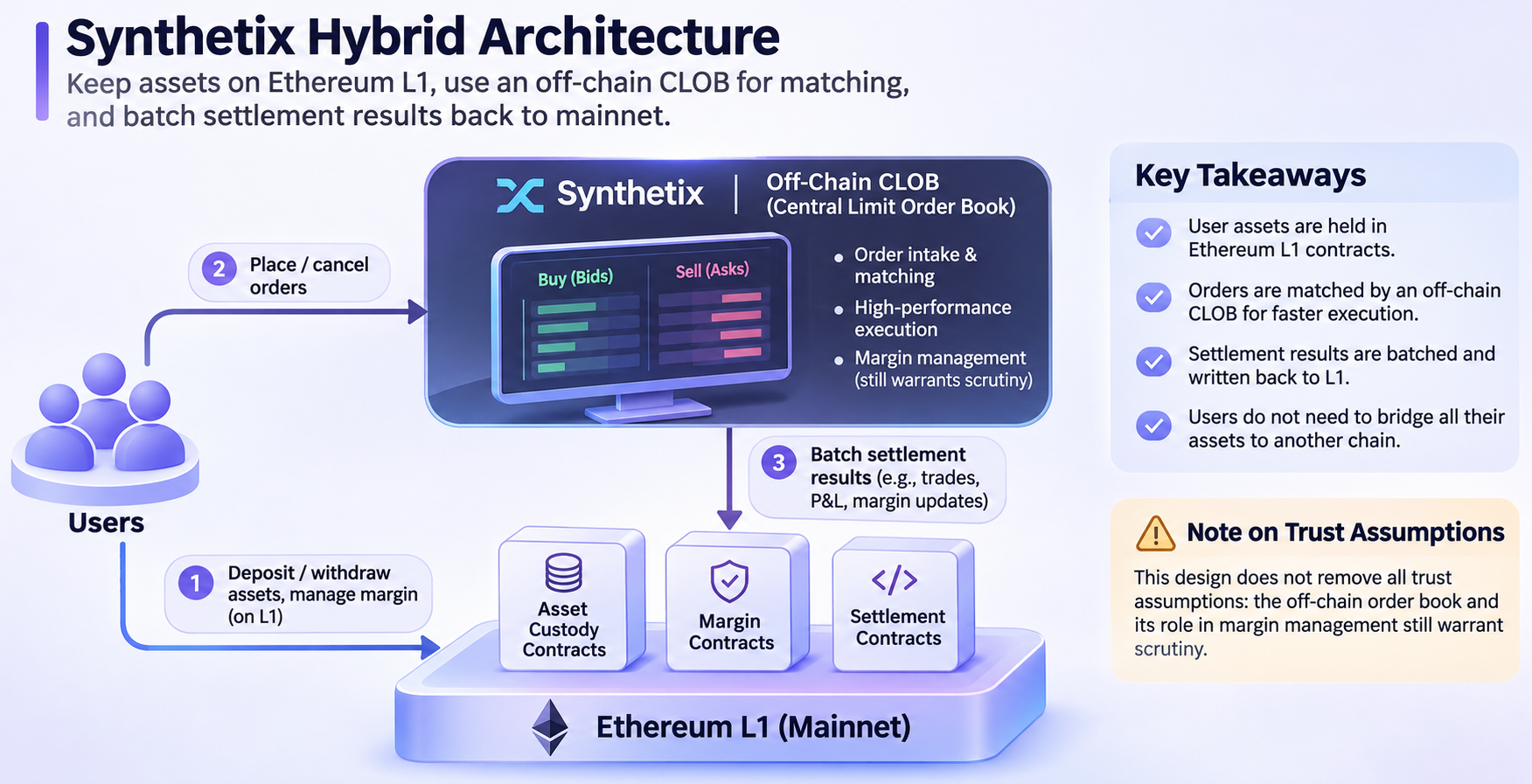
Under EIP-1559, Ethereum burns the transaction base fee and pays the priority fee to validators. Greater demand for scarce blockspace can therefore raise ETH burns, but more activity need not produce more burns if transaction costs fall. The article pointed to cheaper L2 data posting after upgrades including Dencun and Fusaka, alongside a higher L1 gas limit, as reasons not to assume ecosystem growth translates directly into fee revenue.
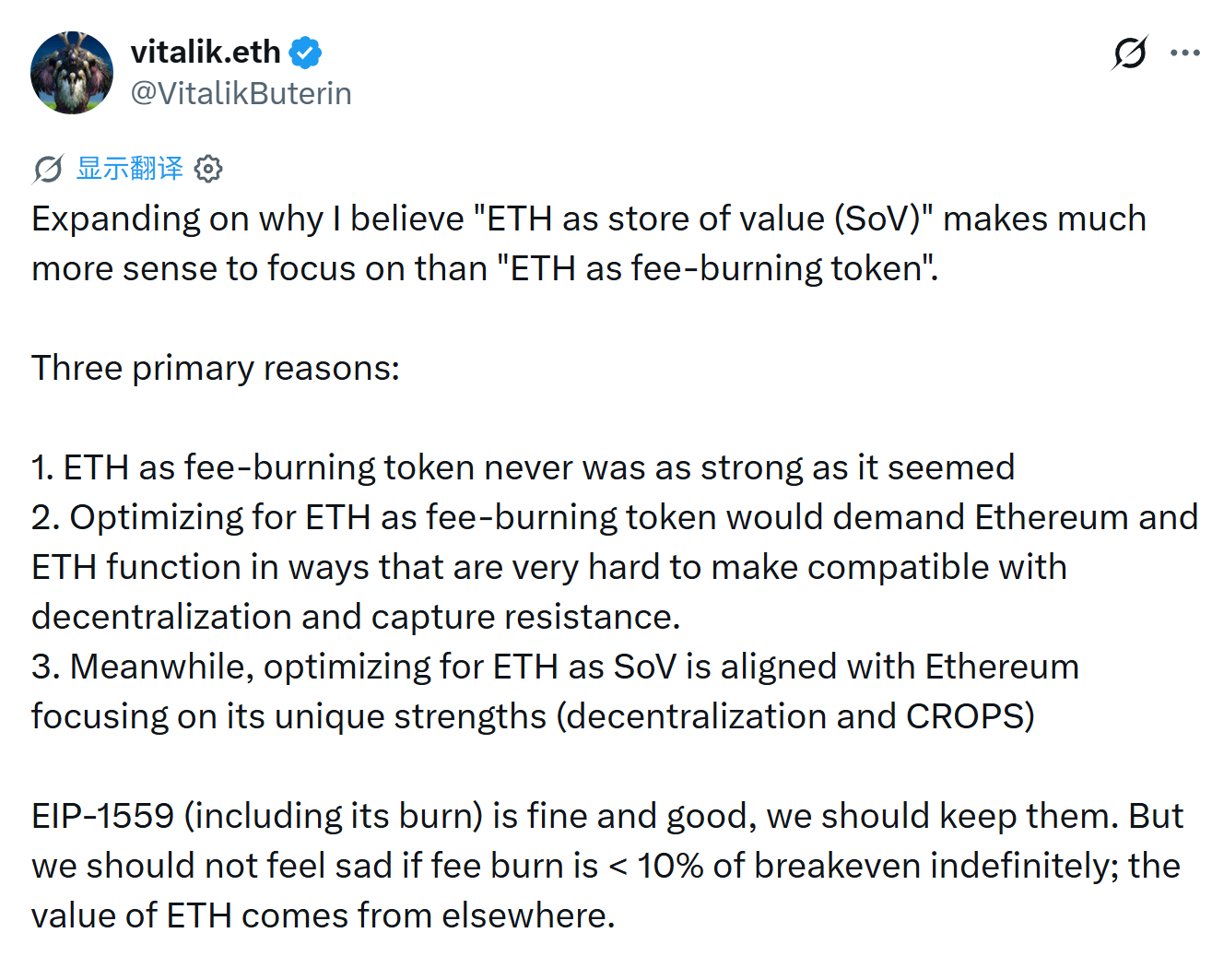
Vitalik Buterin’s argument, as presented in the article, was not to abolish fee burning. Rather, he argued against making it the sole measure of ETH’s value, even in a scenario where burns offset less than 10% of break-even issuance. The article cited the roughly $180 million in fees burned during one day of the 2022 Otherdeed NFT mint as an example of a large burn driven by speculative activity—not a dependable forecast of future demand.
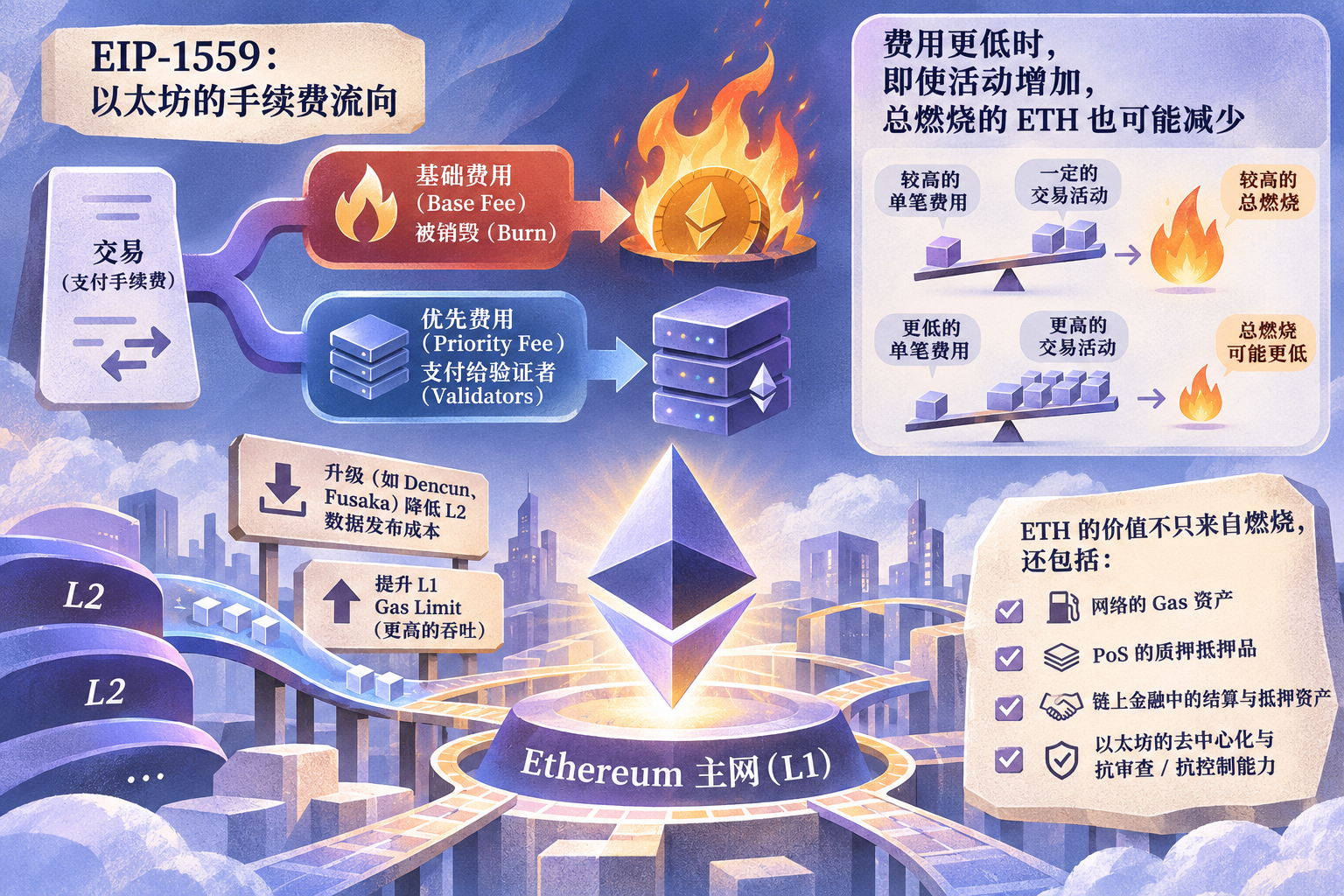
Its alternative case for ETH rests on its roles as the network’s gas asset, proof-of-stake collateral, and an asset used for settlement and collateral in on-chain finance, alongside Ethereum’s decentralization and resistance to control. Those are roles and an argument about long-term network utility, not a guarantee of demand or returns. L2s can still serve applications that need distinct execution environments; the 2026 examples show why each project must weigh that benefit against the costs of operating one.
Source: panewslab.com (originally published 2026-11-11 21:36 UTC+8)