Originally reported by ChainCatcher on November 11, 2026, at 09:39 (UTC+8), based on research published by on-chain data account Sparsity on November 10. The ChainCatcher article was written by Kioto.
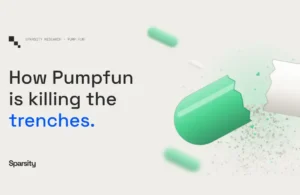
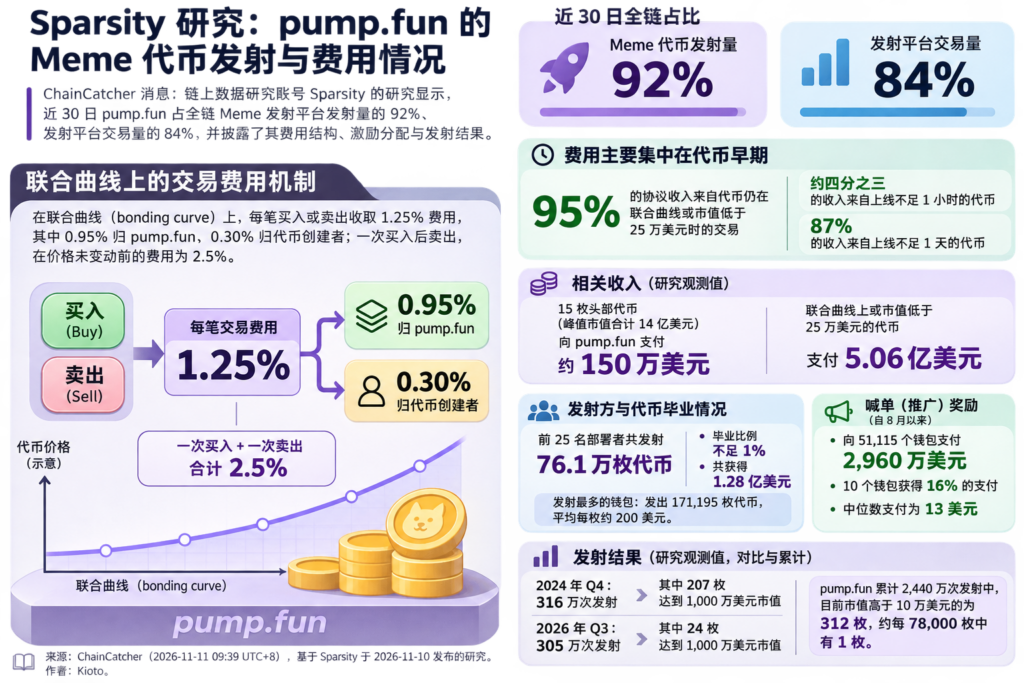
Sparsity estimated that pump.fun accounted for 92% of meme-token launches and 84% of launch-platform trading volume across chains over the preceding 30 days. Its findings also describe where the platform collects fees and how launch-related incentives are distributed.
Fees concentrate early in a token’s life
According to the study, 95% of pump.fun’s protocol revenue came from trading while tokens were still on the bonding curve or had a market capitalization below $250,000. Each buy and sell on the bonding curve incurred a 1.25% fee: 0.95% went to pump.fun and 0.30% to the creator. A buy followed by a sell therefore cost 2.5% in fees before any price movement.
Sparsity said roughly three-quarters of that revenue came from tokens less than one hour old, and 87% from tokens less than one day old. It reported that 15 leading tokens with a combined peak market capitalization of $1.4 billion paid pump.fun about $1.5 million, while tokens on the bonding curve or below a $250,000 market capitalization paid $506 million.
Payouts and launch outcomes
The study said the top 25 deployers launched 761,000 tokens in total, with fewer than 1% graduating, and received $128 million. The most prolific wallet launched 171,195 tokens and received about $200 per token on average.
Sparsity also reported that, since August, promotion rewards had paid $29.6 million to 51,115 wallets. Ten wallets received 16% of those payments, while the median payment was $13.
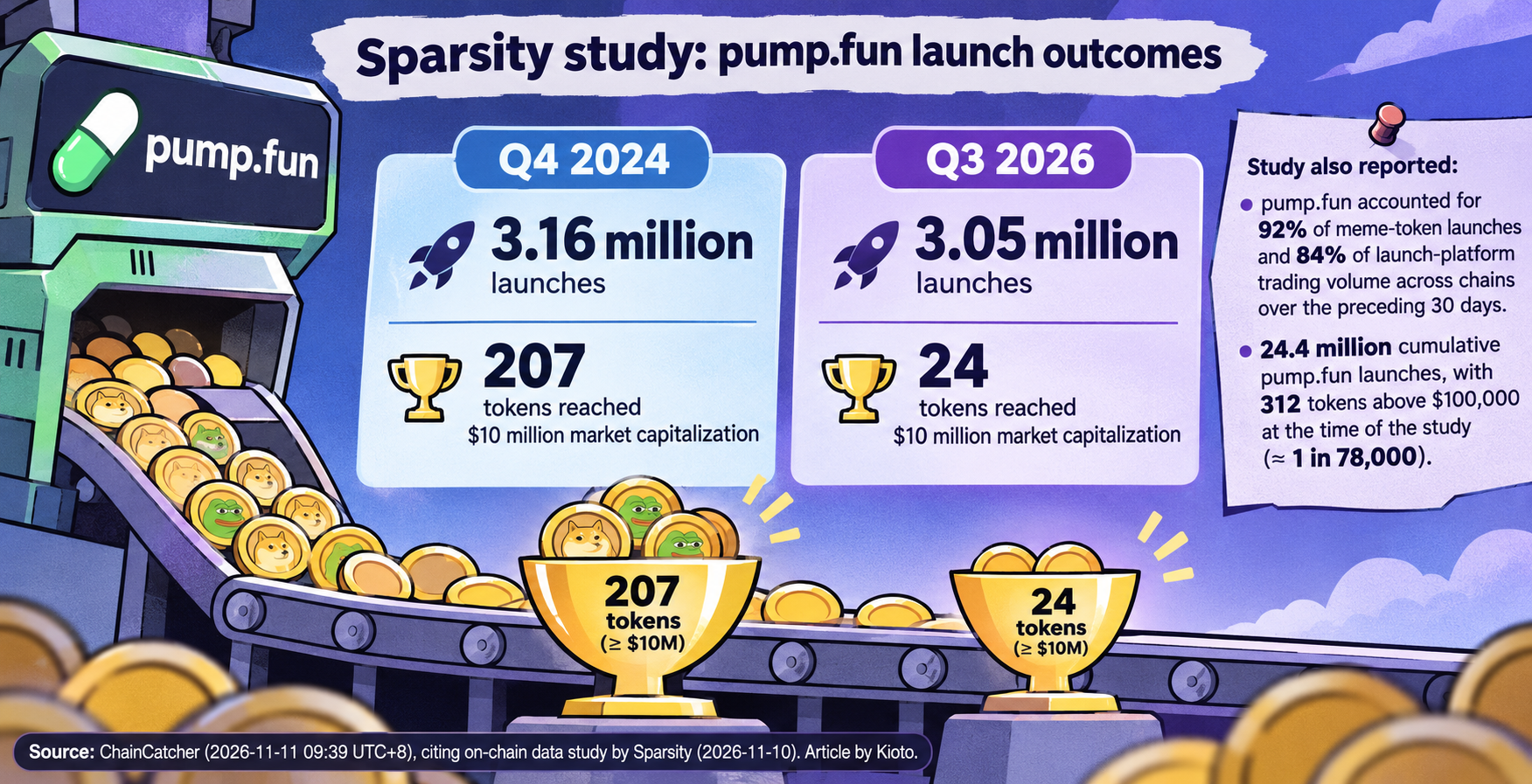
The study compared 3.16 million launches in the fourth quarter of 2024, of which 207 reached a $10 million market capitalization, with 3.05 million launches in the third quarter of 2026, of which 24 reached that level. Of 24.4 million cumulative pump.fun launches, it said 312 tokens had a market capitalization above $100,000 at the time of the study—approximately one in 78,000 launches. These figures describe the study’s observed outcomes, not a forecast for future tokens.
Source: chaincatcher.com (originally published 2026-11-11 09:39 UTC+8)