Historical report: originally published November 11, 2026, at 18:26 UTC+8.
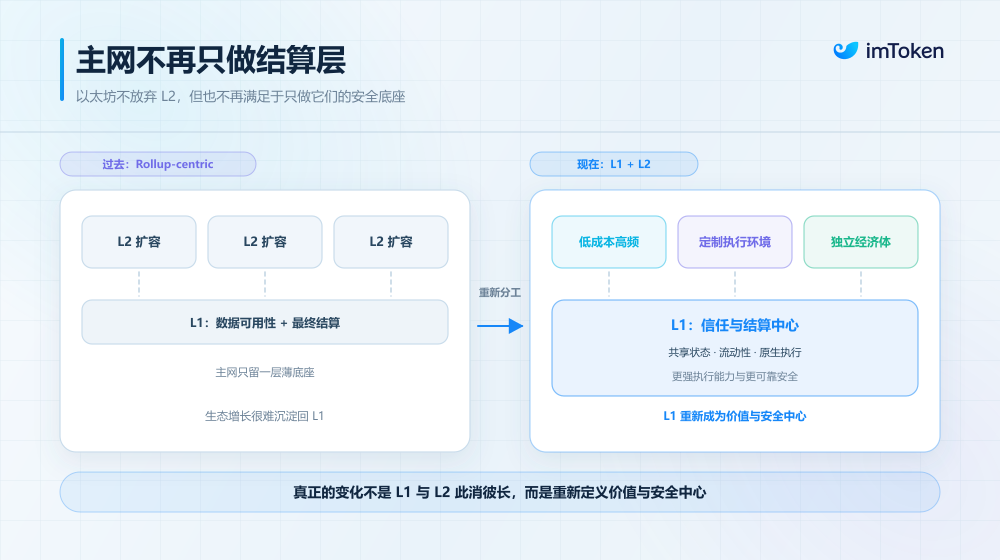
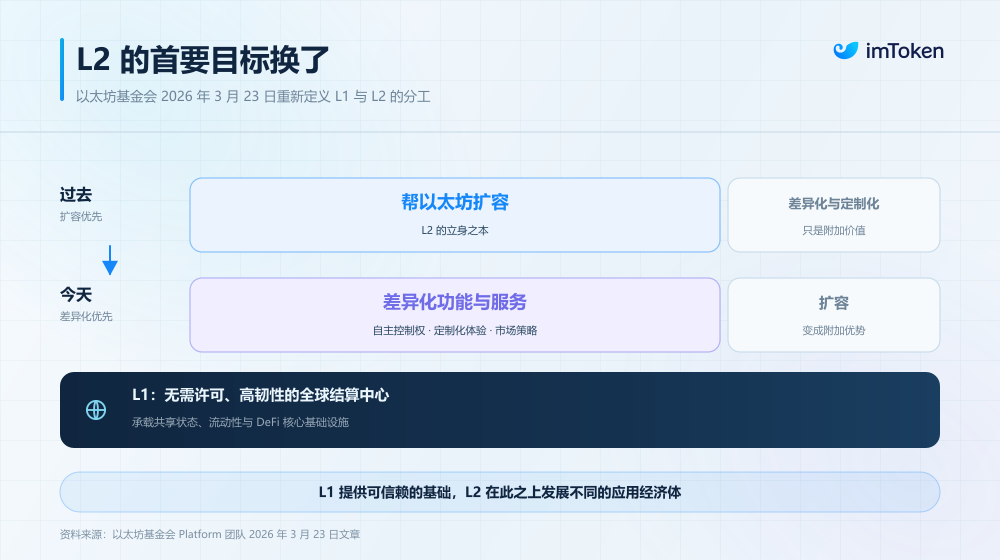
For years, high gas costs made an Ethereum rollup an attractive place to run an application—and, for some projects, a reason to build an L2 of their own. The original report described a shift in that calculation: several projects were choosing Ethereum mainnet instead, while some independent L2s faced operating pressures. The cases do not mean L2s are disappearing. They show why execution costs, liquidity and the expense of maintaining a network need to be assessed together.
The cost of running a separate network
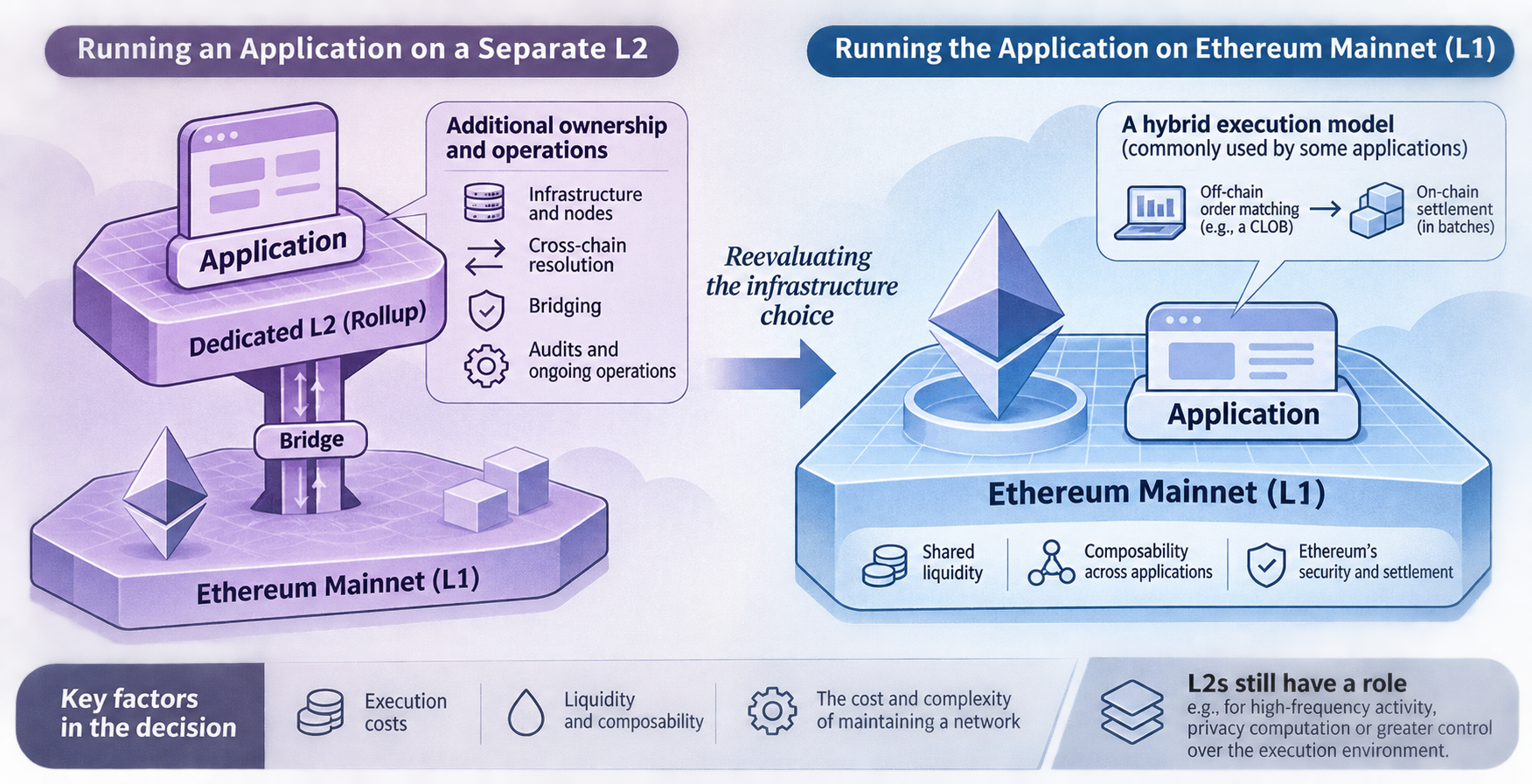
ENS Labs planned Namechain, a dedicated ZK rollup for ENSv2, in 2024. In February 2026, ENS co-founder Nick Johnson announced that development would stop and ENSv2 would deploy directly on Ethereum L1, citing mainnet scaling that had exceeded expectations. According to ENS Labs figures cited in the original report, the average gas cost of an ENS registration had fallen by about 99% over the preceding year, from nearly $5 to less than $0.05. A separate L2 would also require infrastructure, cross-chain resolution, bridging, audits and ongoing operations.
Other projects made different, application-specific choices. Synthetix launched its new perpetuals exchange on mainnet in December 2025 after arguing that L2 deployment had brought fragmented liquidity and infrastructure problems. ShapeShift moved its rFOX staking program from Arbitrum to Ethereum on October 1, 2026; the report said most FOX was already held on mainnet, making a bridge an unnecessary step for many participants. In August 2026, Superseed stopped its L2 and planned to move core products to mainnet, replacing reliance on its chain’s gas revenue for loan repayments with application-level yield strategies. Trueo announced a move of its principal deployment from Base to L1 in September 2026, while Nillion began moving node operations from its L2 to Ethereum mainnet in October.
There were also cases of L2 retrenchment. The report said Blast announced on October 2, 2026, that it would wind down because network maintenance costs exceeded L2 revenue and it saw no reliable path to economic sustainability. Abstract announced a planned network shutdown for December 15, 2026. Its reported integration of more than 144 applications and attraction of over 400,000 users had not, according to the report, overcome limited liquidity, a small DeFi ecosystem and insufficient institutional participation. Those user and application counts alone do not establish a sustainable revenue model.
Keeping assets on L1 without putting every calculation there
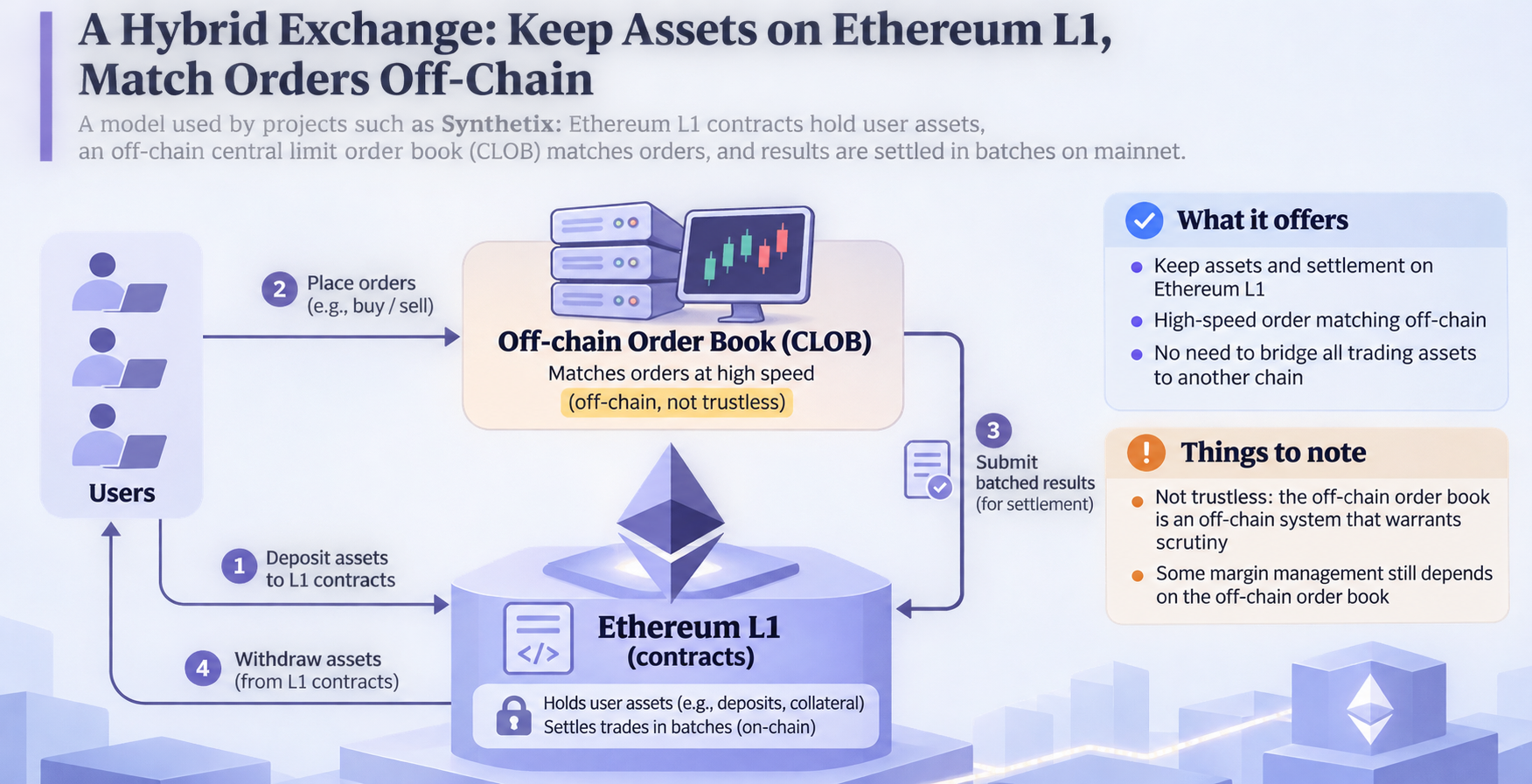
A return to mainnet need not mean executing every task on-chain. The report described Synthetix’s perpetuals exchange as a hybrid design: Ethereum L1 contracts hold user assets, an off-chain central limit order book matches orders, and results are settled in batches on mainnet. That avoids requiring users to bridge all their trading assets to another chain, but it does not remove trust questions. Some margin management still depends on the off-chain order book, which itself warrants scrutiny.
The report also pointed to research on native rollups and proposals such as the Ethereum Economic Zone as possible ways to improve verification or interaction across execution environments. These were presented as research and development directions, not deployed solutions to fragmented liquidity or composability. L2s can still serve applications that need high-frequency activity, privacy computation or greater control over their execution environment.
Cheaper transactions complicate the burn narrative
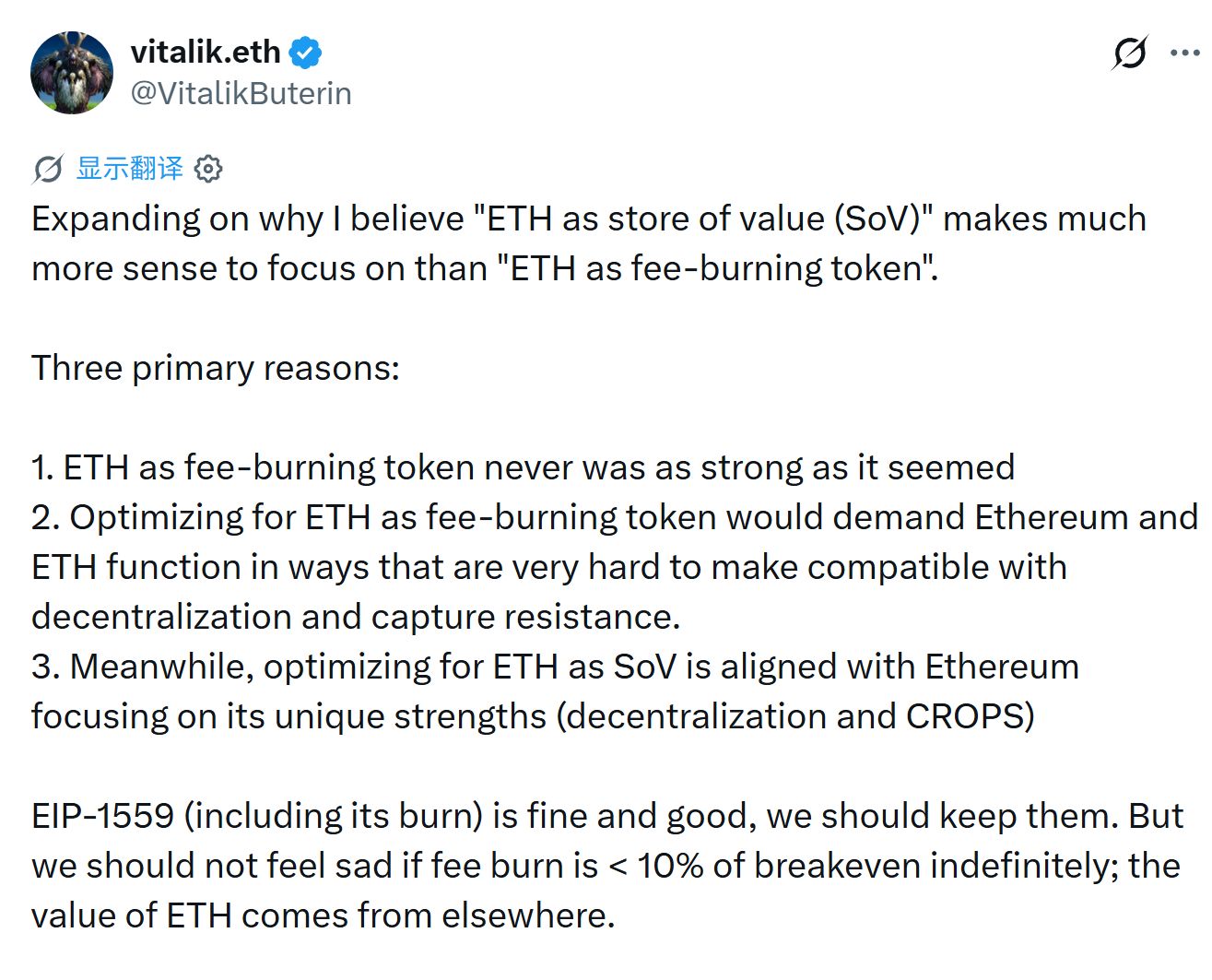
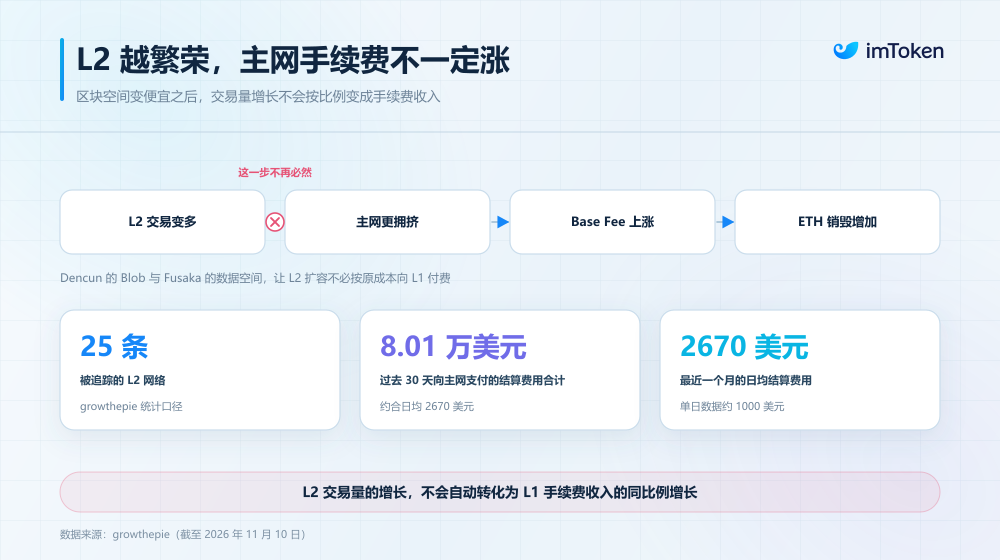
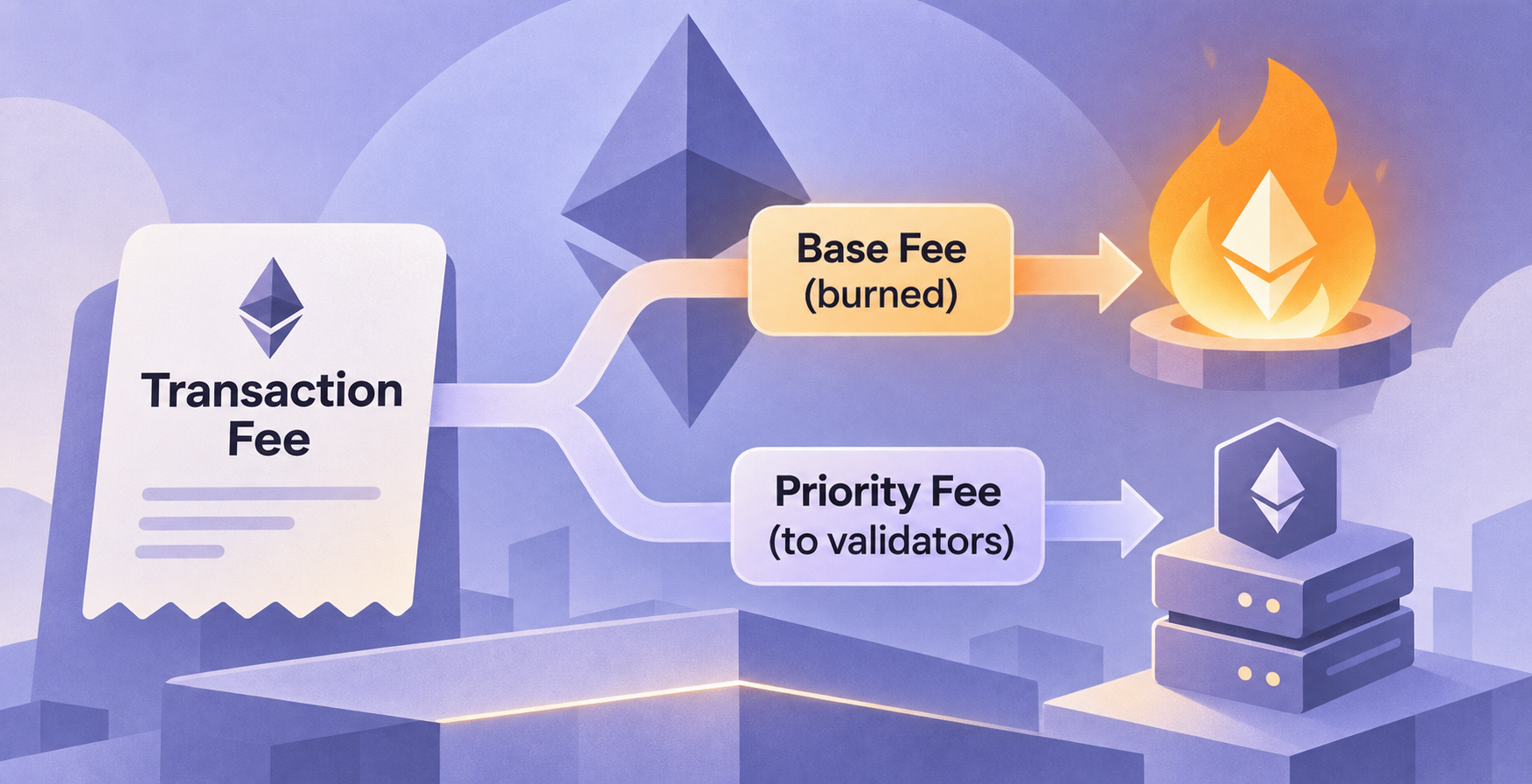
These infrastructure choices matter to ETH economics, but they do not imply a particular price outcome. Under EIP-1559, the transaction base fee is burned and the priority fee goes to validators. More demand for scarce blockspace can increase base fees and burn; cheaper transactions, however, mean growing activity does not necessarily produce proportionately greater burn.
That is the tension the report identified as upgrades lowered L2 data-publication costs and Ethereum raised mainnet’s gas limit. It attributed to Vitalik Buterin a view that ETH’s long-term role should not be judged primarily by fee burn. He did not advocate removing EIP-1559; rather, the report said he considered the mechanism worth retaining even if burn were to offset less than 10% of break-even issuance over the long term. The report also cited the roughly $180 million in fees burned in one day during Yuga Labs’ 2022 Otherdeed NFT mint as an example of why an exceptional, speculation-driven burn event is a weak basis for projecting lasting demand.
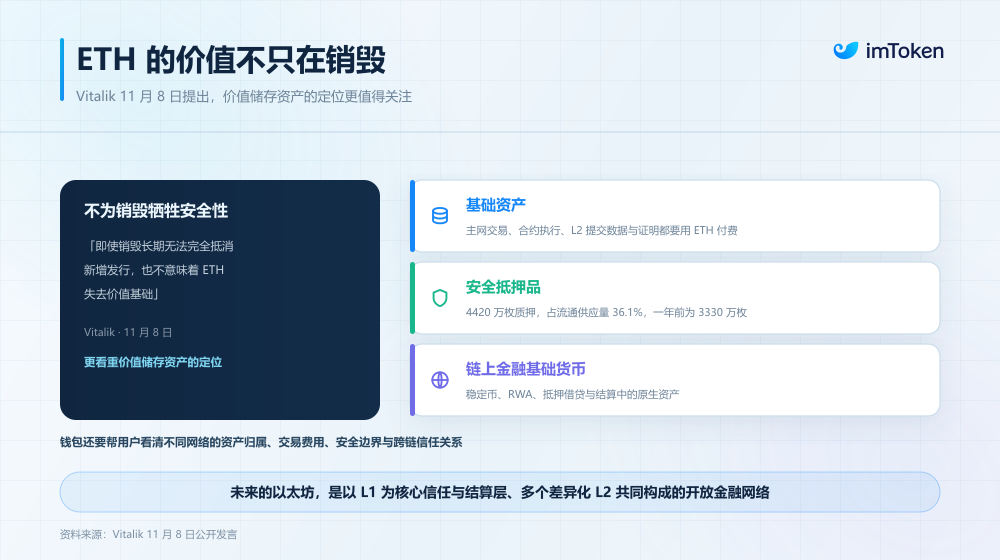
The broader argument is about what activity stays anchored to Ethereum: ETH pays for gas, secures proof-of-stake consensus and serves as an asset in on-chain finance. Keeping important assets and settlement state on L1 could strengthen the usefulness of a shared liquidity and security layer. Whether that translates into durable demand for ETH—and how it compares with any reduction in fee burn—remains an economic question, not a guaranteed result of projects moving back to mainnet.
Source: odaily.news (originally published 2026-11-11 18:26 UTC+8)