Historical report: Deep Tide TechFlow published the original article on November 9, 2026, at 18:31 (UTC+8). The figures below reflect its reporting at that time, not current supply data.
Ethereum’s fee burn reduces ETH supply, but whether it can support ETH’s market value is a separate question. Reporting on comments Vitalik Buterin made on November 8, TechFlow says he challenged the idea that burned fees create a dependable valuation floor. The article presents his alternative emphasis—ETH as a store of value grounded in Ethereum’s security and neutrality—as a valuation argument, not a change to issuance or burn rules.
What the burn figures showed
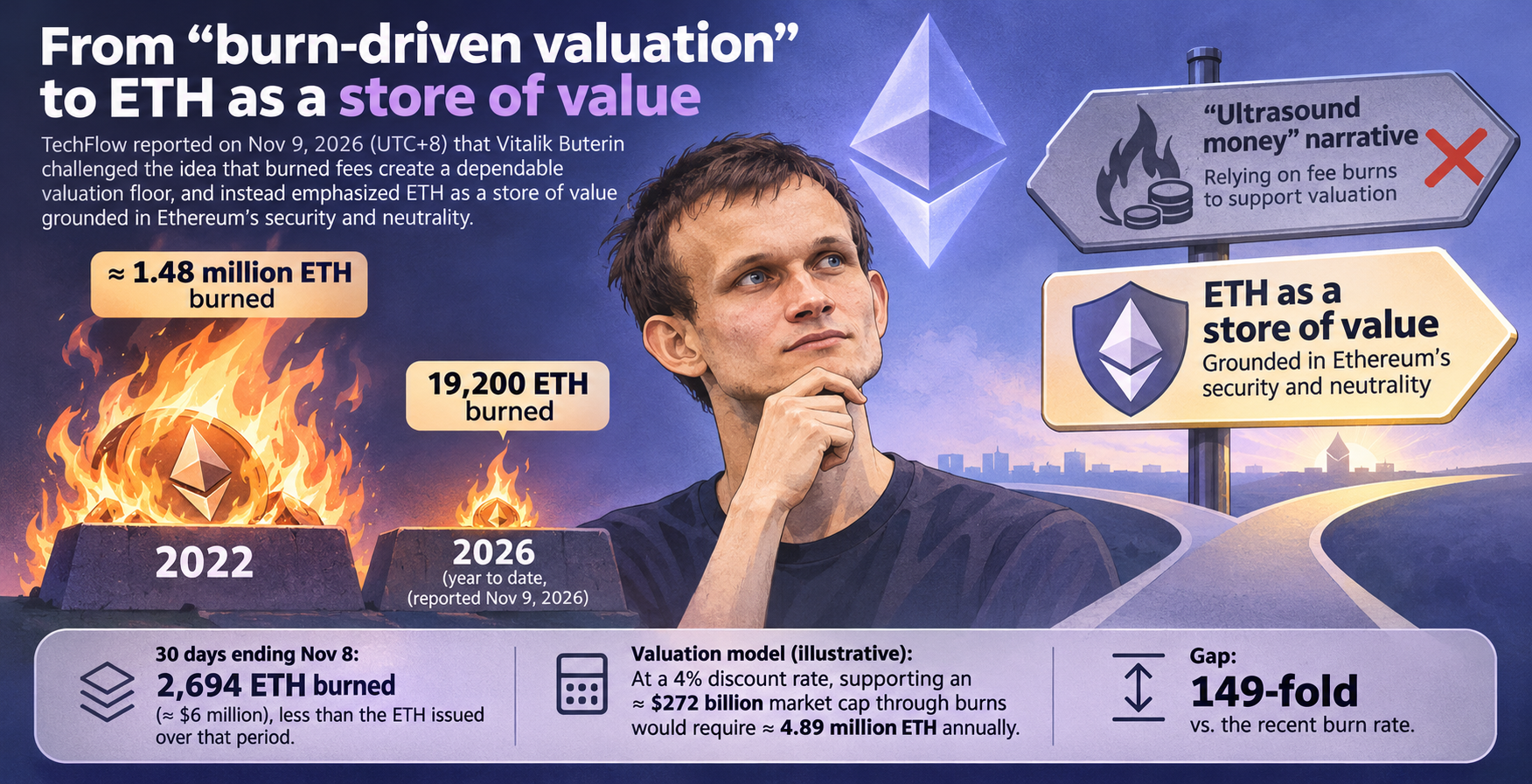
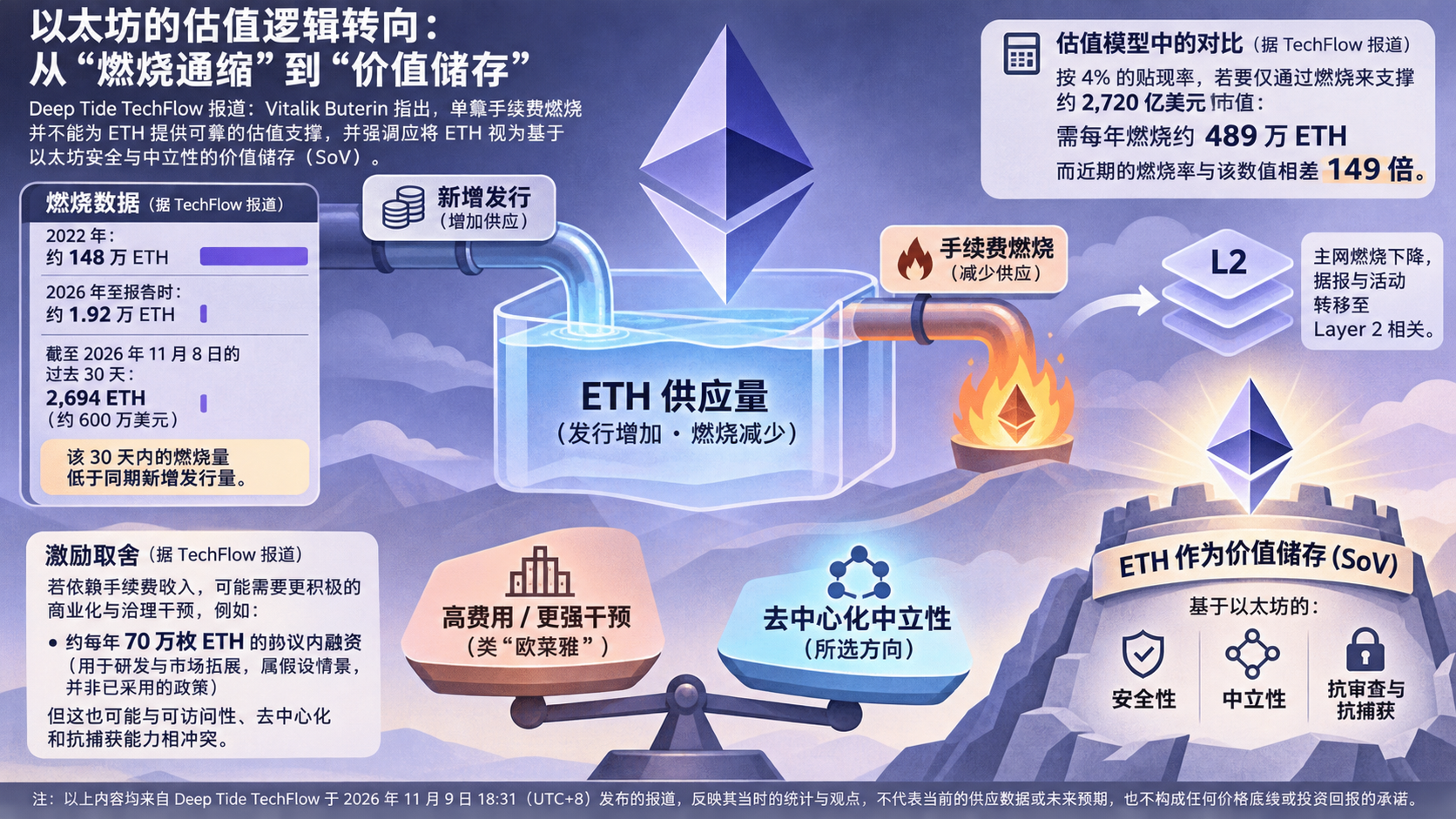
TechFlow reports that Ethereum burned about 1.48 million ETH in 2022, versus 19,200 ETH in 2026 through the time of its report. Over the 30 days ending November 8, it says 2,694 ETH, worth roughly $6 million, was burned—less than the ETH issued over that period. The article attributes the decline in mainnet burns to activity moving to Layer 2 networks.
According to TechFlow, Buterin illustrated the scale of the valuation argument with a hypothetical calculation: at a 4% discount rate, supporting an approximately $272 billion market capitalization through burns would require about 4.89 million ETH burned annually. The article puts the gap between that figure and the recent burn rate at 149-fold. This is a comparison within a valuation model, not a supply target or forecast.
The incentive trade-off
TechFlow says Buterin argued that relying on fee revenue would push Ethereum toward a more interventionist model. In a comparison with L’Oréal, he described a scenario involving roughly 700,000 ETH a year in protocol-level funding for research and market expansion. The article presents that as a hypothetical path, not an adopted funding policy. It also reports his concern that pursuing higher fees and more active governance could conflict with access, decentralization and resistance to capture.
TechFlow’s author interprets the shift in emphasis as moving away from an “ultrasound money” valuation narrative toward ETH’s potential role as a store of value. Neither the reported burn figures nor that interpretation establishes a price floor or a future return.
Source: techflowpost.com (originally published 2026-11-09 18:31 UTC+8)