Historical report: The original article was published on November 12, 2026, at 09:19 UTC+8. The project plans and network status below reflect that reporting date.
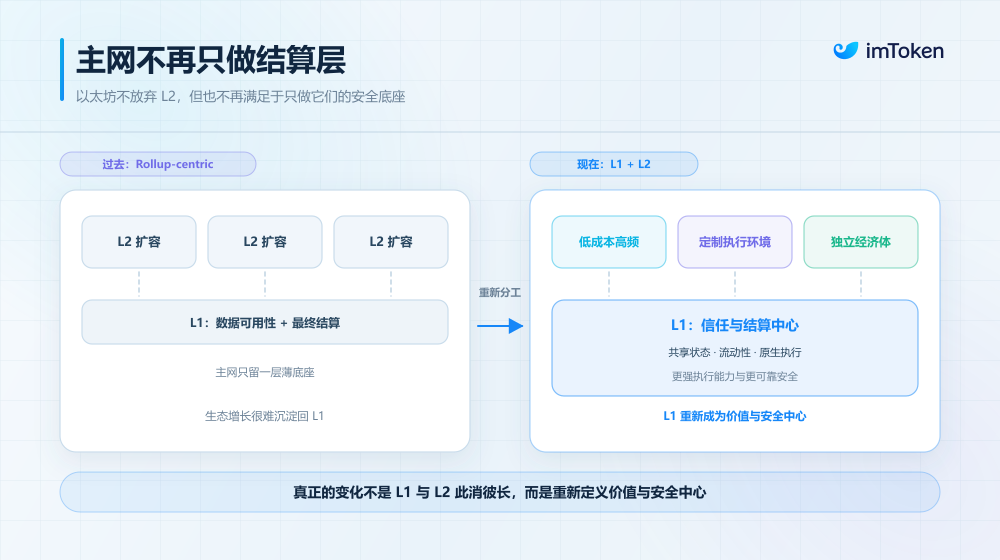
Ethereum’s scaling debate is no longer simply about moving activity off the mainnet. As the original article reported, several projects had reconsidered whether the lower transaction costs of an independent layer 2 (L2) justified its infrastructure, bridging and operational demands. That choice also bears on ETH’s economics: more activity does not necessarily mean more fee revenue or more ETH burned.
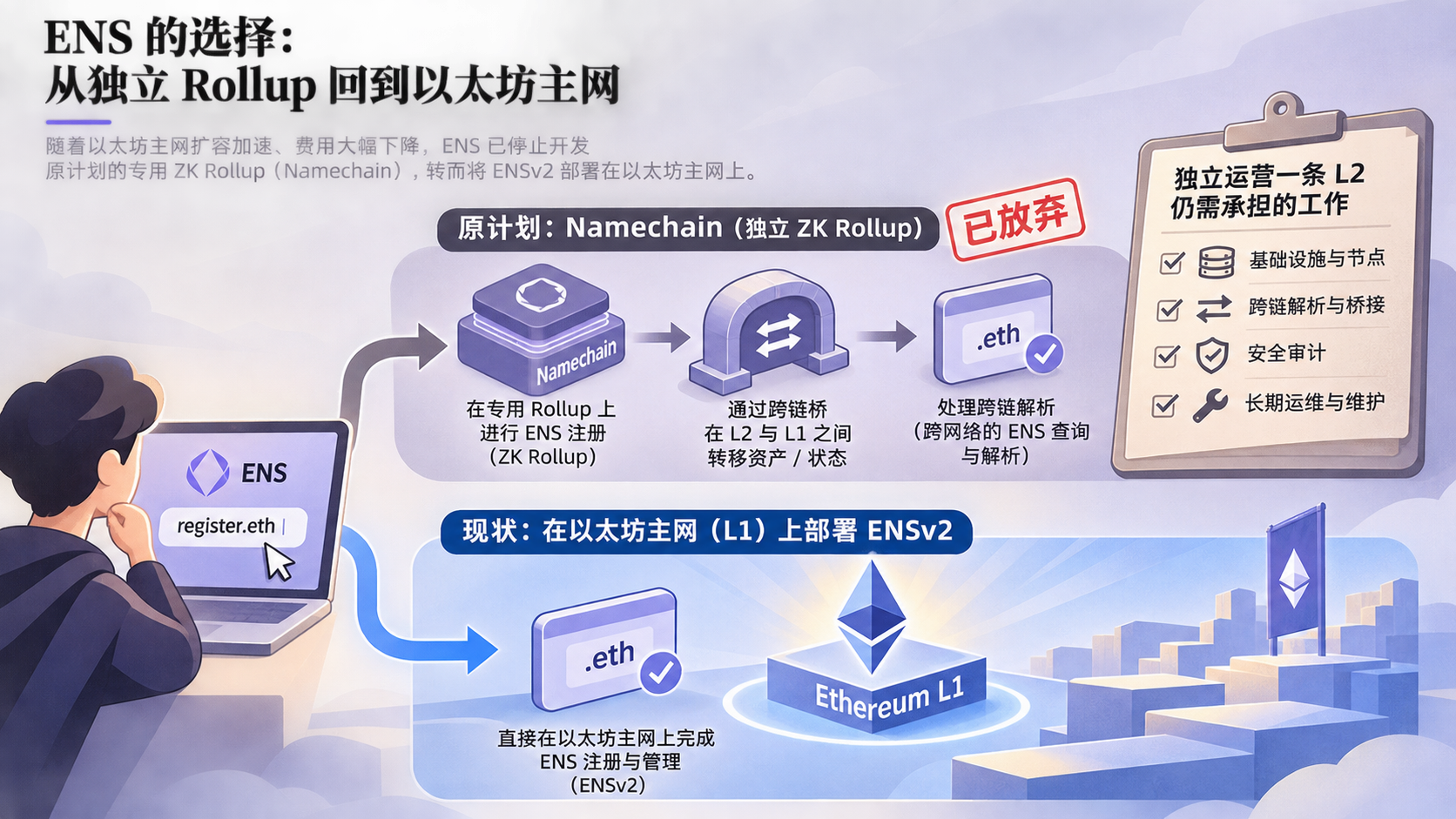
The cost of operating a separate network
ENS Labs planned a dedicated ZK rollup, Namechain, for ENSv2 in 2024. In February 2026, ENS co-founder Nick Johnson said development would stop and ENSv2 would instead deploy on Ethereum’s mainnet. He cited faster-than-expected L1 scaling. According to ENS Labs figures quoted in the original article, the average cost of registering an ENS name had fallen by about 99% over the preceding year—from nearly $5 to less than $0.05—as Ethereum’s gas limit increased. A separate rollup would still require infrastructure, cross-chain resolution, bridging, audits and ongoing maintenance.
Other decisions had different motivations. ShapeShift moved its rFOX staking program from Arbitrum to Ethereum L1 on October 1, 2026; the article noted that most FOX tokens were already held on mainnet, making a bridge an additional step for participants. Superseed stopped its L2 in August 2026 and planned to move core products to mainnet, replacing reliance on its chain’s gas revenue to support loan repayment with application-level yield strategies. Those are changes to how users reach a product and how it is funded—not evidence that every L2 has become unnecessary.
The original article also reported that Blast announced on October 2, 2026, that it would cease operations, saying network maintenance costs exceeded L2 revenue and that it saw no reliable route to economic sustainability. It reported that Abstract planned to shut down on December 15. These cases illustrate a distinction: attracting users or applications does not, by itself, establish enough continuing revenue to operate a chain.
Keeping assets on L1 while moving execution elsewhere
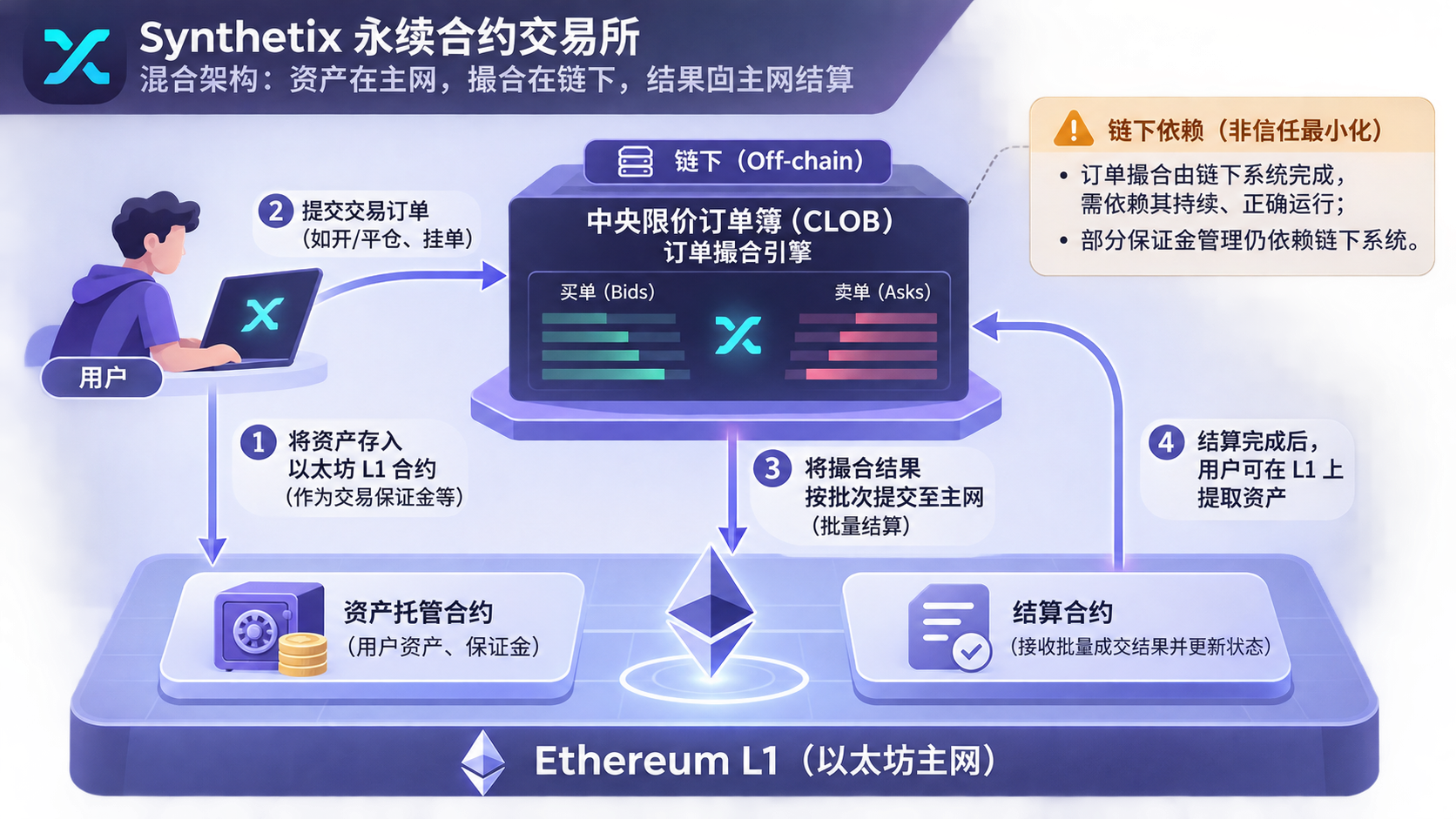
An application does not have to put every operation on the same network. The article describes Synthetix’s mainnet perpetuals exchange, launched in December 2025, as a hybrid: Ethereum L1 contracts hold user assets, an off-chain central limit order book matches orders, and batches of results settle on mainnet. This avoids requiring users to bridge their assets to a separate L2 for order matching. It does not eliminate reliance on the off-chain system; the article notes that parts of margin management still depend on it.
Native rollups and the Ethereum Economic Zone were discussed as research or developing approaches to closer verification and interaction across execution environments—not as completed solutions. L2s may still serve applications that need high-frequency execution, privacy features or greater control over their execution environment.
Lower fees complicate the burn narrative
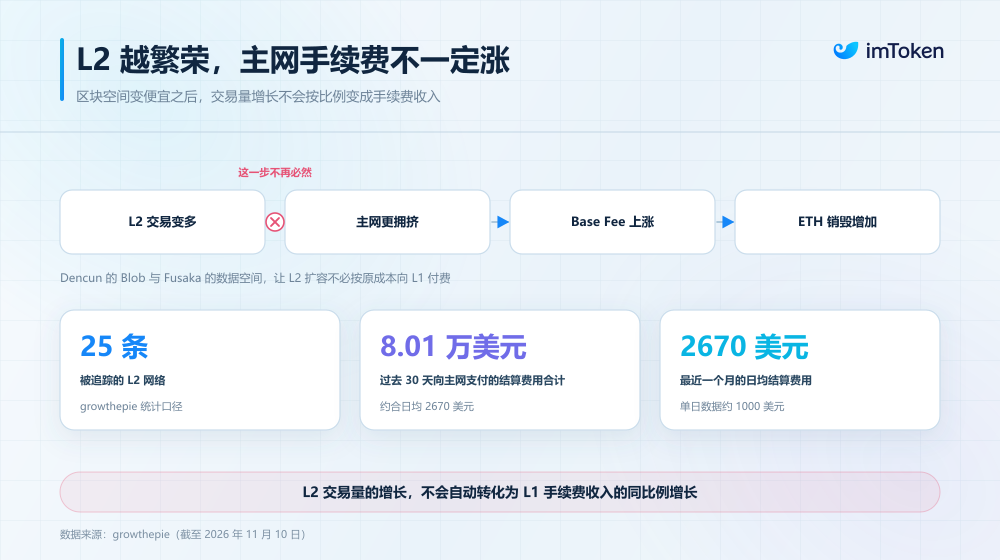
Under EIP-1559, a transaction’s base fee is burned, while its priority fee goes to validators. When demand makes block space scarce, a higher base fee can increase ETH burned. But cheaper L2 data posting and greater mainnet capacity can reduce the fee paid per transaction. Growing transaction volume therefore does not guarantee growing burn; nor can burn alone establish whether ETH issuance will be offset.
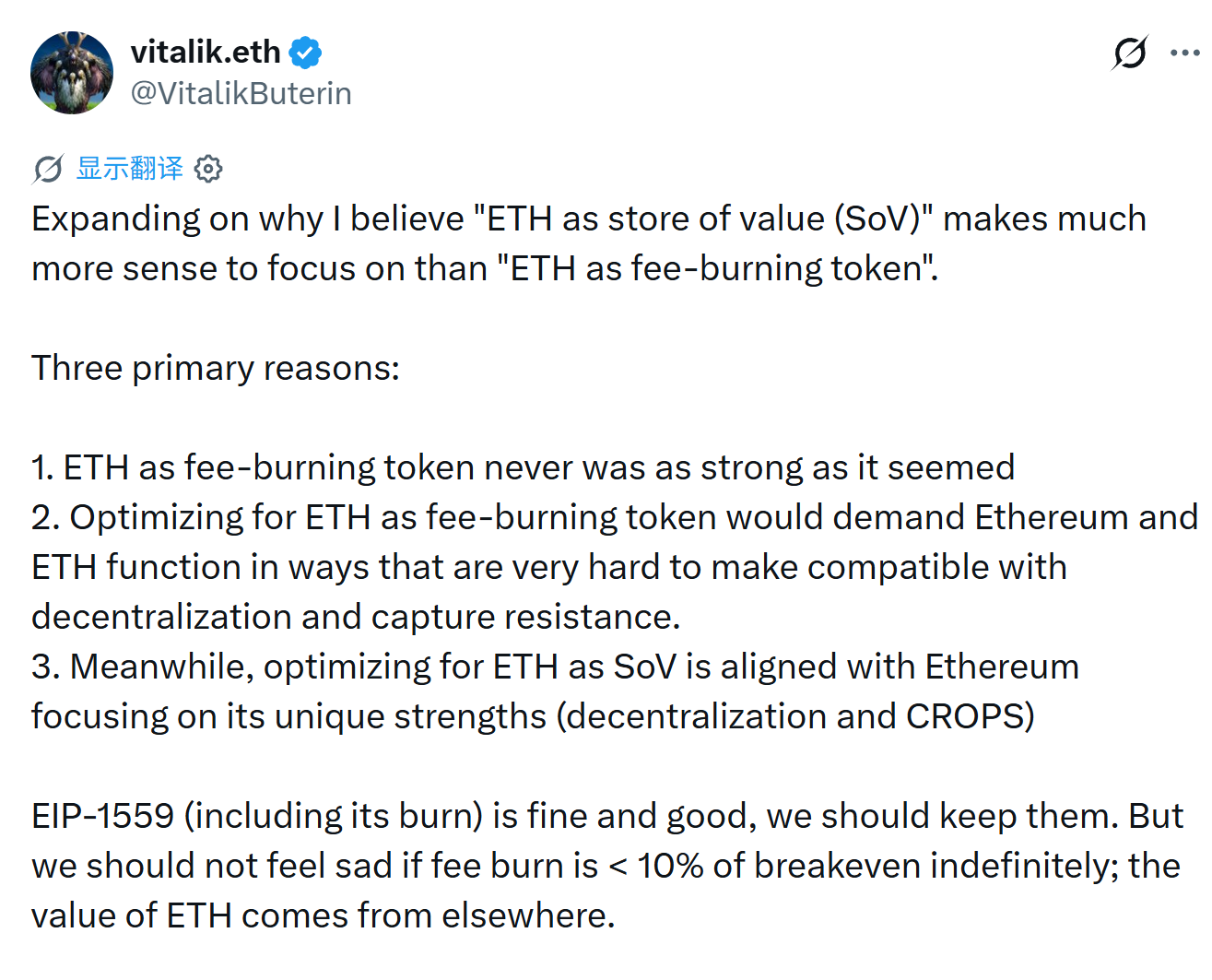
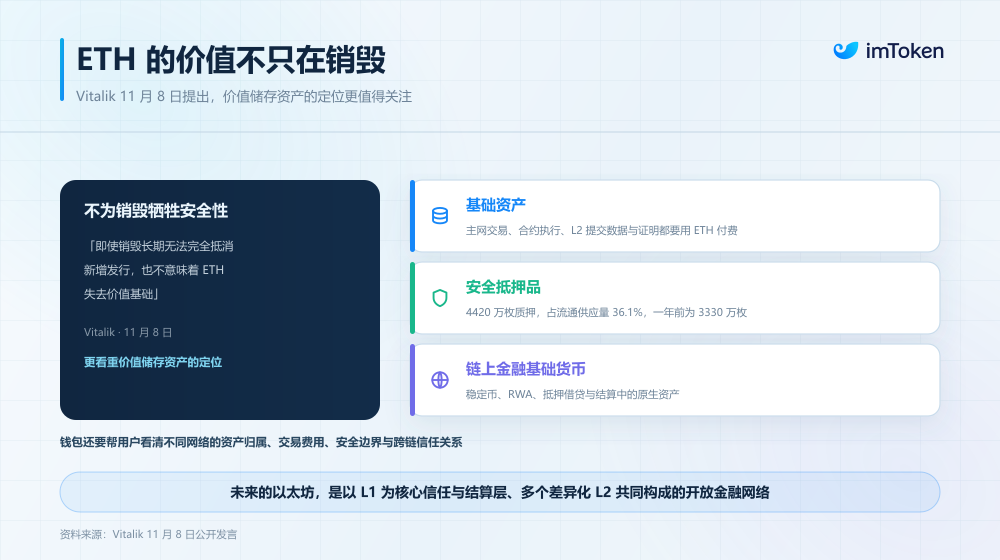
The article attributes a broader argument to Vitalik Buterin: keep EIP-1559’s burn mechanism, but do not make high fees the principal test of ETH’s value. His emphasis is on Ethereum’s durability as decentralized infrastructure, including resistance to censorship and control, open source, privacy and security. In that account, ETH’s roles as the network’s gas asset, proof-of-stake collateral and an asset used in on-chain finance matter alongside fees.
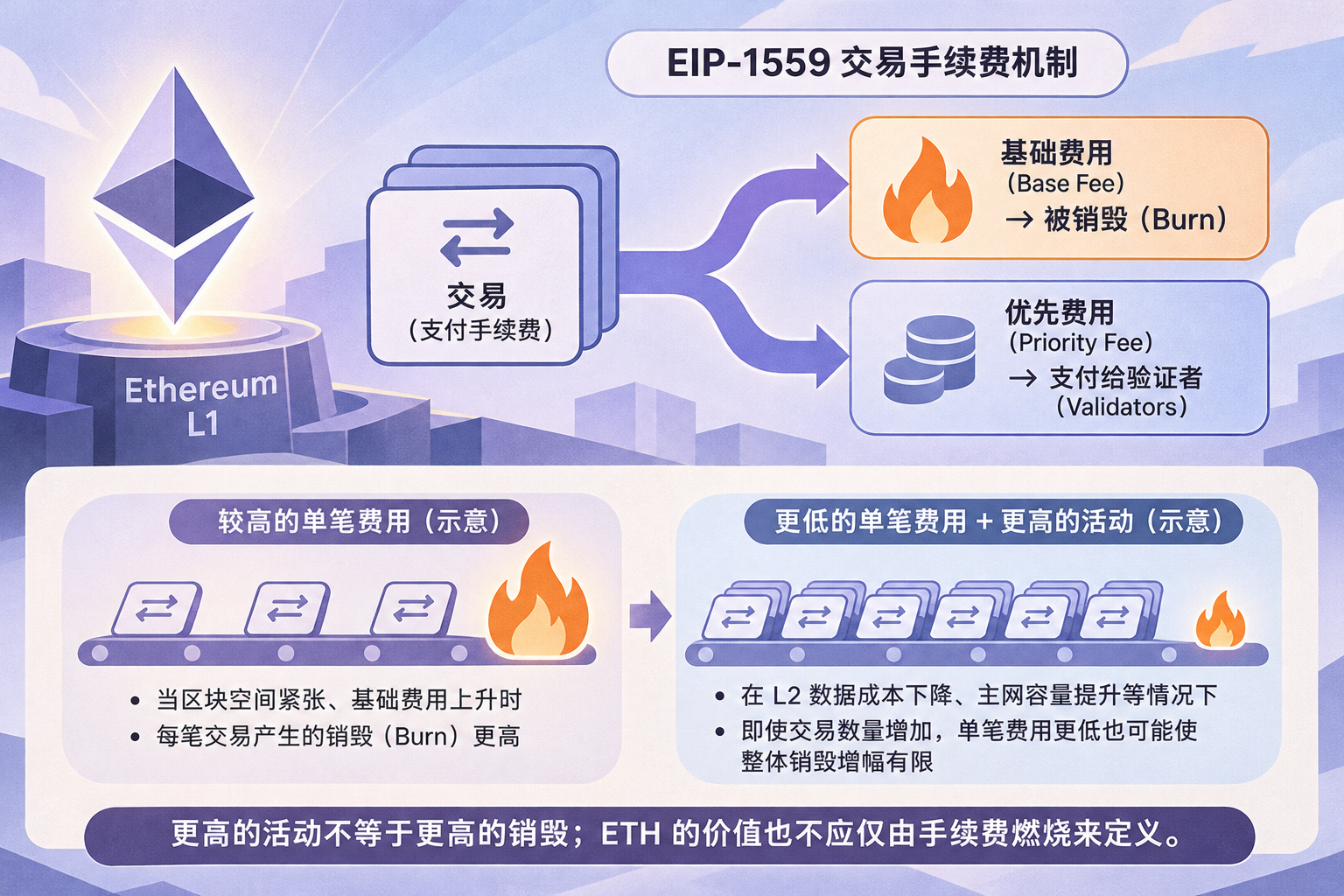
The economic question is thus not whether activity belongs exclusively on L1 or L2. It is which arrangement provides the security and execution an application needs, what it costs to maintain, and whether its incentives can persist without depending on expensive transactions or a separate chain’s gas revenue.
Source: techflowpost.com (originally published 2026-11-12 09:19 UTC+8)