Originally reported by 深潮 TechFlow on November 11, 2026, at 09:41 (UTC+8), based on analysis by Alea Research.
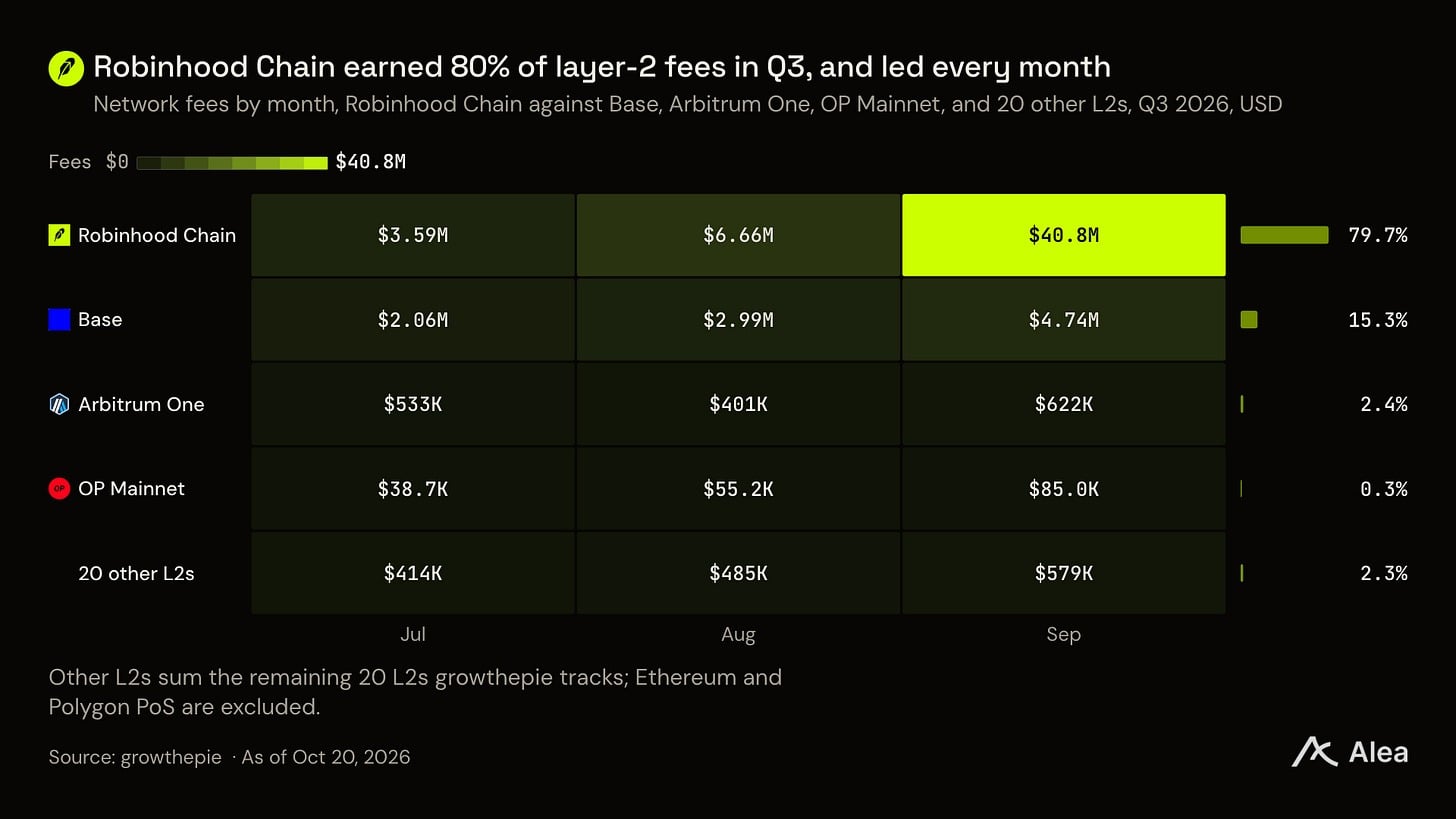
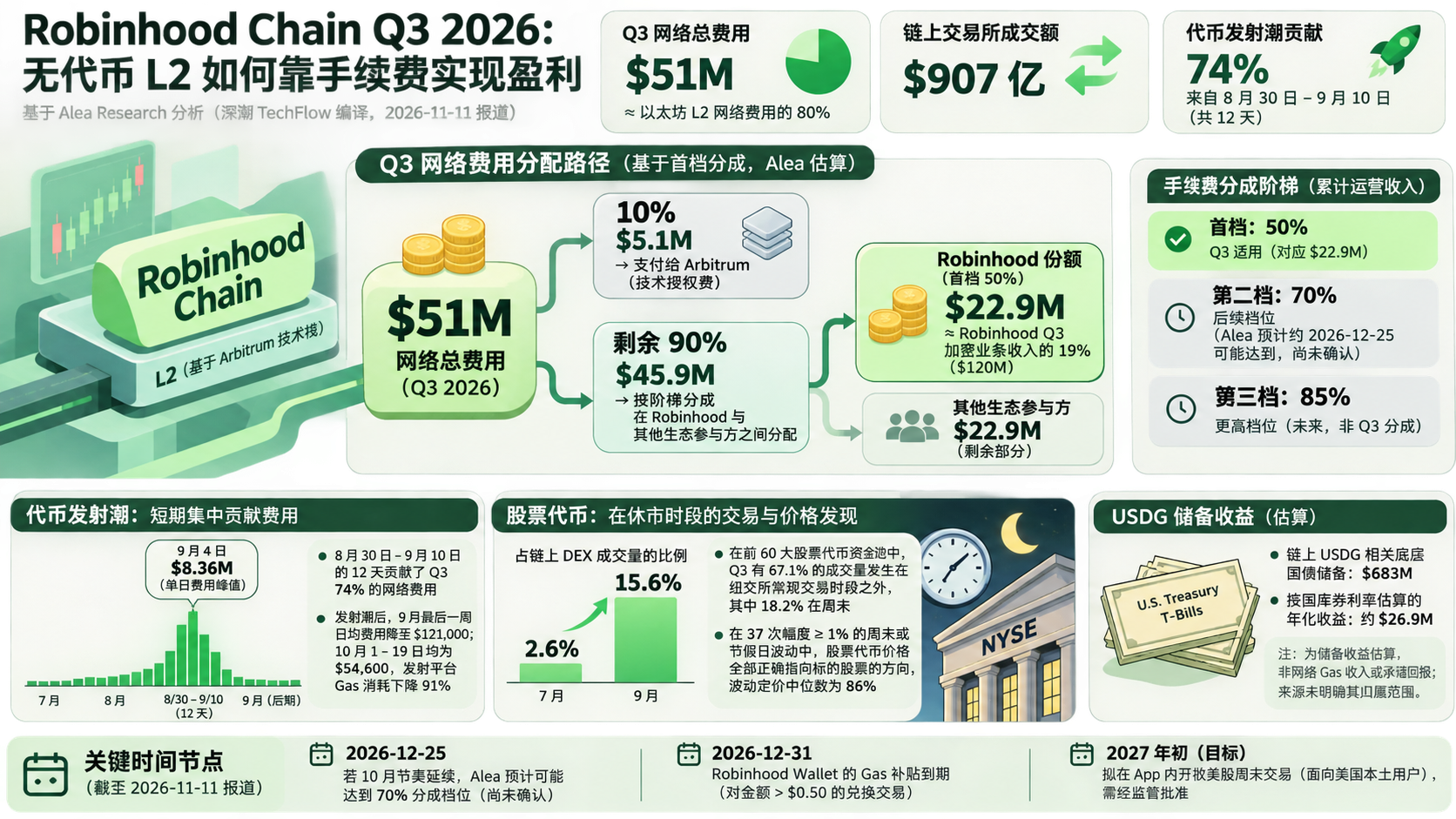
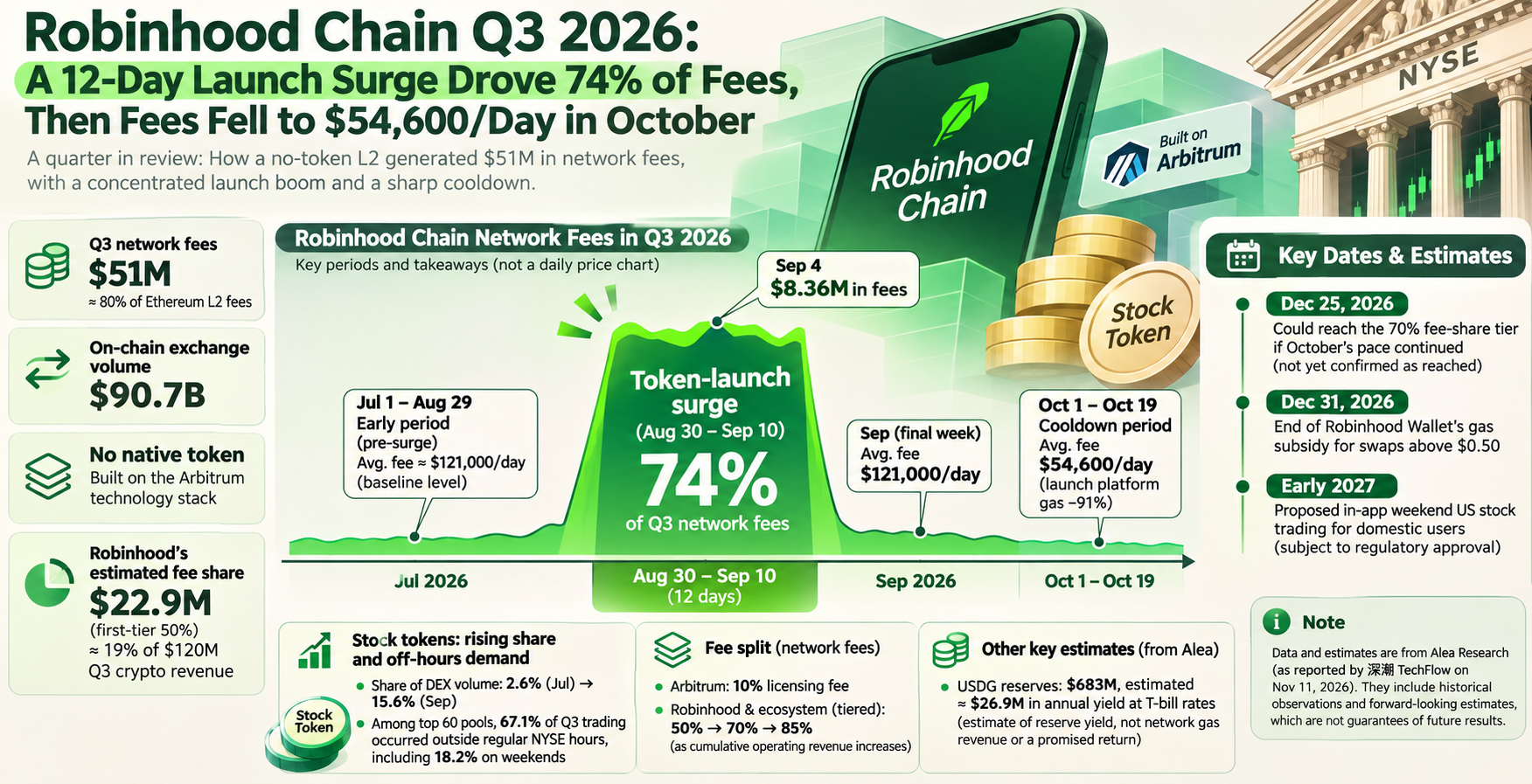
Robinhood Chain has no native token, but its first full quarter after mainnet launch offers a case study in how an L2 can earn fees without one. According to Alea Research, the chain generated $51 million in network fees in Q3 2026—about 80% of Ethereum L2 network fees—and recorded $90.7 billion in on-chain exchange volume. The fee result was heavily concentrated: a 12-day token-launch surge produced 74% of the quarter’s network fees.
Where the fees went
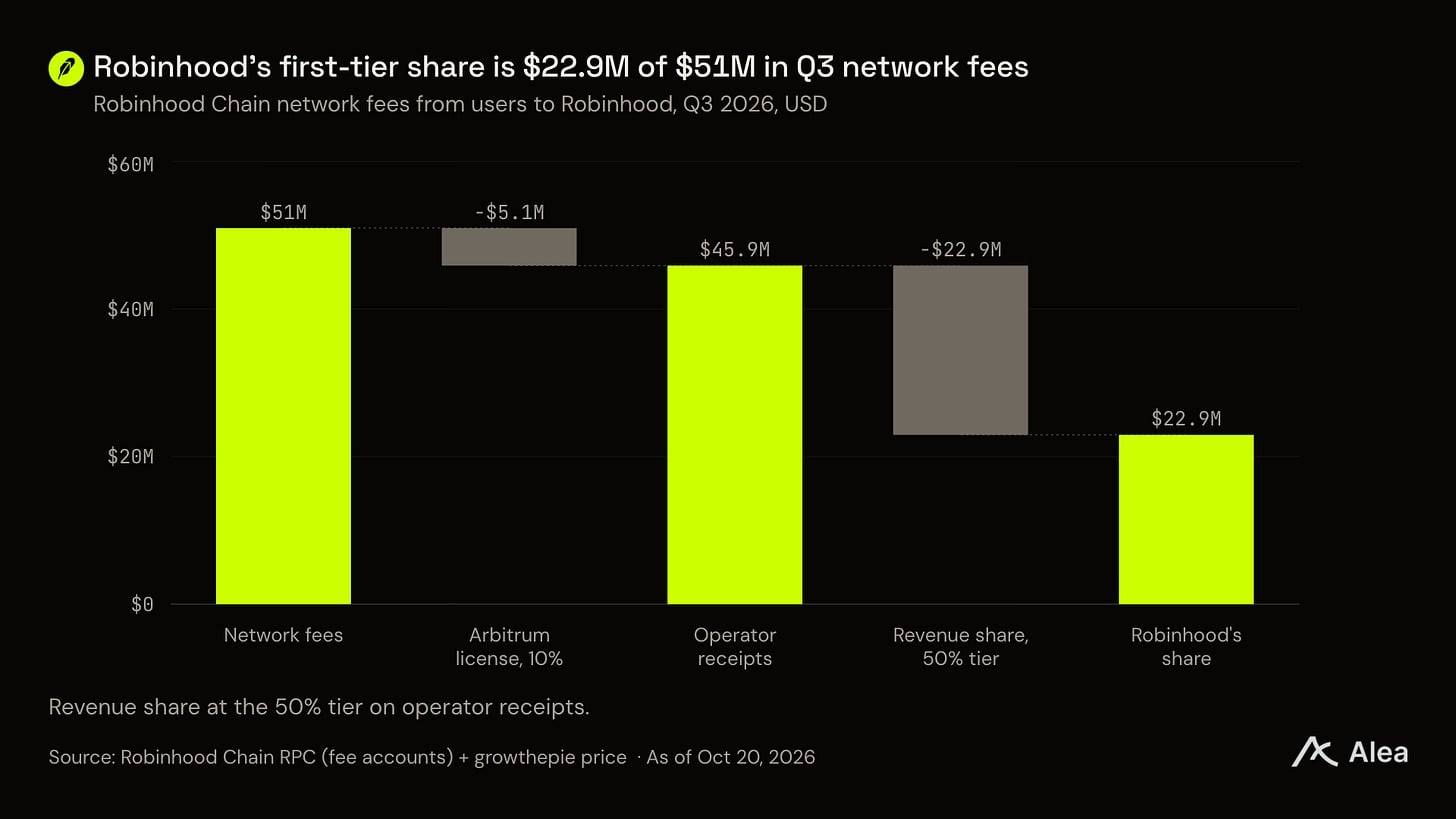
Robinhood Chain uses the Arbitrum technology stack. Arbitrum receives a licensing fee of 10% of gross network fees; Robinhood and other ecosystem participants split the remainder under a tiered arrangement. Robinhood retains 50% in the first tier, rising to 70% and then 85% as cumulative operating revenue increases. Using the first-tier rate, Alea estimated Robinhood’s Q3 share at $22.9 million, equivalent to 19% of its reported $120 million in quarterly crypto-business revenue. That is a fee-share estimate, not a token-holder payout.
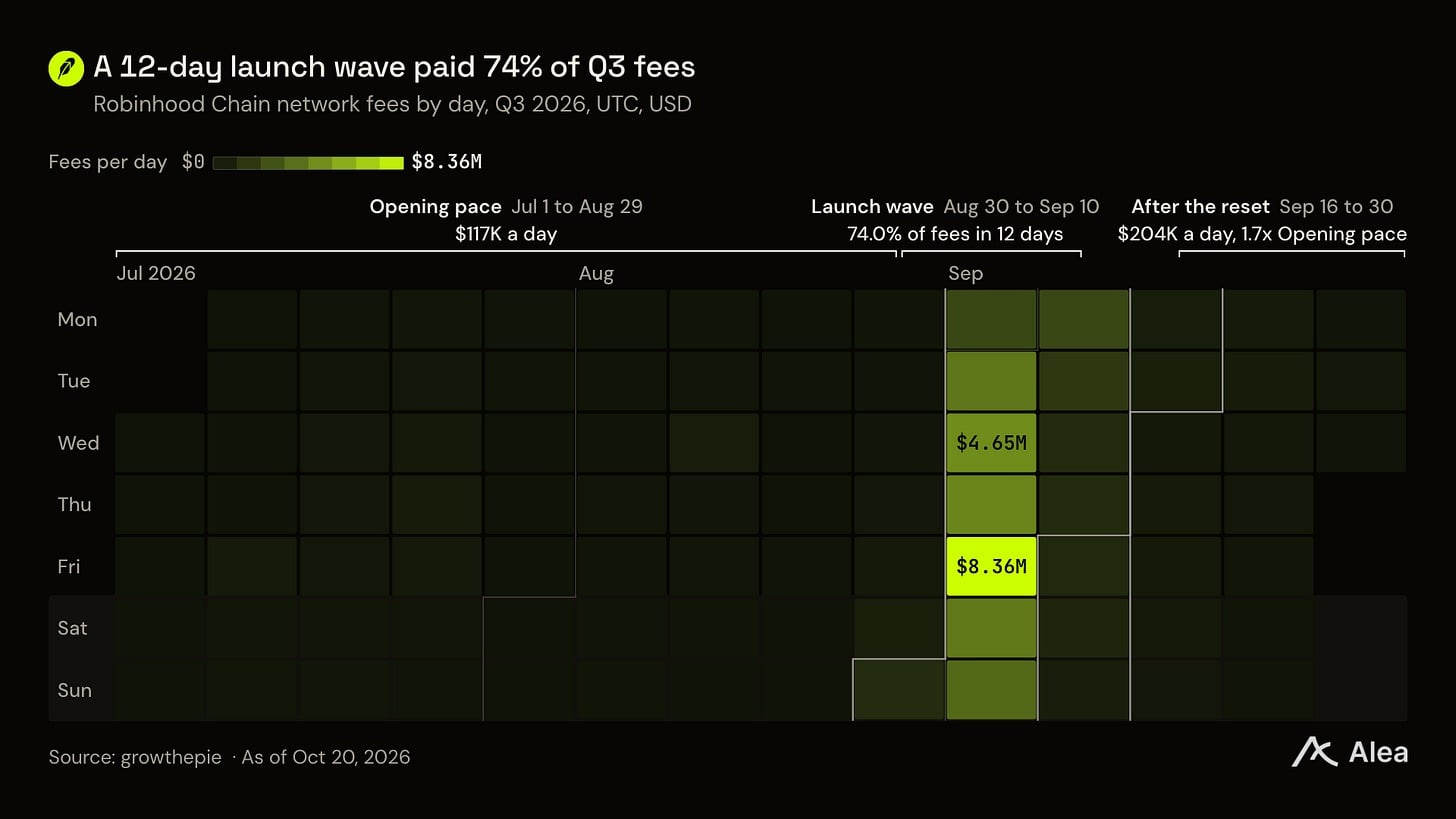
Even excluding the launch surge, Alea calculated that Robinhood Chain accounted for 57.7% of L2 network fees over the quarter’s other 80 days, compared with 30.7% for Base. The spike nevertheless matters for interpreting the headline figure: Pons released its V2 token-launch factory on August 4 and recorded 648,701 launches. Fees during August 30–September 10 supplied 74% of Q3 network fees; September 4 alone brought in $8.36 million. By the final week of September, average daily fees had fallen to $121,000. They averaged $54,600 from October 1–19 as gas consumed by launch platforms dropped 91%, according to the report.
Stock tokens and demand outside market hours
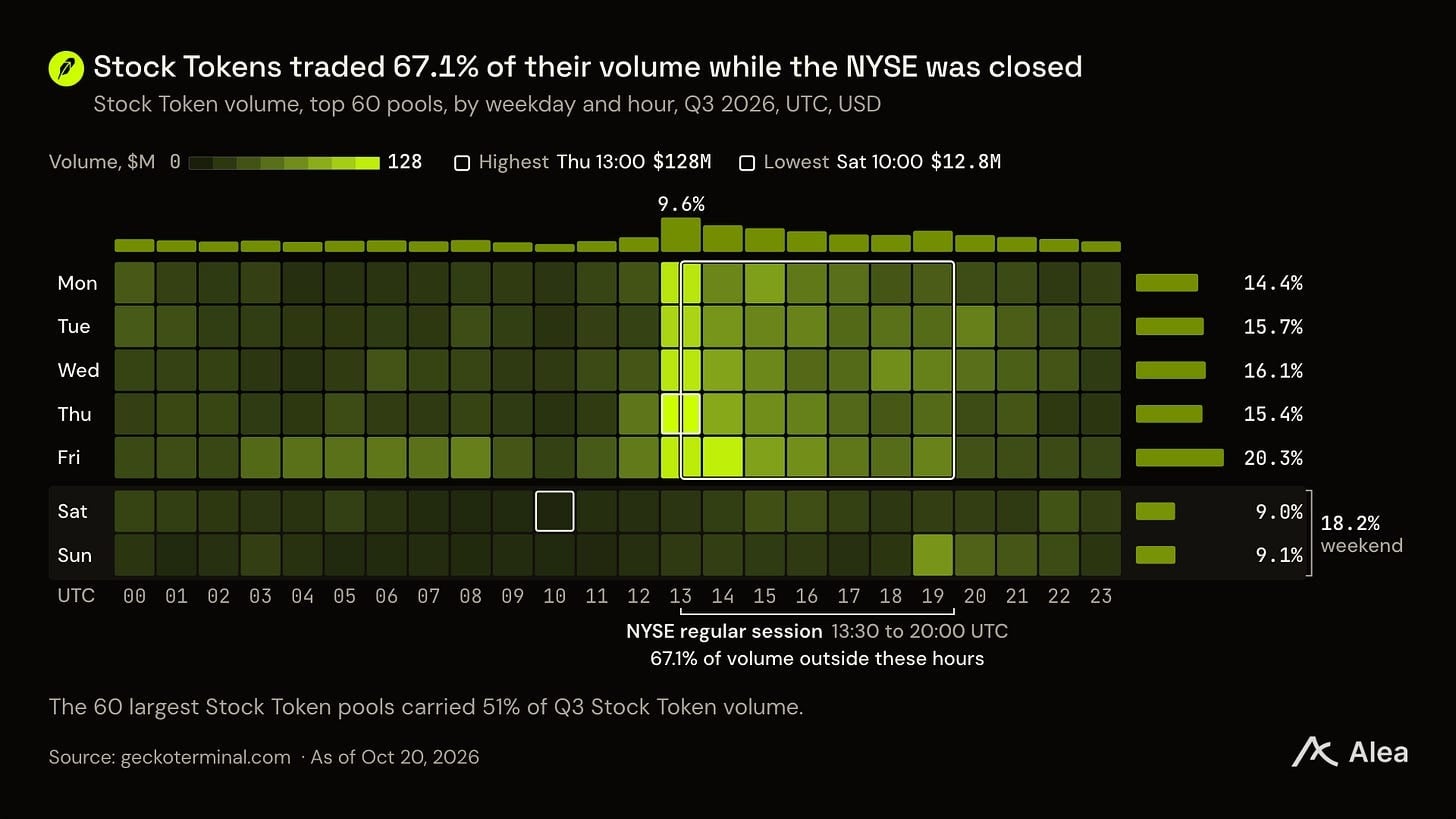
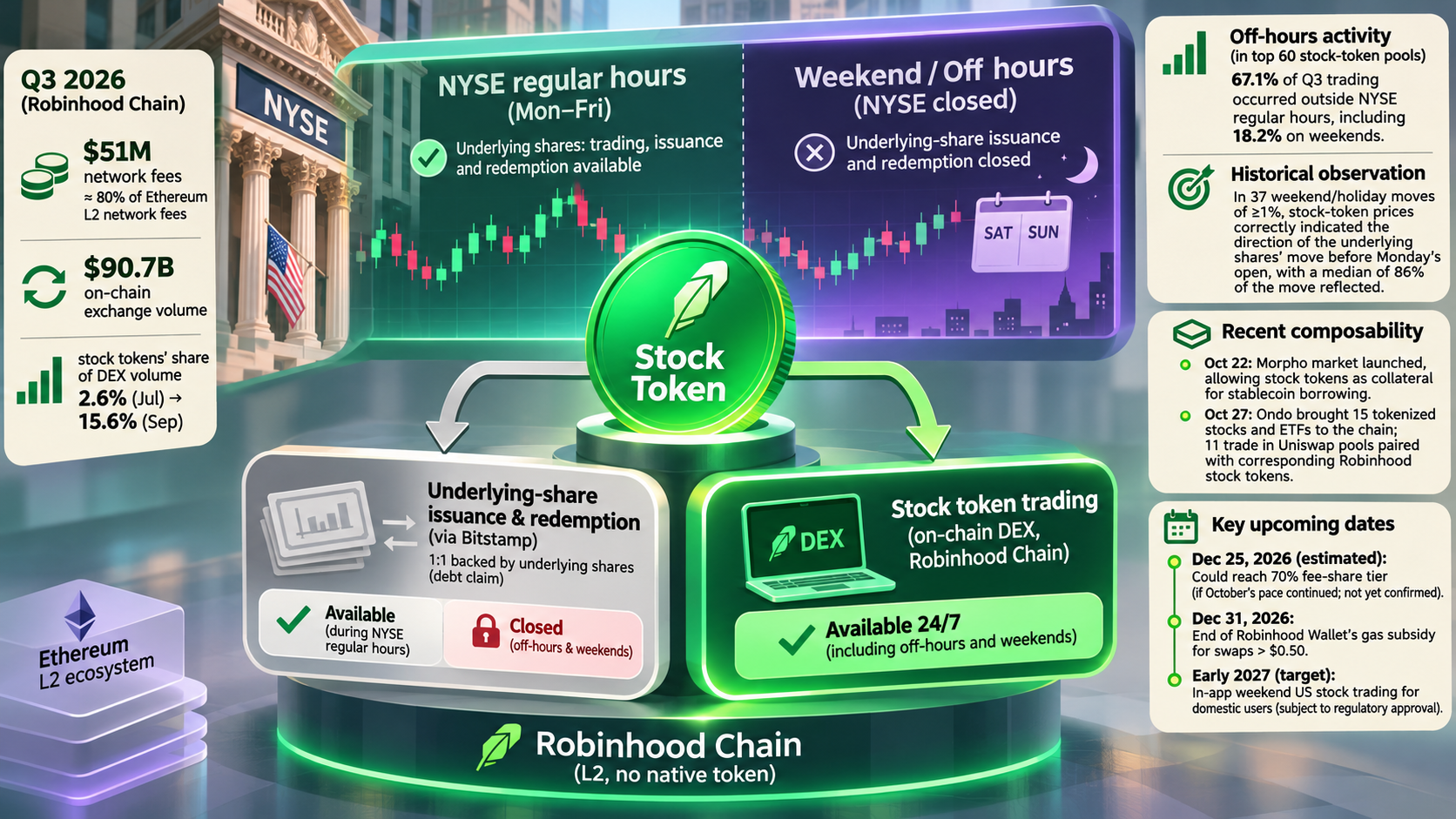
Robinhood’s stock tokens are debt claims backed one-for-one by underlying shares, with issuance handled by its subsidiary Bitstamp, according to the source. Their share of the chain’s DEX volume rose from 2.6% in July to 15.6% in September. Among the 60 highest-volume stock-token pools, 67.1% of Q3 trading occurred outside regular New York Stock Exchange hours, including 18.2% on weekends, when issuance and redemption against underlying shares were closed.
Alea reported that, across 37 weekend or holiday price moves of at least 1%, stock-token prices correctly indicated the direction of the underlying shares’ move before Monday’s open. The median proportion of the move reflected in token prices was 86%. That historical observation does not establish that the tokens will consistently predict future prices.
The source also describes changes to what holders can do with these tokens. Morpho and Robinhood launched a market on October 22 allowing stock tokens to serve as collateral for stablecoin borrowing. On October 27, Ondo brought 15 tokenized stocks and ETFs to the chain; 11 traded in Uniswap pools paired with corresponding Robinhood stock tokens. Robinhood’s plans to enable eligible holders to vote and redeem tokens for shares had no stated timetable at the time of reporting.
Dates and estimates to watch
As reported on November 11, Alea projected that Robinhood could reach the 70% fee-share tier around December 25, 2026, if October’s pace continued; the threshold was not yet confirmed as reached. The report also identified December 31, 2026, as the scheduled end of Robinhood Wallet’s gas subsidy for swaps above $0.50. Robinhood’s proposed in-app weekend US stock trading for domestic users was targeted for early 2027, subject to regulatory approval.
Alea additionally estimated that $683 million in underlying Treasury reserves associated with USDG on the chain could generate about $26.9 million annually at Treasury-bill rates. That is an estimate of reserve yield, not network gas revenue or a promised return; the source does not establish that all of it accrues to Robinhood.
Source: techflowpost.com (originally published 2026-11-11 09:41 UTC+8)